
RMB: The East Wind and West Wind at the 6.8 Threshold

Morning FX
Although I anticipated a strengthening US dollar, the intensity of this rally exceeded my expectations.
In the past week, the US Dollar Index surged by more than 1%, driving both USDCNY and USDCNH back to the 6.8 level. On Wednesday, onshore USDCNY trading volume expanded to $71 billion, the second highest this year.Behind the increased trading volume, market divergence is gradually emerging.
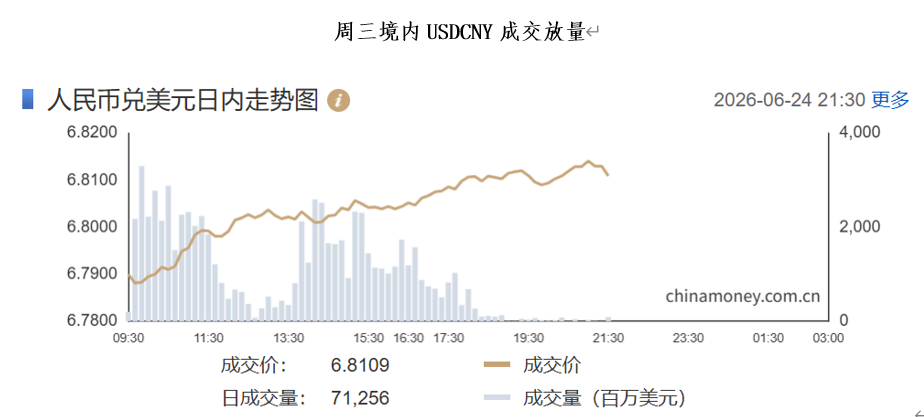
At the 6.8 threshold, how should we view the RMB exchange rate at mid-year? Behind the market tug-of-war, there are two contrasting forces—an "East Wind" and a "West Wind".
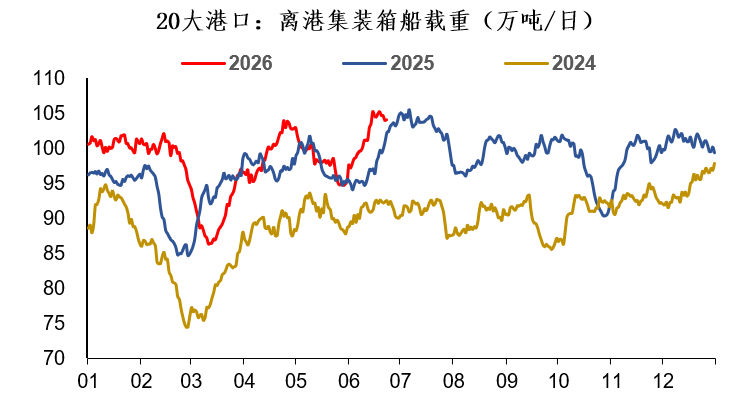
Let’s look at the East Wind first: the strongest case for RMB appreciation—robust exports.What do high-frequency data say about mid-year exports? Still very strong, impressively so. Multiple sets of high-frequency data tell us one thing:never underestimate China’s exports.
Here, let’s take a look at the market landscape—domestic container throughput, with year-on-year growth between 5% to 10%:
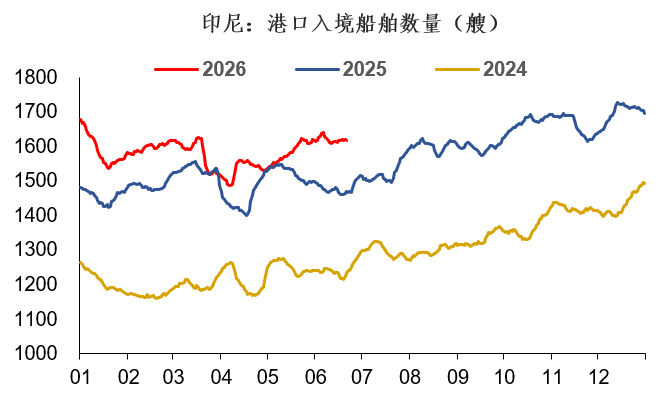
This is Indonesia’s inbound vessel data, with year-on-year growth above 10%:
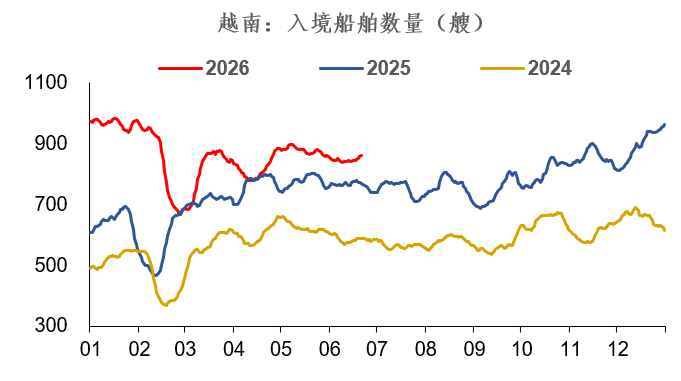
This is Vietnam’s inbound vessel data, with year-on-year growth above 10%:
Looking at the forex market this year, in a context where most non-US currencies have struggled, the RMB has shown independent strength and even displayed characteristics of a safe-haven currency. Robust exports are the main “East Wind”. On the other hand, however, the mid-year market environment is changing, with the “West Wind” showing as—declining settlement ratio.
Data shows that from April to May, the export settlement ratio dropped to 60%, a notable decrease from 68% in Q1, and below the seasonal average. Market feedback indicates that export companies generally adopt a “settle foreign exchange when rates are high” approach, causing the settlement flow to display timing and pulse characteristics. After the peak in Q1, settlement sentiment in the market has gradually faded.
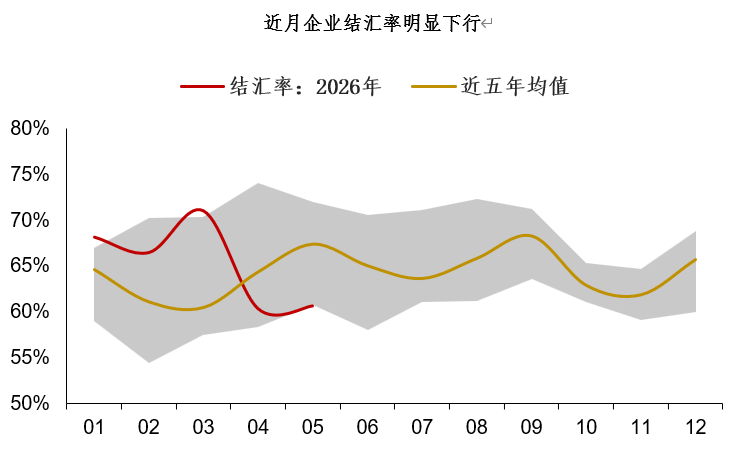
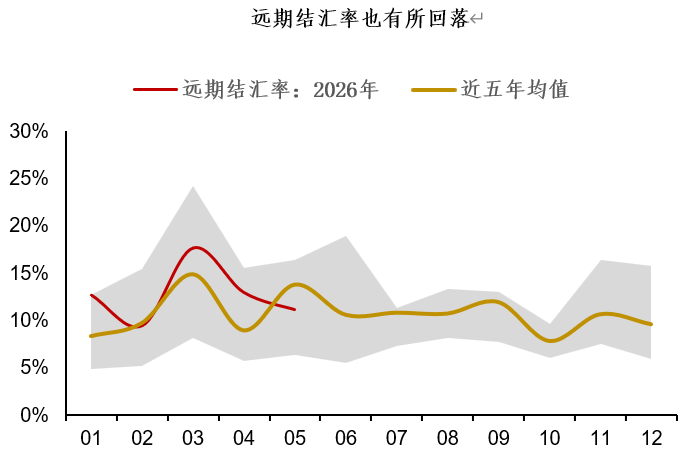
Why, in an appreciating environment, do companies lower their forex settlement rates? Essentially, this is related to this year’s unique market context. Although the RMB is appreciating, the US-China interest rate spread continues to widen—a rare historical phenomenon. Thus, some business owners weigh whether holding US dollars in deposits at 4% can offset RMB appreciation. The significant mid-year strengthening of the dollar has further fueled hesitation and a wait-and-see attitude.
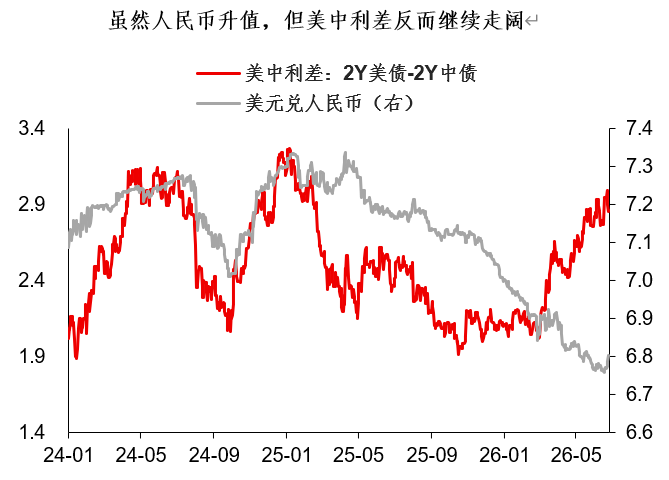
In this complex environment where both East and West winds coexist, how should we view the mid-year RMB forex market? In my view, this year, the RMB current account determines the direction, while the capital account affects the pace of movement.Strong exports are the RMB’s trump card—backed by industrial, trade, and even military factors. Overseas factors such as the dollar exchange rate and interest rates mostly affect the tempo.
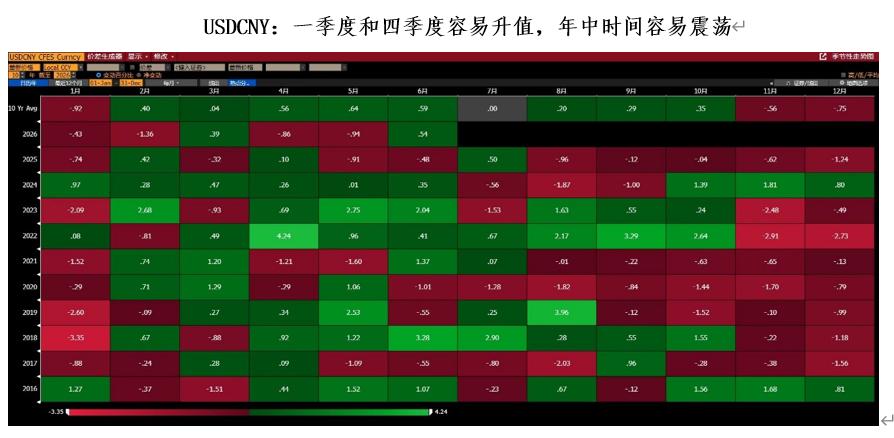
Strategically, the East Wind is likely to overpower the West Wind. Tactically, mid-year USDCNY two-way volatility is actually beneficial, creating more opportunities for selling foreign exchange at favorable rates—let’s reference this chart again:
To summarize today’s points:
1. The dollar’s rally has been exceptionally strong, pushing both USDCNY and USDCNH back to 6.8. Behind the market back-and-forth are two opposing forces: the East Wind and the West Wind;
2. The East Wind for the RMB rate—robust exports. High-frequency data show export sentiment remains strong at mid-year (container throughput at ports in China, Indonesia, and Vietnam), serving as the hard backbone of the RMB exchange rate; the West Wind—the declining settlement ratio. Settlement flow has become more time/event-driven, and the stronger dollar further adds to companies’ cautiousness;
3. In my opinion, in this year's market context, the RMB current account sets the direction, while the capital account sets the pace. Strong exports are the trump card—East Wind beats West Wind. At mid-year, two-way fluctuation of USDCNY is actually a good thing, making it easier to capture favorable forex settlement opportunities. Opportunity waits for no one; seize the moment.
Disclaimer: The content of this article solely reflects the author's opinion and does not represent the platform in any capacity. This article is not intended to serve as a reference for making investment decisions.
You may also like
How much CPO demand will Nvidia Rubin Ultra generate? Bernstein: Optical value per Pod will increase fivefold
Bernstein believes that the co-packaged optics (CPO) and fiber demand driven by Nvidia's Rubin Ultra architecture will surge significantly, with the optical content per Pod rising from $1 million to $5.4 million. This will propel the size of Nvidia's optical ecosystem market to $46.8 billion by 2028 (a 91% annual increase). Although the industry faces supply bottlenecks with InP substrates, the outlook remains positive. The institution reiterates its “outperform” rating for Lumentum, Coherent, and Ciena.

UBS Q3 implements a two-way strategy with gold options, heavily invests in technology stocks, and builds positions in SK Hynix (SKHY.US)
UBS Group (UBS.US) has submitted its Q3 holdings report (13F) as of September 30, 2026.

SpaceX (SPCX.US) reportedly attempts “de-Nvidiaization” at the rack level: developing Kessel cabinets to bypass L6 compute boards, purchasing only chips
SemiAnalysis: SpaceX has developed its own Kessel cabinet, bypassing Nvidia's L6 cards to provide more options for manufacturing its own hardware.

$3.7 billion “data center power equipment prepayments” abandoned! What did "the most active buyer of gas turbines", SoftBank, see?
In the second quarter of fiscal year 2026, SoftBank reported a net loss of $7.1 billion, primarily due to a $3.7 billion impairment charge from a $9.5 billion advance payment for power generation equipment for US data centers—of which about $2.9 billion was non-refundable and effectively lost. The CFO admitted that SoftBank placed orders before the project plan was finalized, and is now conducting a comprehensive review of its procurement strategy. "The most aggressive purchaser of gas turbines has now written off the deposit in this way."
Crypto prices
More


