
Opera's MiniPay launches Visa debit card for stablecoin spending

MiniPay has launched a Visa debit card that allows users in selected markets across Africa, Latin America, Southeast Asia and Europe to make purchases using stablecoins.
According to Tuesday's announcement, the card is powered by Gnosis Pay's infrastructure, enabling users to pay directly from their MiniPay wallets while merchants receive local currency through Visa's network.
MiniPay said it has grown to more than 16 million activated wallets across 65 countries since launching in 2023, with much of its adoption concentrated in Africa and other emerging markets.
The card can be added to Apple Pay and Google Pay, while eligible users in some markets will receive cashback rewards denominated in stablecoins USDt and USDC, as well as Tether Gold.
MiniPay is a stablecoin wallet owned by Opera, the Nasdaq-listed software company best known for its web browser. Built on the Celo blockchain, the wallet focuses on payments, transfers and savings using dollar-backed stablecoins.
Stablecoins see adoption in emerging markets
The launch comes as stablecoins gain traction in emerging markets. In Latin America, a recent Bitso report found that dollar-backed stablecoins overtook Bitcoin as the most-purchased crypto asset among the exchange's users in 2025, with USDC and USDT accounting for a combined 40% of purchases.
Adoption is also accelerating among businesses in the region. Bitso reported that stablecoin transaction volumes among its institutional clients rose 81% year-on-year in the first half of 2026, while banks and licensed payment providers accounted for more than 60% of new business customers added during the period.
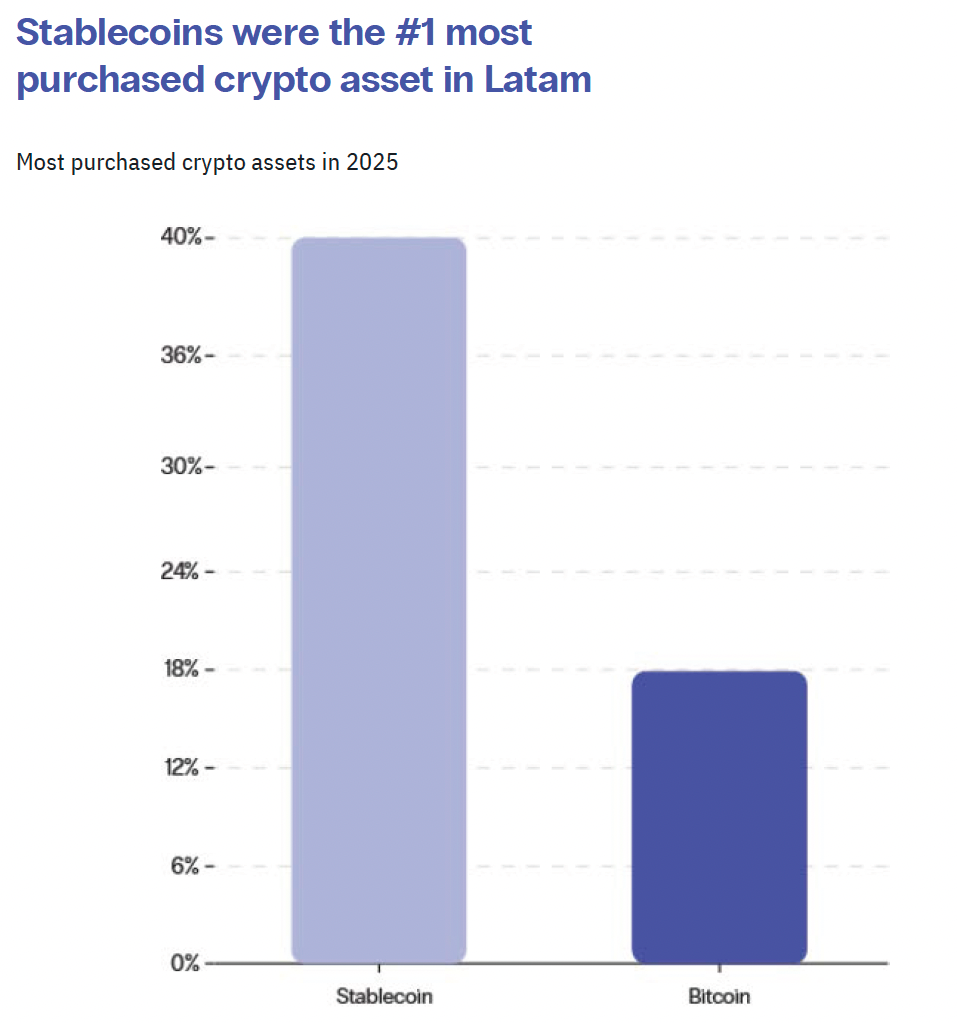
Bitso's "Stablecoin Landscape in Latin America report for the first half of 2026." Source: Bitso
Africa has also emerged as a key growth market for stablecoin issuers seeking to expand payment and remittance services.
In March, Circle partnered with African fintech Sasai to expand USDC-powered cross-border payments across the region. The partnership integrates USDC into Sasai's existing payments infrastructure, which supports cross-border transfers, enterprise payments and consumer wallets.
Last week, Ripple acquired a stake in Flutterwave, a $3.3 billion fintech operating in 35 African countries, with plans to integrate RLUSD and other blockchain-based payment tools.
The growth in stablecoin payments has coincided with a broader expansion of the market. According to DefiLlama data, the total value of stablecoins in circulation has risen to roughly $315 billion, up from about $250 billion a year ago.
Disclaimer: The content of this article solely reflects the author's opinion and does not represent the platform in any capacity. This article is not intended to serve as a reference for making investment decisions.
You may also like
One month before the IPOs of Anthropic and SpaceX, bitcoin fell 22%. How will liquidity dynamics drive the future market trend?
SBET's Chief Investment Officer attributes this phenomenon to a "liquidity event rapidly increasing correlations between assets"—investors sell crypto assets to participate in star IPOs. Following this logic, most brokerages require investors to wait 15 to 30 days after being allotted new shares before selling. After the SpaceX IPO, on the 31st day, ETH’s price surpassed its level on the IPO day, and by the 70th day, BTC's downward trend reversed.

WeRide Q3 revenue increased by 88% year-on-year, AI infrastructure revenue nearly doubled, Robotaxi single-quarter revenue surpassed 100 million yuan for the first time | Earnings Report Insights
WeRide's revenue for the third quarter reached 320 million yuan, surpassing the market expectation of 270 million yuan. Its net loss was 310 million yuan, lower than the expected 400 million yuan. Overseas income grew by 171.5% year-on-year, driving the gross margin up to 43%. The Guangzhou Robotaxi business achieved positive unit economics for the first time. However, increased R&D investment led to a larger adjusted loss, indicating profitability still needs improvement.
Wall Street technology veteran Niles is optimistic that Anthropic (ANT.US) will win the AI agent price war, but warns that its stock price may fall below the offering price.
Anthropic's IPO exceeded expectations, but Dan Niles warns of valuation risks, slowing growth in AI revenue, and price competition.
After Jensen Huang's resignation, Nvidia faces a new threat: losing its top engineers
Thousands of Nvidia employees have petitioned for Jensen Huang to return to his position, with some publicly criticizing the board's decision; some employees have already announced their resignation. Interim CEO Kress has issued early salary increases and stock rewards in an effort to stabilize the team, but AMD, Broadcom, and AI startups are poised to poach talent. Analysts warn that if five to ten key technology leaders leave, it could affect decisions on chip and software architecture, product iteration, and the planning of next-generation AI technologies.

Crypto prices
More


