
Hedging Strategies for Import and Export Enterprises: Importers Edition

Morning FX
1. The market environment is very favorable for companies needing to purchase foreign currency
This year may be the most comfortable year in the past decade for companies conducting foreign currency purchases. RMB appreciation, deep swap discounts, RR at historical lows, and the removal of forward FX risk reserve requirements—multiple rare factors are all neatly in favor of currency buying.
RMB appreciation: Since last year, USDCNY has shown a relatively moderate trending bull market.
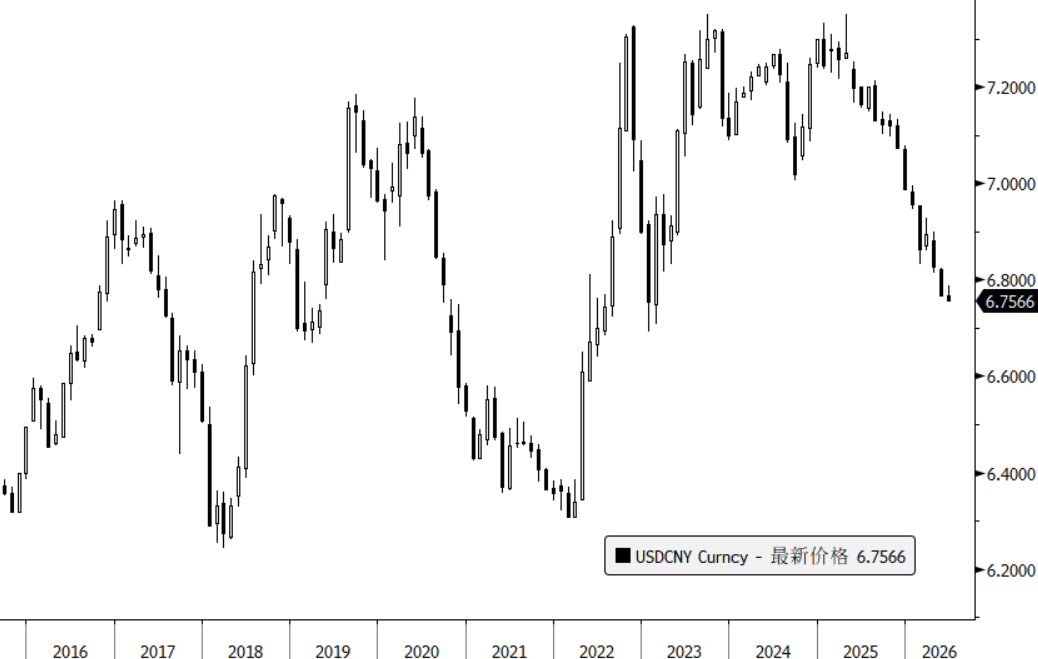
Deep swap discounts: The key difference in this appreciation cycle versus 2020. In 2020, the one-year USDCNY swap points were +1700 pips, now it is -1700 pips.
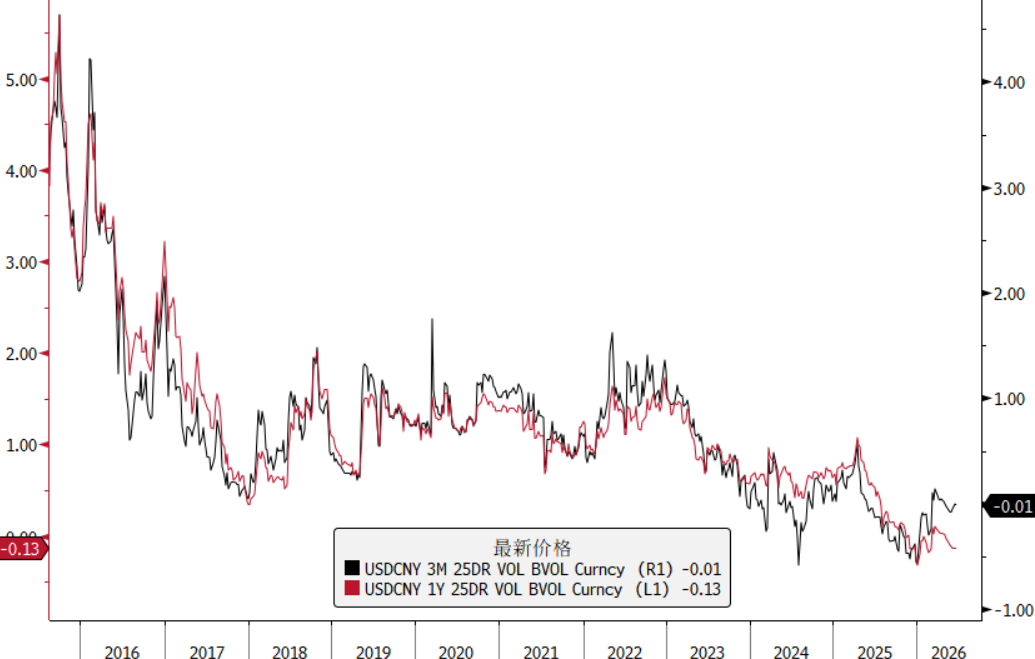
RR at historical lows: Option market sentiment is strongly bullish on the RMB, with USDCNY RR at its lowest since the 2015 exchange rate reform, meaning call options are cheaper and put options are more expensive.
Domestic cancellation of forward FX risk reserve requirement: No more barriers for hedging foreign currency purchases.
Although the market environment is in favor of foreign currency purchase, from the principle of exchange rate neutrality, not hedging any positions at all is not a prudent choice. After all, no one can predict a "black swan" tomorrow, such as the unexpected hawkish tone from Waller last night…
My personal suggestion is that companies consider their own billing cycles and make comprehensive use of multiple tools to lock in their FX exposure:
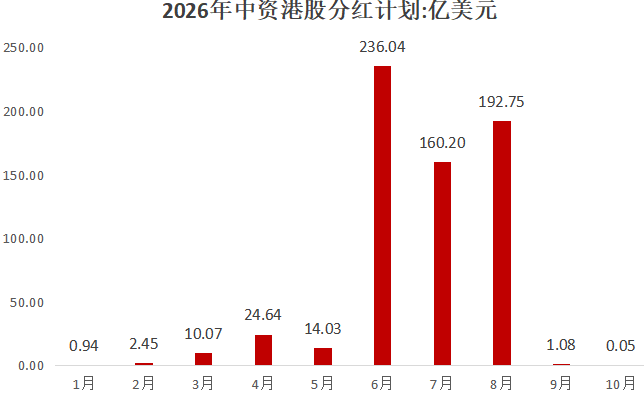
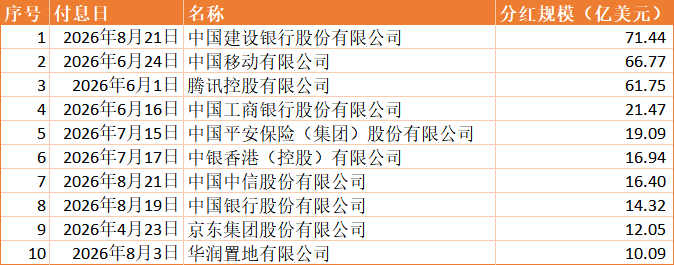
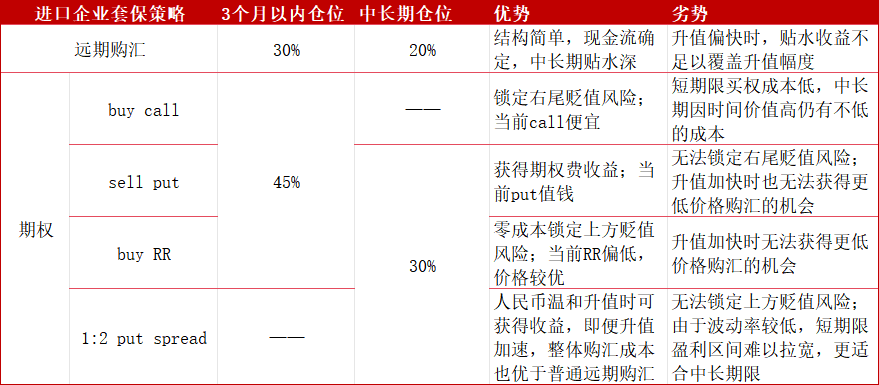
(1) Forward FX purchase: 30% position for within 3 months,20% for medium and long term positions. Seasonal summer dividend-related FX buying provides support for RMB spot, and the pace of appreciation may slow further in June–August. Short-term FX demand can moderately increase the hedging percentage. Although medium and long-term FX swaps are deeply discounted, the appreciation during the FX settlement high season in Q4 may exceed the swap discount gains.
(2) Options: 45% position for within 3 months, 30% for medium and long term.
Buy USDCNY call options: By paying a certain option premium, you can lock in the right-tail risk of RMB depreciation without having to bear the left-tail risk of substantial RMB appreciation. Short-term calls are relatively cheap and more worthwhile to buy.
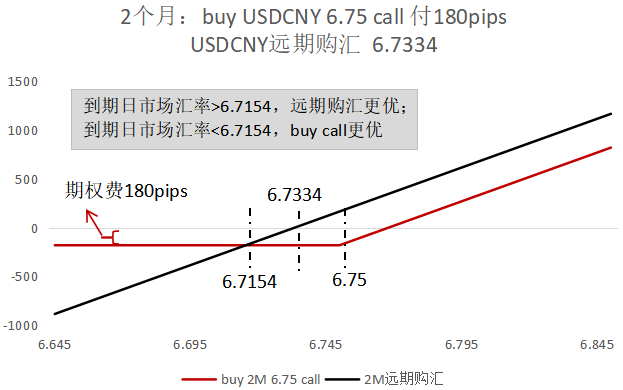
Sell USDCNY put options: Currently, puts are valuable and this product can earn considerable option premiums. However, if the RMB depreciates, the right-tail risk is unlimited. Consider combining with forward FX purchases to use option premiums to optimize the cost of forward FX, but note that locked amounts will be proportionally amplified, so avoid excessive hedging.
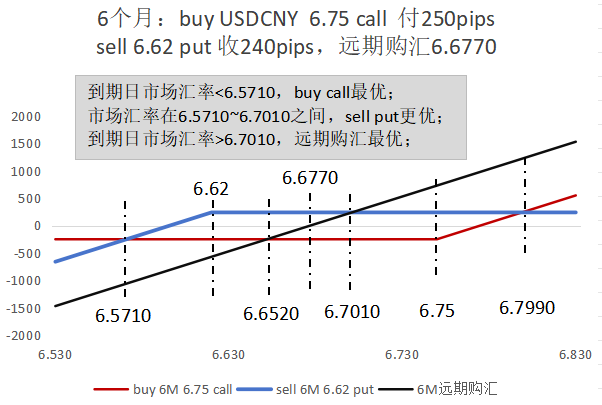
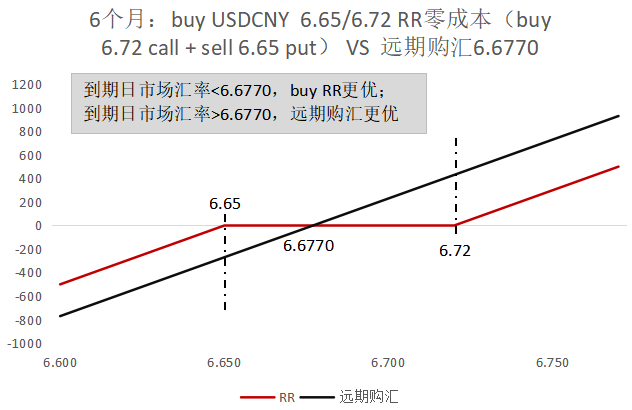
Buy USDCNY risk reversal options (buy RR, i.e., buy call + sell put): Not for the purpose of earning option premiums but to construct a zero-cost combination.
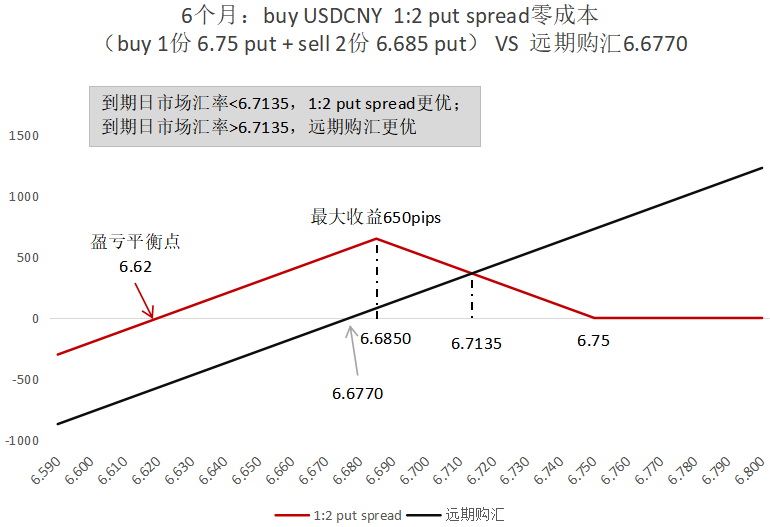
1:2 put spread combination: By buying one higher strike put and selling two lower strike puts, a zero-cost combination is created—suitable for FX buyers who expect moderate RMB appreciation. One limitation is that option volatility is presently low, making it difficult to widen the profit zone for shorter tenors under 3 months; it’s more suitable for 6 months or longer tenors.
3. Summary
Currently, currency-buying companies enjoy multiple hedging benefits: RMB appreciation, deep swap discounts, RR at historical lows, and the removal of forward FX risk reserve requirements. It is reasonable to leave part of the exposure uncovered but not advisable to go completely unhedged.
It is recommended that FX buyers flexibly construct a multi-product portfolio basket based on their billing cycles:
Disclaimer: The content of this article solely reflects the author's opinion and does not represent the platform in any capacity. This article is not intended to serve as a reference for making investment decisions.
You may also like
After a week of "bloodbath" in US stocks, valuations now show investment value, but no one dares to say the bottom has arrived.
Last week, U.S. stocks experienced a massive sell-off, but in fact, there have been no fundamental changes in the underlying factors. Multiple valuation indicators now highlight their investment value, and the willingness of contrarian funds to buy the dip should be strong.

The script at the end of 2018: The Federal Reserve continued to raise interest rates, US stocks plunged 20% from the September highs, forcing the Federal Reserve to "pivot" in January.
Goldman Sachs' head of trading believes the current US stock market is repeating the scenario of late 2018, with monetary tightening and equity market pressure. The Goldman Sachs Financial Conditions Index has tightened by about 8 points in two weeks, reaching the highest level in a year. The selloff has broadened from tech stocks to defensive sectors. Gold and equities are declining simultaneously, possibly indicating investors are selling assets to raise cash, making gold a key indicator for observing liquidity stress.

Goldman Sachs Trader “Revisits the 2018 Playbook”: Still Clearly Remembers “On December 24th, Clients Asked Why the Market Dropped So Much—And I Had No Idea”
Brian Garrett pointed out that the current adjustment in the US stock market is similar to the sharp decline in Q4 2018: the S&P 500 has already experienced 42% of the corresponding drop, and the VIX is approaching its peak just before Christmas. If history repeats itself, the bottom of this cycle may appear in January next year. However, the credit market and Federal Reserve policy have yet to provide clear signals of a bottom.
Anthropic (ANT.US) nearly “broke issue price,” but Claude knocks on the doors of “the highest peak in mathematics”! 17 million lines of Lean code used to write a candidate proof for the Riemann Hypothesis
On November 20th, Eastern Time, on its second day of trading, Anthropic's intraday price dropped to a low of $83.05, just 5 cents above the offering price of $83, and finally closed at $88.91, a decline of 8.50%. On the same day, the company's mathematician Levant Alperg announced on his personal website that he and Claude had found a candidate proof for the Riemann hypothesis, which has puzzled the mathematics community for 167 years, and released about 17 million lines of Lean formalized code.

Crypto prices
More


