
"Massive layoffs" sweep Silicon Valley—corporate willingness is "growing stronger," while employee reemployment is "becoming more difficult"

Snap cuts 16% of its employees, Block slashes 40% of its workforce, Oracle makes large-scale layoffs—Silicon Valley is entering a new era of "mass layoffs."
Since the advent of the AI boom, Silicon Valley companies have moved away from gradual or moderate staff reductions, instead opting for large-scale one-time layoffs, which have been enthusiastically received by investors.
Analysts believe that layoffs are no longer seen as signs of distress or mismanagement, but as marks of “decisive action” by management. Venture capitalists point out that for most companies, cutting 30% to 50% of employees does not materially impact performance.
Additionally, the willingness of American companies to conduct massive layoffs reflects a fundamental shift in how they view professional talent. Over the past decade, many firms have offered high salaries and benefits to attract knowledge workers, but now company leaders see large teams as obstacles to growth.
Block’s Chief Financial Officer and Chief Operating Officer Amrita Ahuja disclosed that after announcing a 40% layoff, many senior executives from other companies proactively contacted Block, intending to replicate this “mass layoff playbook.” She stated bluntly that this approach is “inevitable,” and said:
As a CFO, I’d rather act early than fall behind.
Meanwhile, the situation for laid-off employees is becoming increasingly dire, with white-collar reemployment difficulties rising significantly. According to analysis by the U.S. Department of Labor, in the past 12 months, the unemployment rate for bachelor's degree holders aged 34 and under has reached 4.1%, equal to or even surpassing that of those with two-year college degrees.
Layoffs in Exchange for Stock Price—Companies Rush to Imitate
Large-scale layoffs are becoming a new tool for Silicon Valley companies to win the favor of capital markets.
On Wednesday, April 15 (local time), Snap’s announcement of a 1,000-person layoff saw its stock soar 8% intraday, despite being down 23% in the past year.
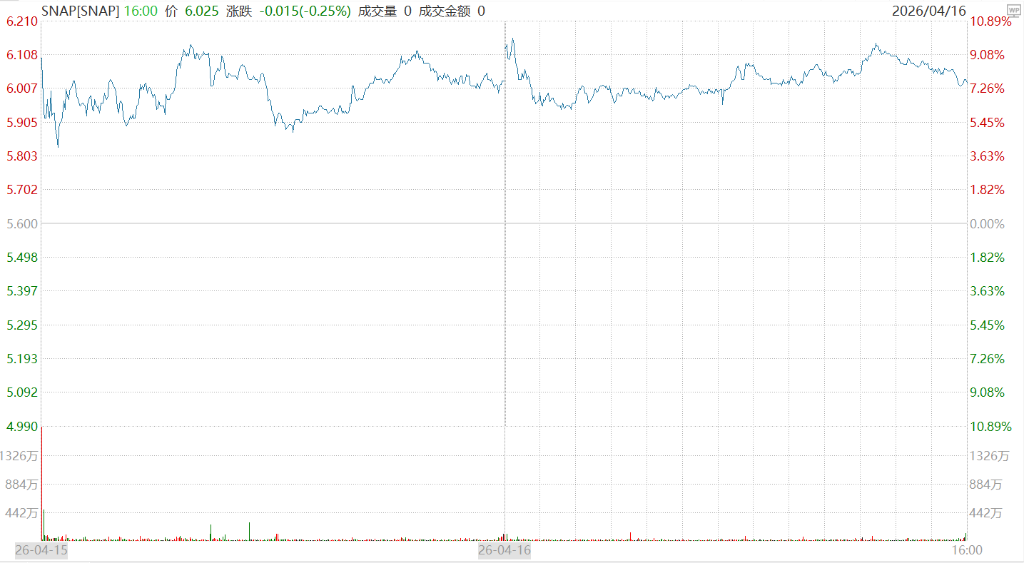 (Stock closed up 7.86% after layoff news on Wednesday, and remained volatile at a high level on Thursday)
Block, which saw its share price fall 16% earlier this year, announced in late February a cut of about 4,000 employees (roughly 40% of its staff). Since then, its share price not only recouped losses but climbed further. Amazon previously also laid off about 30,000 employees over several months.
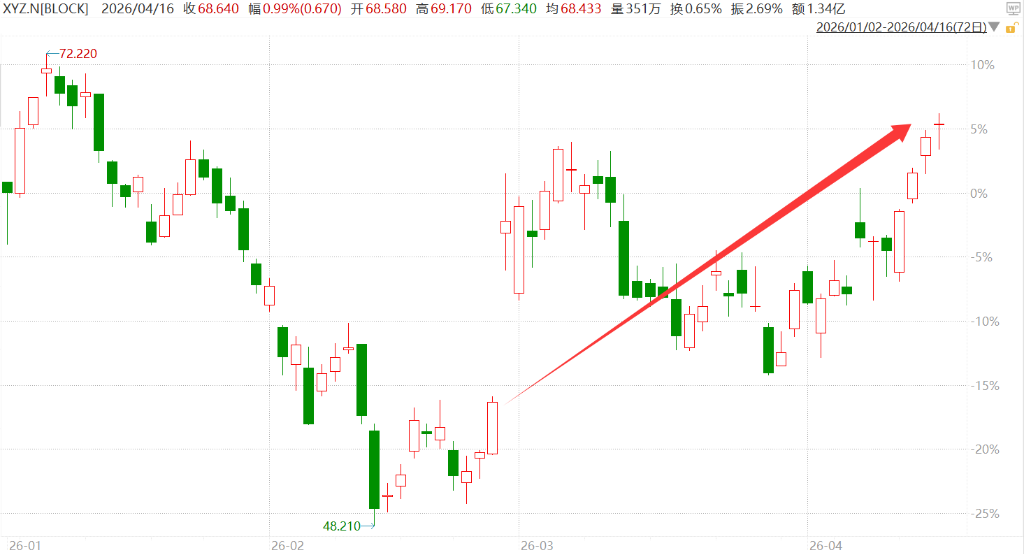
This phenomenon reflects a profound shift in market sentiment. Beth Steinberg, a seasoned HR executive, commented:
More companies will follow suit. A small number of companies act first and get praised, which will drive other management teams to go back and say ‘We must conduct large-scale layoffs too.’
“Streamlining” Logic—Not Just About AI
Although AI is often cited as a reason for layoffs, several executives have pointed out that the driving force behind the current wave of mass layoffs is more about the high cost of building AI technology and correcting over-hiring during the pandemic, rather than AI truly replacing a large number of jobs.
Mo Koyfman, founder of venture capital firm Shine Capital and former IAC executive, believes:
Most companies can cut 30% to 50% of their employees at any time without materially impacting performance.
He adds:
AI certainly improves efficiency in some tasks, but more importantly, it offers “air cover,” giving management a legitimate reason to implement personnel optimization that was overdue.
Tariq Shaukat, CEO of code validation company Sonar, is more cautious. He notes that AI tools can indeed compress some tasks into just a few hours, but employees still must spend significant time correcting AI errors and data misinterpretations.
Tariq Shaukat says:
I can understand why companies may delay hiring, but I find it hard to believe that AI is truly behind 40% layoffs.
For Tech Talent, the Job Hunt is Getting Tougher
The workforce released by mass layoffs has not been easily absorbed by the market, and anxiety is spreading among white-collar professionals.
Former IBM distinguished engineer Michael Maximilien left last year to found AI management tool company ClawMax. He says he receives job inquiries from tech professionals—including employees from major companies—almost daily, but he has no hiring plans for now.
He predicts that if programming tools like Claude Code by Anthropic and Codex by OpenAI continue to advance rapidly, by the end of 2026, many tech companies will cut 20% to 50% of their teams.
Michael Maximilien says:
In 30 years, I’ve only seen two people outperform Claude Code. The models are still evolving, so why would I hire someone instead of just buying more Claude accounts?
Meanwhile, economist Dana M. Peterson points out that the layoff wave has spread to industries like warehousing and logistics, which saw extensive hiring during the pandemic. With few exceptions like healthcare, hiring across other sectors has nearly ground to a halt. She says:
Looking elsewhere, no one is hiring, and no one is firing.
Political Risks Loom—The “Era of Mass Layoffs” May Be Just Beginning
As the scale of layoffs continues to expand, their potential political impact is starting to emerge. If this trend persists, mass unemployment could become an important political issue ahead of the midterm elections.
Currently, Koyfman and others in the industry remain optimistic about the necessity of layoffs, viewing streamlining as beneficial for long-term corporate efficiency. But for tens of thousands of dismissed professionals, reality is far less rosy.
Economist Gad Levanon points out that a bachelor’s degree was once a “moat” in the labor market, but that barrier is disappearing. Gad Levanon says:
The job security premium of a bachelor’s degree has, at least for now, disappeared.
Regardless of whether the motivation for layoffs is AI-driven, cost control, or capital market incentives, one thing is certain: Companies are more willing than ever to wield the “big axe,” while securing the next job is increasingly difficult for workers.
Disclaimer: The content of this article solely reflects the author's opinion and does not represent the platform in any capacity. This article is not intended to serve as a reference for making investment decisions.
You may also like
AI Trading Crash! Gold, Silver, and Copper Plunge Across the Board; Full-cycle Gold Falls Over 9%, New York Copper Down Nearly 10%, Crude Oil Drops 20% in Three Weeks
Expectations for a Fed rate hike are rising, and the wave of AI sell-offs has triggered cross-asset deleveraging. Precious metals faced intensive selling: New York gold futures closed down nearly 5% on Friday, marking the largest weekly drop in eight months; silver futures fell more than 7% and dropped 17% for the week. AI demand expectations are being repriced, leading to seven consecutive days and six consecutive weeks of decline for New York copper, the longest weekly losing streak in over four years. Geopolitical risks supported a rebound in US crude oil on Friday, but concerns about oversupply continued to weigh on its overall weekly performance, with both US crude and Brent falling for three consecutive weeks.

The cybersecurity industry may witness the largest merger in history: CrowdStrike is in talks to acquire Zscaler, and the combined market value could reach $265 billion.
According to media reports, the two companies are discussing a potential merger, but it is still uncertain whether a deal will be reached. Details regarding the transaction price, payment method, and acquisition premium have not been disclosed. If the integration is successful, both parties are expected to unify their endpoint, identity, network, and cloud security capabilities into a more cohesive platform, expanding their reach to enterprise clients. Following the news, Zscaler surged 16% after hours, while CrowdStrike dropped 7.4% after hours.
One month before the IPOs of Anthropic and SpaceX, bitcoin fell 22%. How will liquidity dynamics drive the future market trend?
SBET's Chief Investment Officer attributes this phenomenon to a "liquidity event rapidly increasing correlations between assets"—investors sell crypto assets to participate in star IPOs. Following this logic, most brokerages require investors to wait 15 to 30 days after being allotted new shares before selling. After the SpaceX IPO, on the 31st day, ETH’s price surpassed its level on the IPO day, and by the 70th day, BTC's downward trend reversed.

WeRide Q3 revenue increased by 88% year-on-year, AI infrastructure revenue nearly doubled, Robotaxi single-quarter revenue surpassed 100 million yuan for the first time | Earnings Report Insights
WeRide's revenue for the third quarter reached 320 million yuan, surpassing the market expectation of 270 million yuan. Its net loss was 310 million yuan, lower than the expected 400 million yuan. Overseas income grew by 171.5% year-on-year, driving the gross margin up to 43%. The Guangzhou Robotaxi business achieved positive unit economics for the first time. However, increased R&D investment led to a larger adjusted loss, indicating profitability still needs improvement.
Crypto prices
More


