
Traders pricing in TACO trade may be in for 'rude awakening' — Analyst

Traders are miscalculating the severity and the duration of economic fallout from the Middle East conflict and are pricing in a “TACO” trade, which stands for “Trump always chickens out,” according to market analyst and founder of the Coin Bureau, Nic Puckrin.
The term was coined by Wall Street and refers to US President Donald Trump backing down in geopolitical conflicts. However, Puckrin warned that “Trump is not in sole control of the situation,” and there are no easy or quick exits from the war.
If oil continues to trade above $100 per barrel, economic growth will slow, and Personal Consumption Expenditures (PCE) inflation will rise by up to 1 percentage point, Puckrin said.
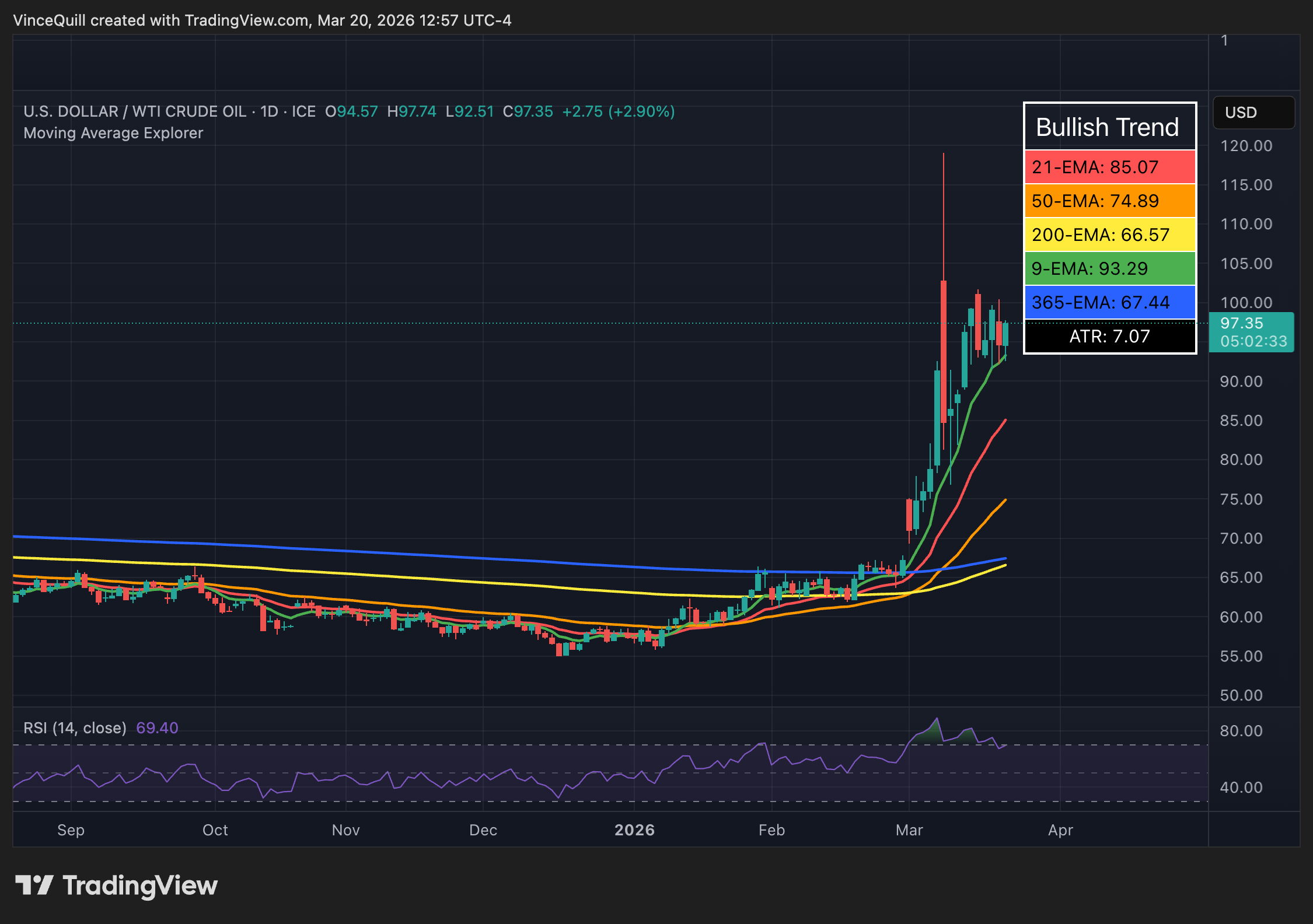 The price of West Texas Intermediate (WTI) crude has spiked since the start of the conflict, briefly surging to nearly $120 per barrel. Source:
TradingView
This environment could lead to stagflation, an economic scenario where inflation rises, while economic growth and employment fall, a “dreaded” situation, Puckrin said. He added:
“If oil stays above $100 throughout Q2 and into Q3, stagflation becomes a real problem for the Fed. In the 1970s, the S&P 500 went essentially nowhere in real terms for an entire decade once stagflation took hold.”
Markets might have a “rude awakening” to the war in the Middle East, Puckrin said, stressing that the longer the Strait of Hormuz, a waterway that 20% of the global oil supply passes through, remains closed, the economic effects will worsen.
“Even if the Strait of Hormuz were to open today, the disruption to the Gulf’s oil-producing infrastructure will take months to rebuild,” he said.
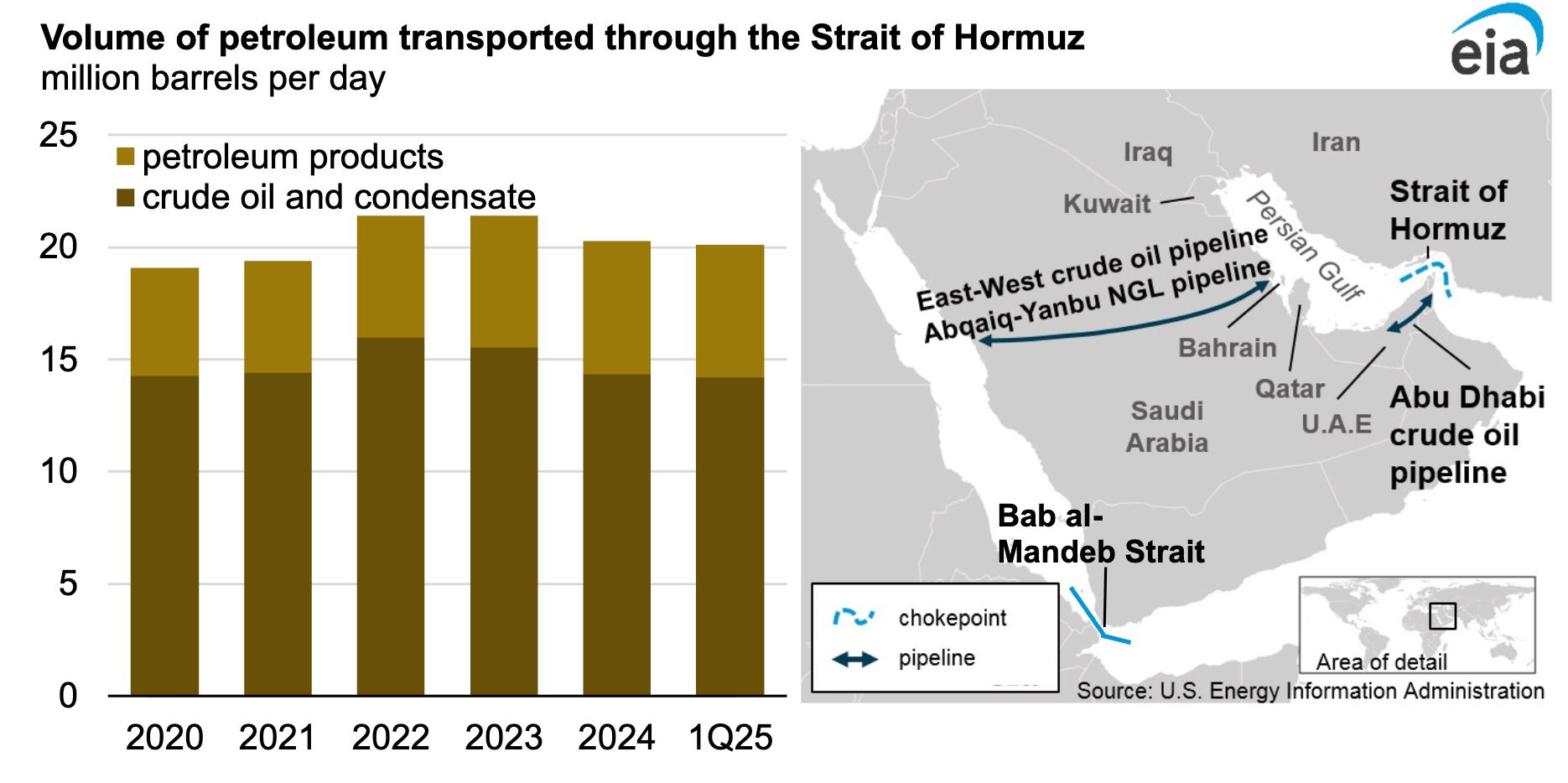 Annual volume of petroleum transported through the Strait of Hormuz between 2020 and Q1 of 2025. Source:
US Energy Information Administration
Energy is a critical input to all economic activity, and a rise in energy prices typically raises the price of all other goods and services.
Elevated inflation means interest rate cuts, which are stimulative to risk assets like crypto, will not materialize, and the Federal Reserve may raise rates to combat inflation, quashing any hopes of easing liquidity conditions to spur a crypto market rally.
Related: Bitcoin whales shift $100M+ as oil spike rattles markets
Federal Reserve chairman says Middle East war clouds the central bank’s forecasts
The Federal Open Market Committee (FOMC), the group that determines interest rate policy in the United States, held interest rates steady in March, leaving the Federal Funds rate between 3.5% and 3.75%.
Rate cut odds have all but vanished for the upcoming April FOMC meeting. Meanwhile, there’s a small but growing probability — aorund 12% — that the FOMC will raise rates next month, according to the Chicago Mercantile Exchange’s (CME) FedWatch tool.
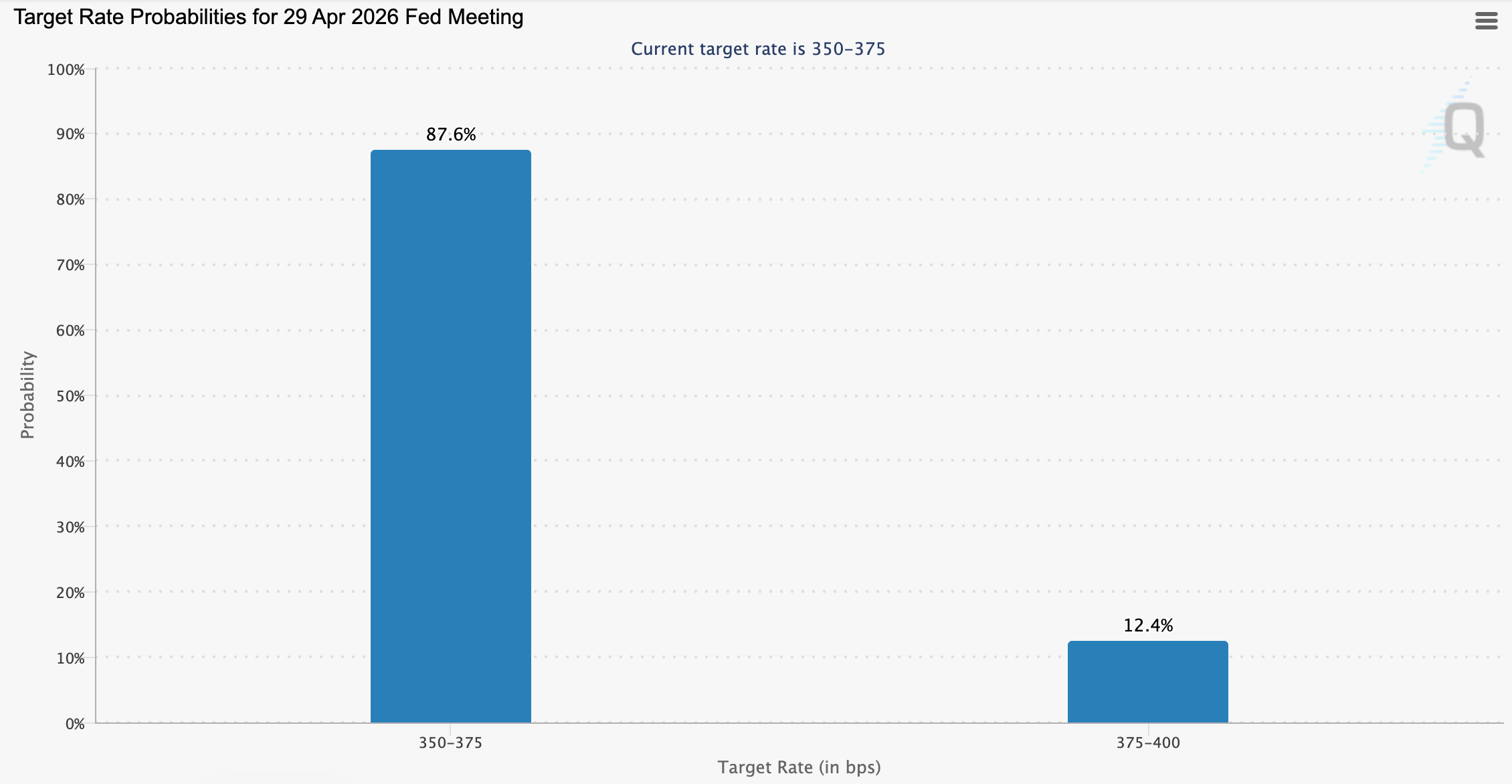 Target rate probabilities for the April 2026 FOMC meeting. Source:
CME Group
“The implications of events in the Middle East for the US economy are uncertain in the near term. Higher energy prices will push up overall inflation,” Federal Reserve Chairman Jerome Powell said at a press conference on Wednesday.
However, Powell clarified that it is still “too soon” to accurately gauge the scope and severity of the potential economic effects from the war and the disruption to the global energy infrastructure.
Magazine: Bitcoin is ‘funny internet money’ during a crisis: Tezos co-founder
Disclaimer: The content of this article solely reflects the author's opinion and does not represent the platform in any capacity. This article is not intended to serve as a reference for making investment decisions.
You may also like
Cross River Bank enters Bitcoin-backed lending with $250K loans

 VIPIndiscriminate Selling Strikes, Igniting the Market's Black Friday
1. Global markets were caught in a liquidity squeeze and indiscriminate selling this week. Apart from natural gas, which surged 16.04%, and the US Dollar Index (DXY), which edged up 0.39%, major global equity indices, precious metals, industrial metals, and cryptocurrencies all fell sharply. Silver and the Nasdaq 100 led the decline, plunging 16.24% and 10.43%, respectively. 2. Minutes from the Federal Reserve's Federal Open Market Committee (FOMC) meeting warned that AI infrastructure is pushing up near-term inflation and adding to market concentration risk. The warning triggered a wave of profit-taking in tech heavyweights. The Nasdaq Composite fell 5.28% on Friday, erasing its gains for the year, and NVIDIA declined for a seventh straight week. At the same time, AI giant Anthropic raised $81.3 billion in the largest IPO on record globally. This massive draw on capital, combined with selling pressure in the secondary market, quickly spread the cooling in risk appetite to high-beta crypto assets. 3. Fed officials dissented in favor of a 25-basis-point rate hike, and Governor Waller went further, warning that an outsized 50-basis-point hike may be needed in December to curb inflation. Tightening expectations drove DXY to a 19-month high of 103.97 and tipped markets into a dash-for-cash liquidity squeeze. Spot gold plunged to a 14-month low, and US equities, commodities, and cryptocurrencies fell in tandem as institutions systematically cut their cross-asset risk exposure. 4. Caught between the tech rout and a strong dollar, Bitcoin briefly fell below $60,000, and market-wide liquidations jumped to $1.33 billion in 24 hours. Institutional flows saw a watershed reversal. BlackRock's IBIT posted a net outflow of $541 million on Thursday, its largest single-day outflow since launch, and cumulative net outflows from US spot Bitcoin ETFs have neared $3.5 billion so far in November. Looking ahead, the market is set to search for a bottom in both sentiment and valuations in the near term. 5. Assets in focus: BTC, ANT, and NVDA

5 Best VPNs Worth Using for Crypto
Ripple ETF Investors Hold On, But XRP Buyers Go Missing
Crypto prices
More


