
Bitcoin's five-month losing streak may not end in March as $70K caps price

Bitcoin (BTC) is battling three key resistance levels at once, and the end of the bear market may depend on breaking them in March.
Key takeaways:
Bitcoin still faces three resistance levels on the weekly chart after its mid-week gains.
Bitcoin is down 14% in February, the fifth consecutive red month for BTC price.
Bitcoin bulls attempt three support flips
Data from showed the BTC/USD pair hovering around $67,720 after being rejected by the $70,000 psychological level.
An analysis of the current market structure points to a cluster of barriers that have merged into a resistance area, as shown in the chart below.
The 200-week exponential moving average (EMA) at $68,330, the old 2021 all-time high at $69,000, and the psychological level at $70,000 are capping the price rebound at the time of writing.
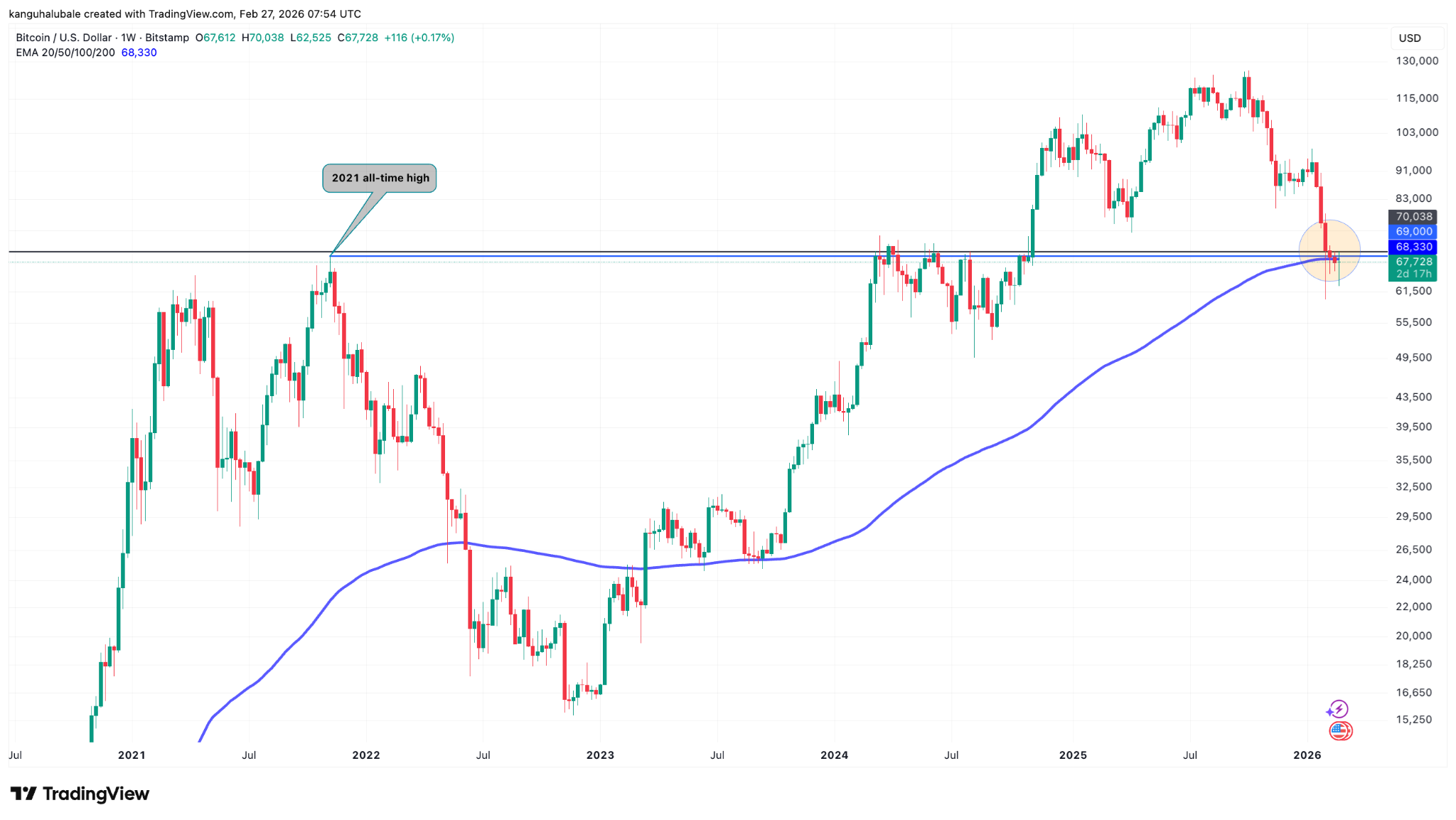 BTC/USD weekly chart. Source: Cointelegraph/
TradingView
BTC failed to reclaim any of these levels following its climb to $70,040 on Wednesday. Commenting, analyst Captain Faibik said that Bitcoin needs a weekly candlestick close above the 200-week EMA for the bulls to maintain momentum.
If this happens, “we can then expect a bounce back toward 80k in the coming days,” the analyst said in a recent post on X, adding:
“I think March is going to be a bullish month.”
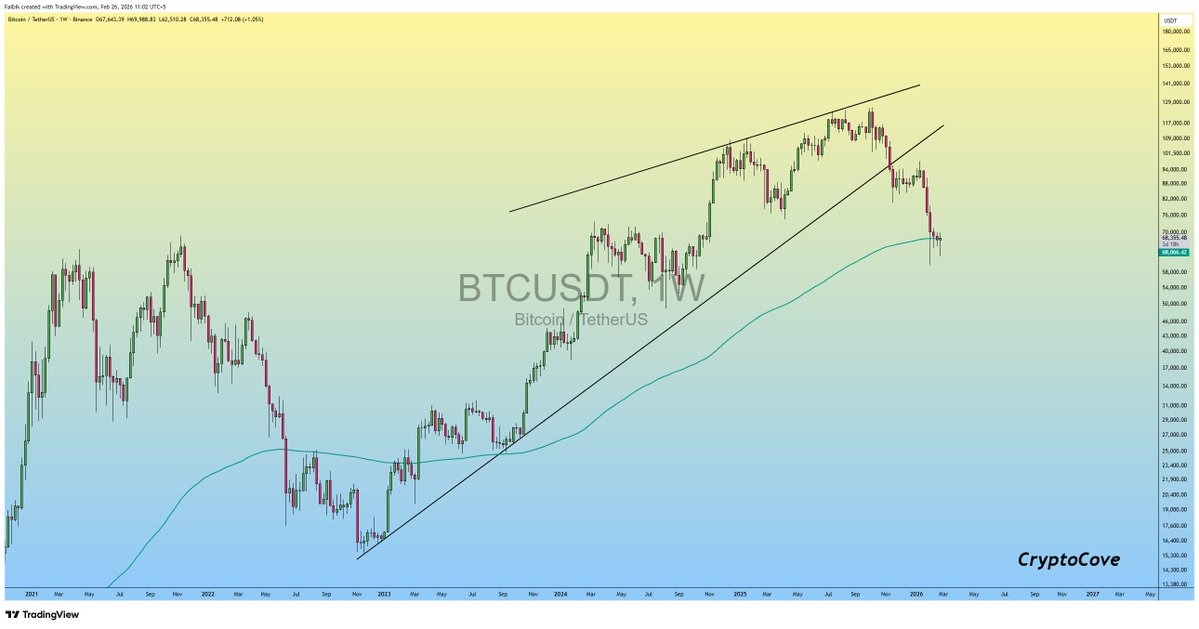 BTC/USD weekly chart. Source: Captain Faibik
As reported, the bear market may end if the BTC price breaks above the cost basis of the 18-24-month age band at $74,500.
Bitcoin heads for five straight months of losses
Historical price data from confirmed Bitcoin is facing its fifth consecutive red month, down 14% in February. The last time this happened was toward the end of 2018 at the depths of the bear market.
“Bitcoin is nearing a rare bearish streak,” Alex said in a recent post on X, adding:
“Last time in 2018 and 2019, the streak was followed by five strong green candles and a 4x rally.”
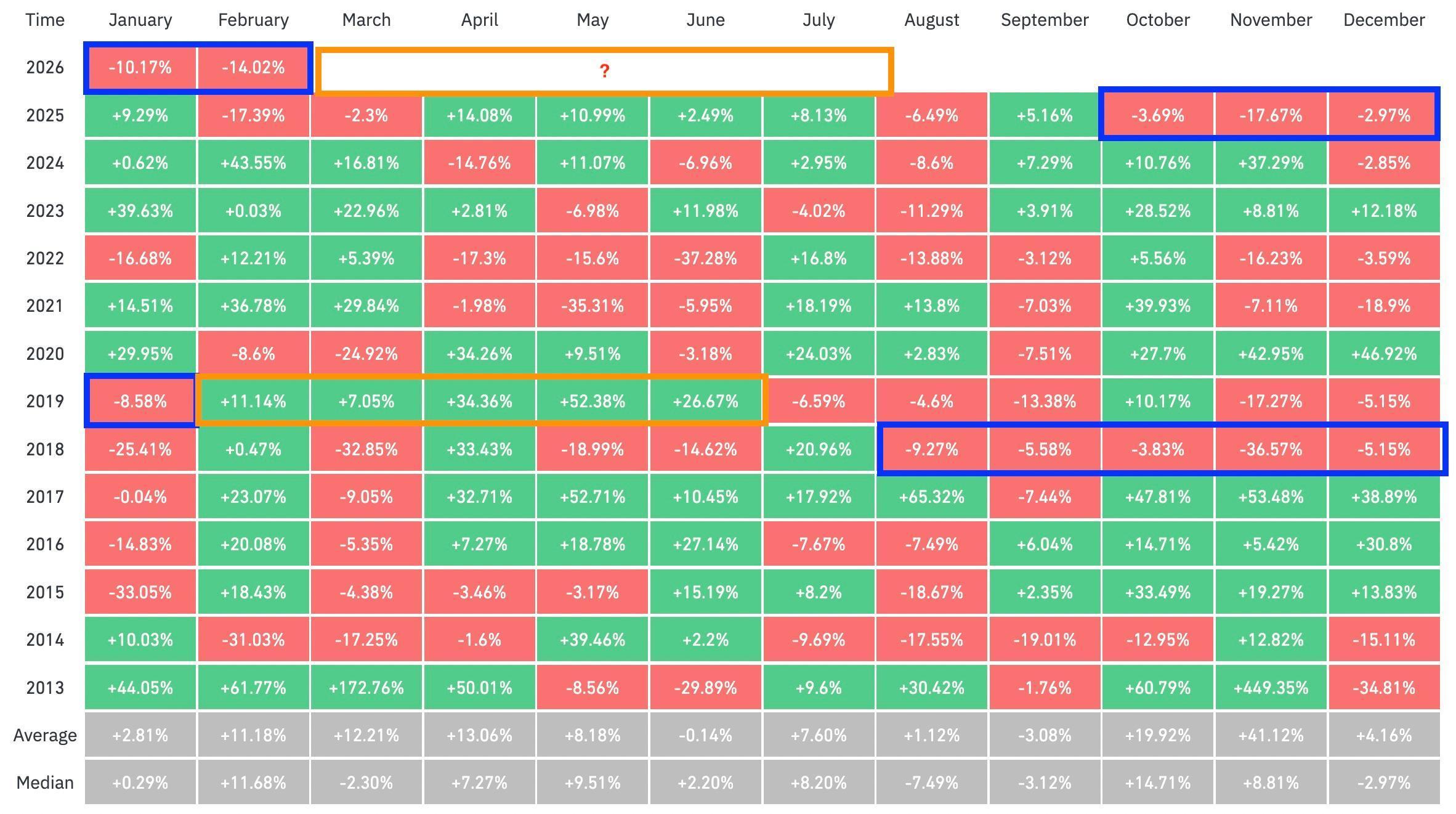 Bitcoin monthly percentage returns. Source: CoinGlass
After a 57% decline between August 2018 and January 2019, Bitcoin then recorded five consecutive green months, gaining 317% to $13,880 from $3,329.
If history repeats, the reversal could begin in April, particularly as selling pressure nears exhaustion levels.
Disclaimer: The content of this article solely reflects the author's opinion and does not represent the platform in any capacity. This article is not intended to serve as a reference for making investment decisions.
You may also like
RLUSD market cap drops 13% as XRP Ledger DEX volume jumps 40%

Amidst the semiconductor plunge, are AI "landlords" gaining favor? Blackstone Data Center REIT (BXDC.US) rises over 10% pre-market as long-term cash flow becomes the market focus
Blackstone Digital Infrastructure Trust has acquired a majority stake in two joint ventures established with Amazon Web Services for approximately $5 billion. BXDC will own 13 newly built powered buildings in two AWS data center campuses. AWS will lease back the entire portfolio of buildings, with an initial lease term of 12 years, extendable to 32 years.
"Boredom is Beauty"? BTIG: The Unusual Strength of Defensive Sectors Reminds People of the Eve of the 2000 Bubble Burst
In the past 30 days, the S&P 500 Consumer Staples sector outperformed the Technology sector by 33 percentage points, marking the largest monthly gap in nearly 25 years and echoing the defensive rotation characteristic seen before the bursting of the internet bubble in 2000. BTIG strategist Krinsky is optimistic about Consumer Staples and warns that Technology stocks and semiconductors still have room for further declines, with a strong US dollar potentially exacerbating liquidity pressures. However, there is still disagreement in the market on whether this rotation can persist, with the focus shifting to whether AI-related trades have entered a prolonged adjustment period.

Jensen Huang steps down, Nvidia (NVDA.US) money becomes "cautious": $500 billion may only be invested in major companies in the future
After Jensen Huang's departure, Nvidia's $500 billion AI financing platform is expected to continue, but may be paused in the early stages. The cost of new deals will rise, and funds may shift from emerging cloud providers to more established large-scale cloud companies.
Crypto prices
More


