
USANA's (NYSE:USNA) Q4 CY2025 Earnings Results: Revenue In Line With Expectations


Health and wellness products company USANA Health Sciences (NYSE:USNA)
USANA (USNA) Q4 CY2025 Highlights:
- Revenue: $226.2 million vs analyst estimates of $226 million (5.9% year-on-year growth, in line)
- Adjusted EPS: $0.60 vs analyst estimates of $0.41 (46.3% beat)
- Adjusted EBITDA: $28.47 million vs analyst estimates of $25.31 million (12.6% margin, 12.5% beat)
- Adjusted EPS guidance for the upcoming financial year 2026 is $2.12 at the midpoint, beating analyst estimates by 15.2%
- EBITDA guidance for the upcoming financial year 2026 is $105.3 million at the midpoint, in line with analyst expectations
- Operating Margin: 1.7%, down from 3.8% in the same quarter last year
- Market Capitalization: $382.1 million
“USANA delivered fourth quarter net sales in line with our preliminary results announced on January 12, 2026,” said Kevin Guest, Chairman and Chief Executive Officer.
Company Overview
Going to market with a direct selling model rather than through traditional retailers, USANA Health Sciences (NYSE:USNA) manufactures and sells nutritional, personal care, and skincare products.
Revenue Growth
Examining a company’s long-term performance can provide clues about its quality. Any business can have short-term success, but a top-tier one grows for years.
With $925.3 million in revenue over the past 12 months, USANA is a small consumer staples company, which sometimes brings disadvantages compared to larger competitors benefiting from economies of scale and negotiating leverage with retailers.
As you can see below, USANA’s demand was weak over the last three years. Its sales fell by 2.5% annually, a poor baseline for our analysis.
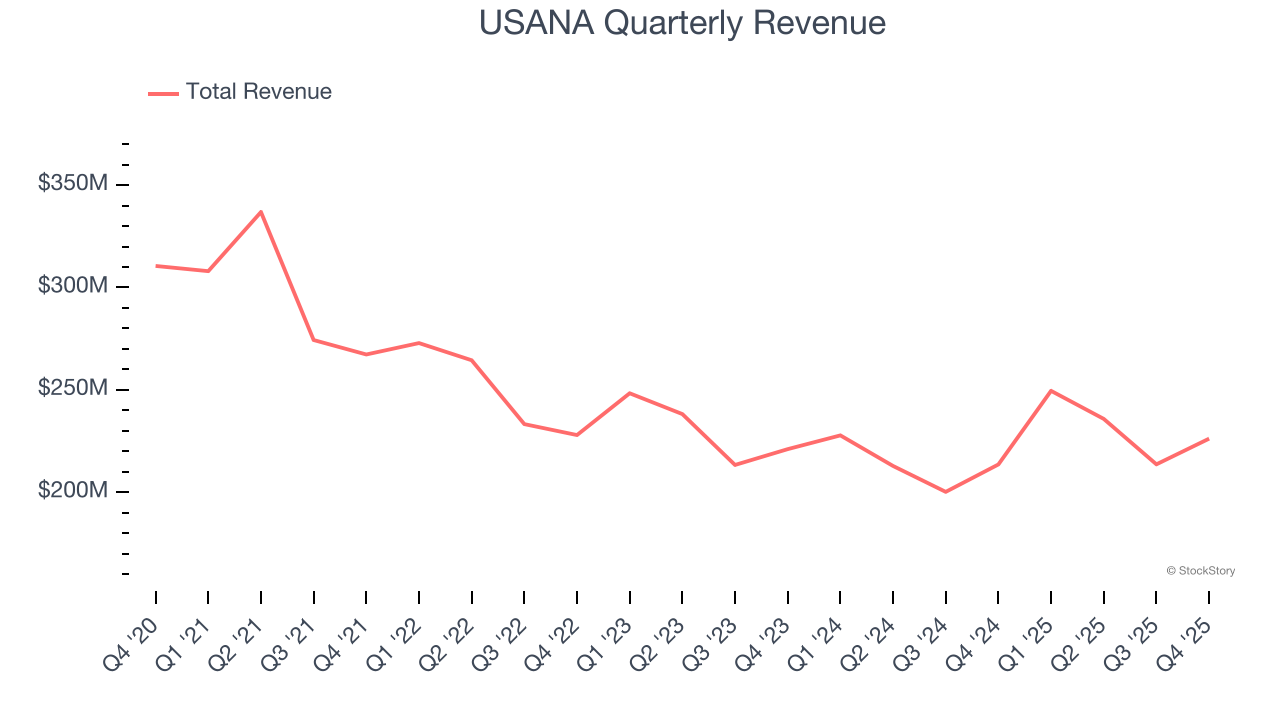
This quarter, USANA grew its revenue by 5.9% year on year, and its $226.2 million of revenue was in line with Wall Street’s estimates.
Looking ahead, sell-side analysts expect revenue to grow 3.3% over the next 12 months. While this projection indicates its newer products will catalyze better top-line performance, it is still below the sector average.
Software is eating the world and there is virtually no industry left that has been untouched by it. That drives increasing demand for tools helping software developers do their jobs, whether it be monitoring critical cloud infrastructure, integrating audio and video functionality, or ensuring smooth content streaming.
Cash Is King
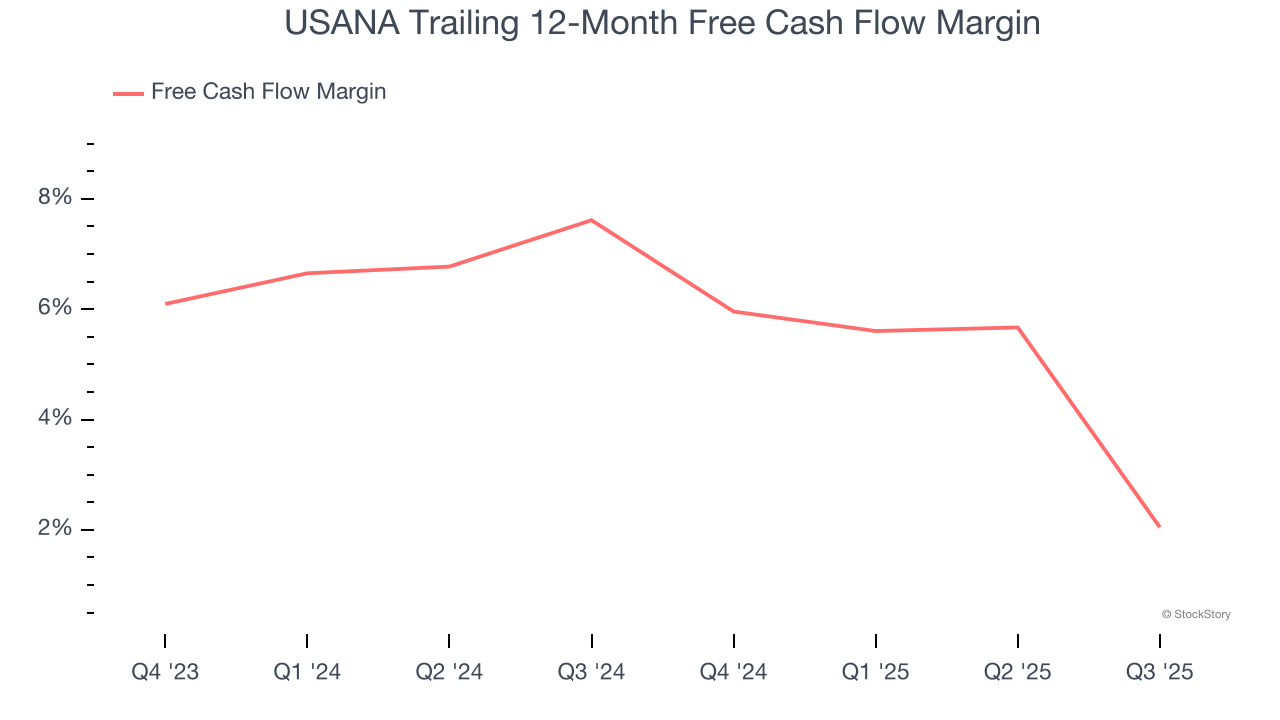
Although earnings are undoubtedly valuable for assessing company performance, we believe cash is king because you can’t use accounting profits to pay the bills.
USANA has shown mediocre cash profitability over the last two years, giving the company limited opportunities to return capital to shareholders. Its free cash flow margin averaged 4.2%, subpar for a consumer staples business.
Key Takeaways from USANA’s Q4 Results
It was good to see USANA beat analysts’ EPS expectations this quarter. We were also excited its EBITDA outperformed Wall Street’s estimates by a wide margin. Overall, we think this was a decent quarter with some key metrics above expectations. The stock remained flat at $20.65 immediately after reporting.
Indeed, USANA had a rock-solid quarterly earnings result, but is this stock a good investment here? If you’re making that decision, you should consider the bigger picture of valuation, business qualities, as well as the latest earnings.
Disclaimer: The content of this article solely reflects the author's opinion and does not represent the platform in any capacity. This article is not intended to serve as a reference for making investment decisions.
You may also like
US PPI report to test Bitcoin, gold and Nasdaq as December rate hike looms
Nvidia falls to its lowest valuation in 14 years! "Super bull" Tom Lee calls for bottom fishing, retail investors are buying more as it drops, but Wall Street is divided
After the market opened on Thursday, retail investors went against the trend and bought up Nvidia, with net purchases reaching $111 million in just half an hour, setting a record for the same period. Investors such as Tom Lee have publicly supported the company, with institutions optimistic about strong order backlogs extending to 2028, robust revenue growth, and opportunities created by declining valuations. Meanwhile, institutions like Bernstein and Goldman Sachs have become more cautious about Nvidia's outlook, with concerns focusing on management succession and technological leadership following Jensen Huang's departure.
Jane Street boosts Fidelity Bitcoin ETF stake 8x in Q3, trims BlackRock IBIT

From SpaceX to Anthropic, the market has new strategies for dealing with tech giants' IPOs
The market's response strategies to major listings are currently centered around "index inclusion expectations": the new regulations allow mega IPOs to be included in the six major indices within 15 days, triggering concentrated buying by passive funds. Investors are positioning themselves in advance and using options to hedge and amplify buying power. However, Anthropic has a free float of only about 6%; shares available for sale by employees on the first day and privately placed shares with no lock-up period may create supply pressure. On the other hand, index arbitrageurs are facing a rare opportunity.

Crypto prices
More


