
Revealing Hidden Value in Industrial Properties After Xerox in Webster, NY
- Webster , NY, revitalizes post-Xerox industrial zones through strategic rezoning and $9.8M FAST NY infrastructure grants. - Reimagine Webster plan transfers road control and designates Brownfield Opportunity Areas to unlock state funding for redevelopment. - Shovel-ready infrastructure and mixed-use zoning attract advanced manufacturers, slashing vacancy rates and boosting property values. - Policy-driven revitalization creates scalable investment opportunities in semiconductors , logistics, and clean en
Webster, NY: A New Frontier for Industrial Investment
Webster, New York, is rapidly gaining attention as a prime location for industrial investment, following significant changes at the former Xerox site. Through targeted land rezoning and substantial infrastructure funding, the area is being reinvented as a center for advanced manufacturing and logistics. This overview examines the key developments driving Webster’s transformation and the resulting opportunities for investors.
Transformative Rezoning: Laying the Groundwork for Growth
In 2024, the completion of the Reimagine Webster Master Plan marked a turning point for the region north of Route 104, which includes parts of the old Xerox campus. By designating this area as a Brownfield Opportunity Area, local officials secured access to state redevelopment funds, addressing the challenges of underused industrial properties. A vital aspect of this initiative was the transfer of important roadways—such as Orchard Street, Panama Road, and Mitcheldean Drive—from Xerox to the village, improving connectivity and paving the way for the conversion of brownfield sites into state-of-the-art industrial facilities.
Additionally, the Webster Forward initiative was awarded $4.5 million in state grants to boost community investment, aligning zoning changes with broader economic development strategies. These coordinated efforts are unlocking the potential of former industrial land, setting the stage for long-term, sustainable expansion.
Infrastructure Funding: Accelerating Site Readiness
Infrastructure improvements are at the heart of Webster’s industrial resurgence. In 2025, a $9.8 million FAST NY Shovel-Ready Grant was allocated to redevelop a 300-acre brownfield that once belonged to Xerox, preparing it for advanced manufacturing operations. The grant is financing essential upgrades, including new roads, enhanced sanitary sewer systems, and comprehensive electrical planning, ensuring the site is immediately available for new development.
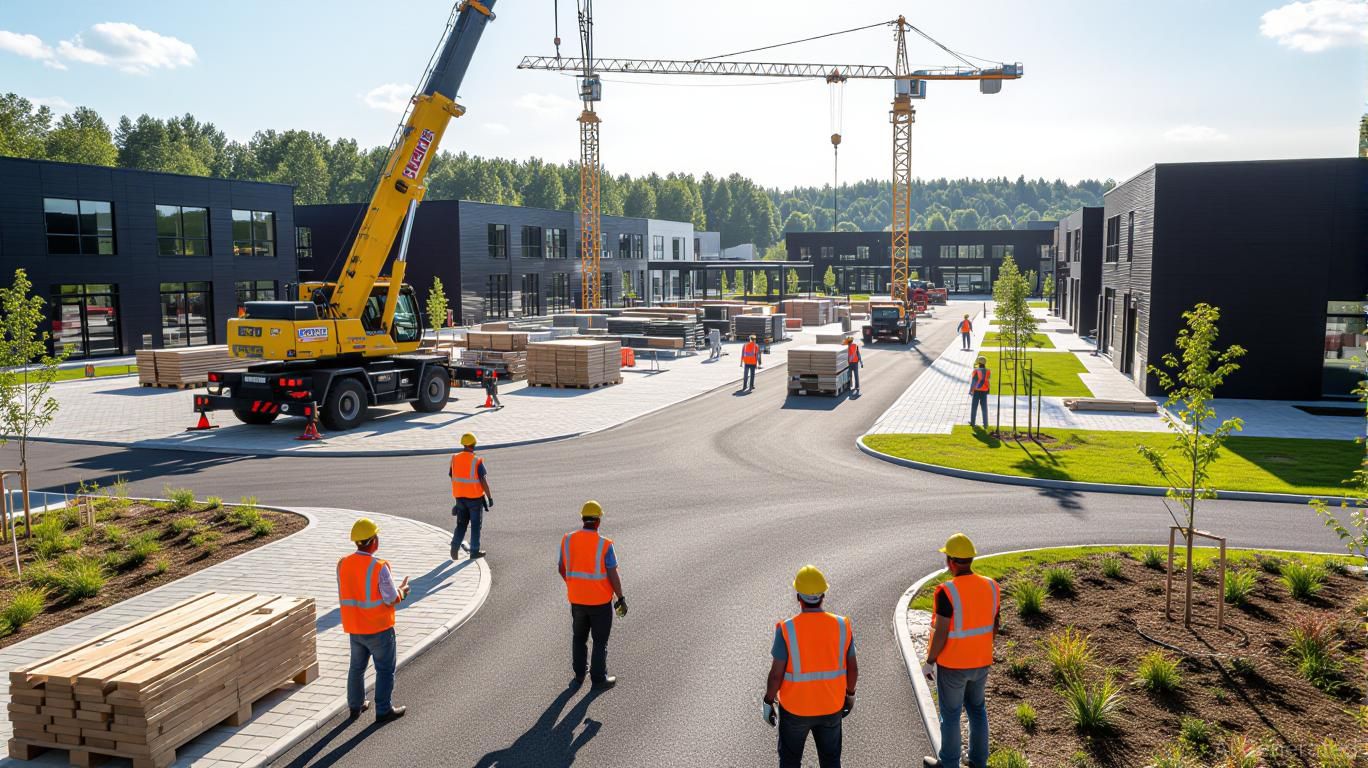
The FAST NY program, managed by the New York State Department of Economic Development, aims to spur economic growth by making industrial sites ready for immediate investment. By streamlining development processes and lowering costs, these grants attract major employers and technology manufacturers looking for efficient, scalable locations. For investors, this level of infrastructure preparedness reduces uncertainty and shortens the path to returns, making Webster a standout choice in the industrial real estate market.
Rezoning and Infrastructure: Driving Market Momentum
The combined impact of new zoning policies and infrastructure investment has significantly boosted Webster’s industrial sector. By 2025, the area has seen a sharp decline in industrial vacancy rates and a notable rise in property values, signaling robust demand for upgraded facilities. The synergy between simplified land use regulations and state-supported infrastructure has created a positive feedback loop: easier access to funding lowers barriers for development, which attracts private capital and stimulates further market activity.
One notable outcome is the creation of flexible, mixed-use industrial zones on former Xerox properties, supporting both manufacturing and logistics. This adaptability meets the needs of modern supply chains, especially in industries like semiconductors and renewable energy, where access to transportation and skilled workers is essential.
Outlook: A Promising Landscape for Investors
Webster’s industrial real estate sector demonstrates how thoughtful rezoning and targeted infrastructure grants can revitalize underused areas. By harnessing state resources and forward-thinking land use strategies, the village has become a model for post-industrial renewal. Investors now have a rare chance to tap into undervalued assets while supporting the region’s economic evolution.
As the Reimagine Webster plan advances and FAST NY-funded projects are completed, Webster is set to become a leading example of how communities can transform legacy industrial sites into thriving centers of innovation and resilience.
Disclaimer: The content of this article solely reflects the author's opinion and does not represent the platform in any capacity. This article is not intended to serve as a reference for making investment decisions.
You may also like
Cross River Bank enters Bitcoin-backed lending with $250K loans

 VIPIndiscriminate Selling Strikes, Igniting the Market's Black Friday
1. Global markets were caught in a liquidity squeeze and indiscriminate selling this week. Apart from natural gas, which surged 16.04%, and the US Dollar Index (DXY), which edged up 0.39%, major global equity indices, precious metals, industrial metals, and cryptocurrencies all fell sharply. Silver and the Nasdaq 100 led the decline, plunging 16.24% and 10.43%, respectively. 2. Minutes from the Federal Reserve's Federal Open Market Committee (FOMC) meeting warned that AI infrastructure is pushing up near-term inflation and adding to market concentration risk. The warning triggered a wave of profit-taking in tech heavyweights. The Nasdaq Composite fell 5.28% on Friday, erasing its gains for the year, and NVIDIA declined for a seventh straight week. At the same time, AI giant Anthropic raised $81.3 billion in the largest IPO on record globally. This massive draw on capital, combined with selling pressure in the secondary market, quickly spread the cooling in risk appetite to high-beta crypto assets. 3. Fed officials dissented in favor of a 25-basis-point rate hike, and Governor Waller went further, warning that an outsized 50-basis-point hike may be needed in December to curb inflation. Tightening expectations drove DXY to a 19-month high of 103.97 and tipped markets into a dash-for-cash liquidity squeeze. Spot gold plunged to a 14-month low, and US equities, commodities, and cryptocurrencies fell in tandem as institutions systematically cut their cross-asset risk exposure. 4. Caught between the tech rout and a strong dollar, Bitcoin briefly fell below $60,000, and market-wide liquidations jumped to $1.33 billion in 24 hours. Institutional flows saw a watershed reversal. BlackRock's IBIT posted a net outflow of $541 million on Thursday, its largest single-day outflow since launch, and cumulative net outflows from US spot Bitcoin ETFs have neared $3.5 billion so far in November. Looking ahead, the market is set to search for a bottom in both sentiment and valuations in the near term. 5. Assets in focus: BTC, ANT, and NVDA

5 Best VPNs Worth Using for Crypto
Ripple ETF Investors Hold On, But XRP Buyers Go Missing
Crypto prices
More


