
The Crypto Crash Orchestrated by the Federal Reserve: With $1.82 Trillion Evaporated, Is the Real Rally Only Just Beginning?

In the past week, the crypto market experienced a cold shower-like plunge. In just one day, $1.7 billions in funds were liquidated, catching many investors off guard. But if you think this was just a random market fluctuation, you may be underestimating the tactics of the Federal Reserve and Wall Street.
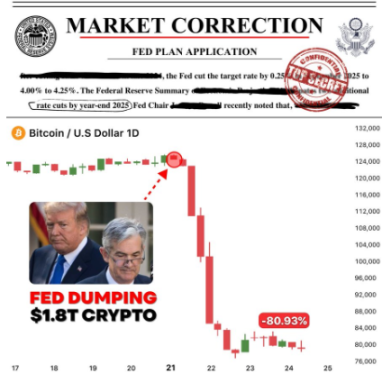
1. Profit Taking After Good News, Plunge Lurking
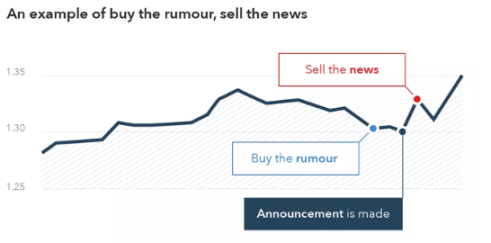
The recent rally was almost entirely built on market expectations of a Federal Reserve rate cut. The media and social platforms kept amplifying this sentiment, creating the illusion of a “one-way up” market. As a result, after the Federal Reserve meeting, the market chose to “sell the news,” triggering large-scale liquidations.
This is not the first time—this is the classic “buy the rumor, sell the news” market pattern.
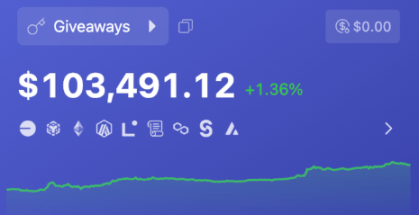
2. Market Makers Manipulation: Plunge as a Deeper Liquidation Tool
In addition to the Federal Reserve’s statements, the actions of market makers and major platforms also amplified market volatility. For example, large exchanges may create long and short traps on their own platforms, selling off while liquidating retail investors’ positions. Such scenarios have been common in several past bull market cycles.
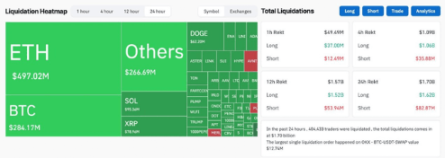
3. Turning Point in Market Sentiment
Before the plunge, there were already signs of overheating in the market:
Perpetual contracts were excessively popular
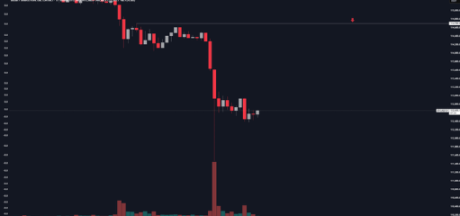
Certain tokens (such as $ASTER) surged too quickly
Social platforms were filled with “new highs keep coming” sentiment
This is the typical market rhythm of local frenzy → plunge and liquidation.
4. The Medium-Term Trend Remains Upward
Although the short-term plunge caused panic, the mid- to long-term logic has not changed:
The U.S. economy remains resilient
There are still expectations of 1–2 rate cuts in the coming months
Global crypto asset adoption continues to rise
Funds are still steadily flowing into the crypto market
These factors together lay the foundation for the next round of gains. Historical data shows that October (Uptober) and November are the strongest months for the crypto market:
Average increase in October: 21.89%
Average increase in November: 46.02%
Looking back at 2021, it was the massive rate cuts that triggered a 21-fold surge in bitcoin. A similar logic may play out again in 2025.
Conclusion
This round of crypto market plunge is not the end of the bull market, but more like a carefully orchestrated liquidation and shakeout. Whether it’s the Federal Reserve’s policy guidance or short-term manipulation by market makers, the goal is to clear out weak hands and pave the way for the next rally.
Investors need to remember:
Short-term declines ≠ trend reversal
Patience and position management are key
With rate cuts, a weakening dollar, and the continued advance of global adoption, October to November may once again become an acceleration phase for bitcoin and crypto assets. True returns often belong to those who can remain calm amid chaos.
Disclaimer: The content of this article solely reflects the author's opinion and does not represent the platform in any capacity. This article is not intended to serve as a reference for making investment decisions.
You may also like
The script at the end of 2018: The Federal Reserve continued to raise interest rates, US stocks plunged 20% from the September highs, forcing the Federal Reserve to "pivot" in January.
Goldman Sachs' head of trading believes the current US stock market is repeating the scenario of late 2018, with monetary tightening and equity market pressure. The Goldman Sachs Financial Conditions Index has tightened by about 8 points in two weeks, reaching the highest level in a year. The selloff has broadened from tech stocks to defensive sectors. Gold and equities are declining simultaneously, possibly indicating investors are selling assets to raise cash, making gold a key indicator for observing liquidity stress.

Goldman Sachs Trader “Revisits the 2018 Playbook”: Still Clearly Remembers “On December 24th, Clients Asked Why the Market Dropped So Much—And I Had No Idea”
Brian Garrett pointed out that the current adjustment in the US stock market is similar to the sharp decline in Q4 2018: the S&P 500 has already experienced 42% of the corresponding drop, and the VIX is approaching its peak just before Christmas. If history repeats itself, the bottom of this cycle may appear in January next year. However, the credit market and Federal Reserve policy have yet to provide clear signals of a bottom.
Anthropic (ANT.US) nearly “broke issue price,” but Claude knocks on the doors of “the highest peak in mathematics”! 17 million lines of Lean code used to write a candidate proof for the Riemann Hypothesis
On November 20th, Eastern Time, on its second day of trading, Anthropic's intraday price dropped to a low of $83.05, just 5 cents above the offering price of $83, and finally closed at $88.91, a decline of 8.50%. On the same day, the company's mathematician Levant Alperg announced on his personal website that he and Claude had found a candidate proof for the Riemann hypothesis, which has puzzled the mathematics community for 167 years, and released about 17 million lines of Lean formalized code.

As US stocks plummet, the parent company of GTA 6 rises against the market! First-day sales hit a record $3.79 billion; Wall Street shifts focus to next-generation GTA Online.
According to Rentrak data, the global box office of "Grand Theft Auto VI" has also surpassed that of "Avengers: Endgame," the highest-grossing film of all time, which has a global box office of approximately $2.94 billion.

Crypto prices
More


