
Jimmy Song slams Bitcoin Core devs for 'fiat' mentality on OP_Return

Jimmy Song, a Bitcoin
BTC$114,510developer and advocate, slammed the decision by Bitcoin Core developers to remove the OP_Return limit for non-monetary data embedded on the Bitcoin blockchain in the upcoming Bitcoin Core 30 upgrade, calling it “fiat” mentality.
Song accused the Core developers of deflecting user concerns about removing the OP_Return limit , which is currently 80 bytes in size, and ignoring the significant pushback from the Bitcoin community and node runners. He also said :
“The idea that spam is difficult to define, and because of this ambiguity, we shouldn't be making any distinctions at all in the software, is a time-wasting argument from fiat politics where you pretend not to know the obvious, so the actual debate can never get off the ground — the non-monetary uses of Bitcoin are spam.
You can argue whether that's something desirable or not, but saying you can't define it is a stalling tactic meant to avoid the real argument about actual impact — particularly, the long-term impact of this change,” Song continued.
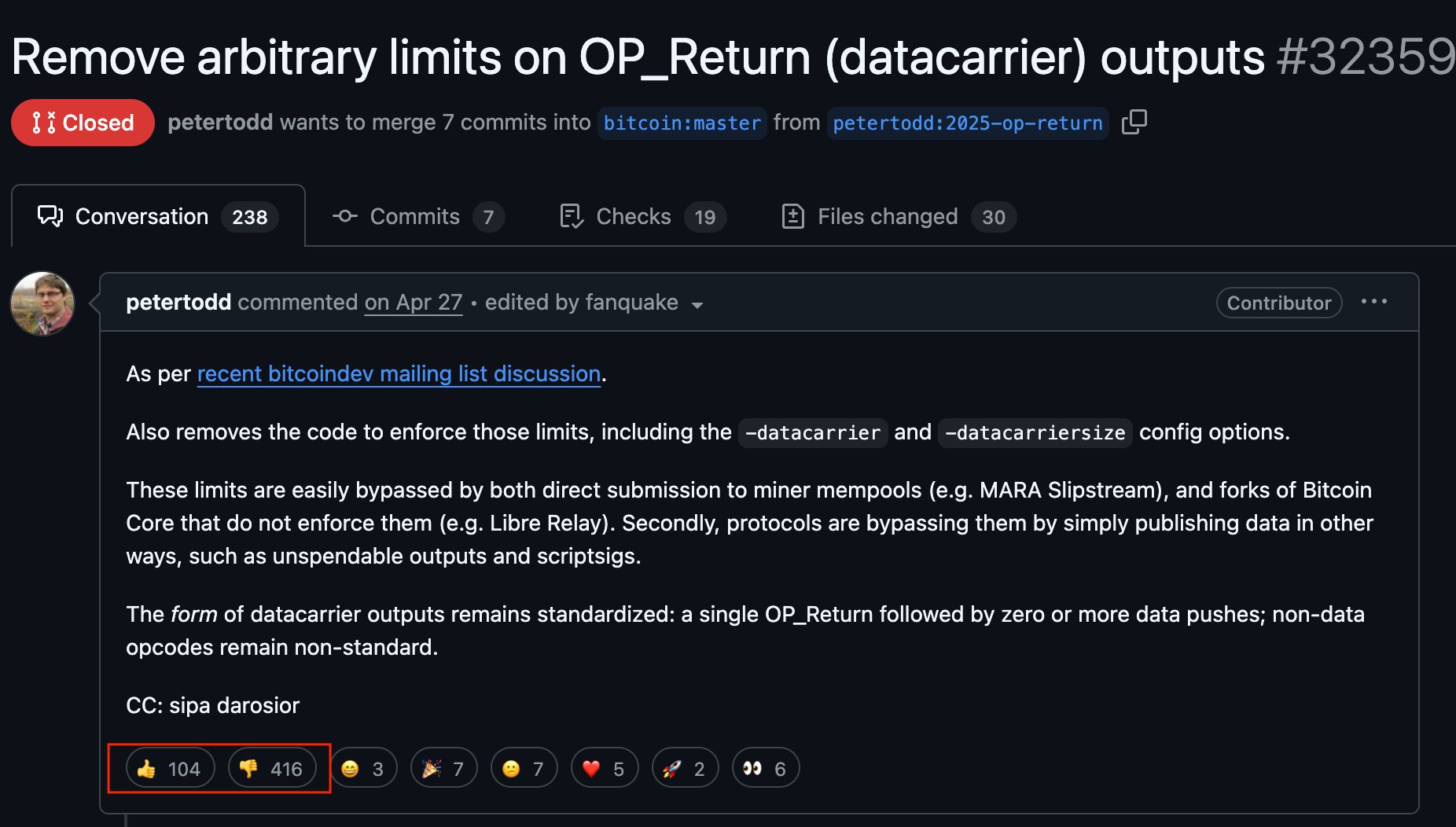
The pull request for removing the OP_Return limit was highly unpopular with the Bitcoin community, but was pushed through regardless. Source: GitHub
The OP_Return debate has raged on for nearly six months, and is reminiscent of the Bitcoin block size wars that took place between 2015 and 2017, which eventually resulted in a hard fork of the Bitcoin protocol that spawned Bitcoin Cash
BCH$587.60, leading some in the Bitcoin community to speculate if the OP_Return wars will result in a similar split.
Node runners vote with their feet in historic exodus to Bitcoin Knots
The decision by Bitcoin Core devs to unilaterally blow open the OP_Return data limit has left the Bitcoin community divided and driven record numbers of Bitcoin node runners to Bitcoin Knots, an alternative implementation of the Bitcoin node software.
This surge in nodes running Bitcoin Knots , which now account for about 20% of the network, compared to about 1% in 2024, represents a near-vertical leap in just nine months.
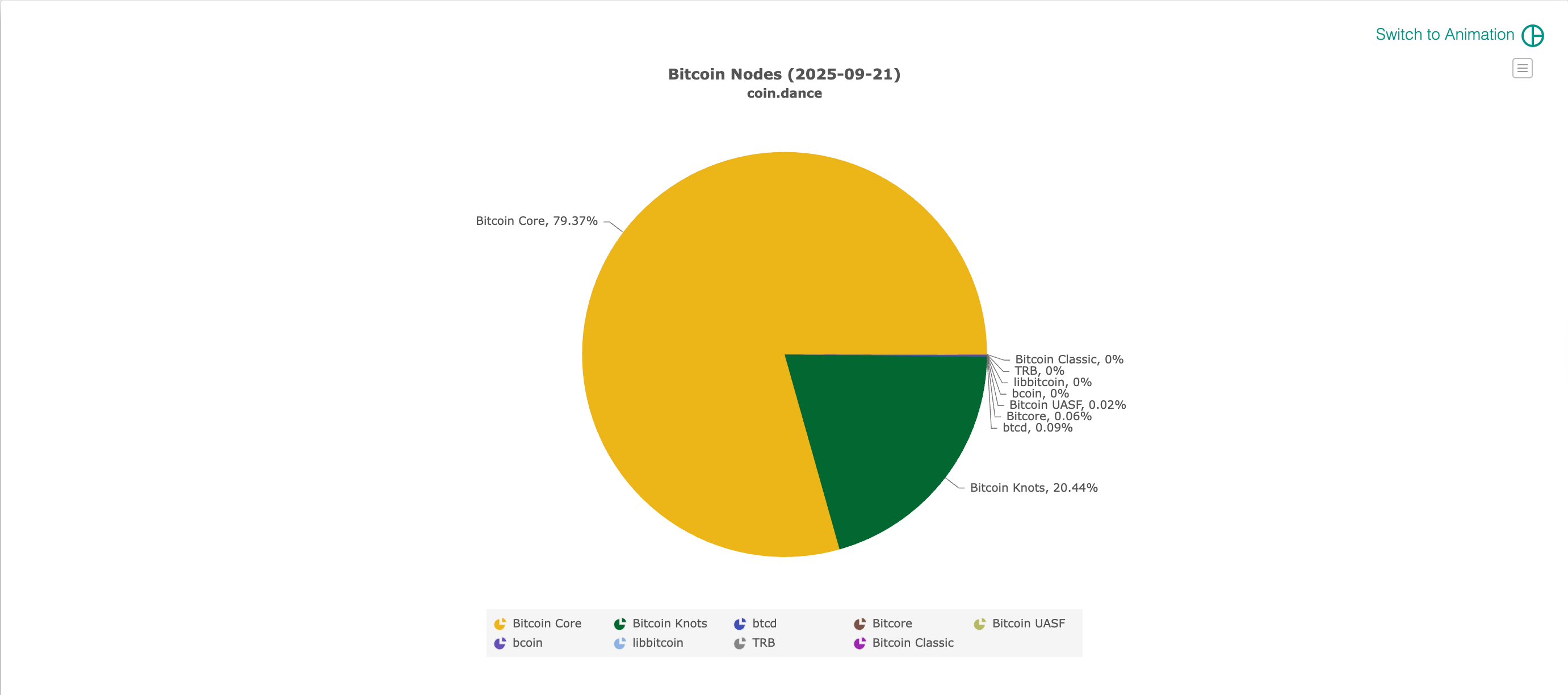
A breakdown of the different node software implementations on the Bitcoin network. Source: Coin Dance
Knots allows node runners to enforce strict data size limits, which proponents argue is necessary to preserve the decentralization of the Bitcoin protocol.
The Bitcoin ledger has generated about 680 gigabytes of data since the inception of the decentralized protocol in 2009, thanks to the simple architecture of Bitcoin and strict data limits.
Bitcoin’s low data storage requirements allow anyone to run a node on retail computer hardware for as little as $300, democratizing access and ensuring maximum decentralization.
For comparison, higher-throughput blockchain networks and smart contract platforms, which generate far more data, can cost tens of thousands of dollars to run and require specialized commercial hardware, meaning only wealthy investors and large corporations can run nodes and enforce the consensus rules of those protocols.
Robust hardware requirements translate into increased centralization of a blockchain protocol and a heightened risk that a few nodes can collude to alter the consensus rules or reverse transactions.
Disclaimer: The content of this article solely reflects the author's opinion and does not represent the platform in any capacity. This article is not intended to serve as a reference for making investment decisions.
You may also like
Report: Samsung's storage capacity is nearly sold out for the next three years, clients rush to secure long-term contracts until 2031
According to media reports, most of Samsung Electronics' memory manufacturing capacity for the period from 2027 to 2029 has already been secured through contracts. Some customers are even seeking to extend long-term supply agreements until 2031. Currently, leading memory manufacturers can only meet about 60% to 70% of client demand, and the supply shortage may intensify further in 2027.

Anthropic commits to about $900 billion in computing power expenditure; bond market expects its bonds to be junk-rated
Despite Anthropic raising over $100 billion in its public offering and reaching a market capitalization of $1.18 trillion, the company is widely expected by the debt market to be rated as BB-level "junk bonds" due to its lack of profitability and approximately $900 billion in massive computing power expenditure commitments. Amid pressure on tech giants in the debt market and chip companies planning to reduce loan guarantees, Anthropic will still need to rely on structured financing in the short term, facing about a three-year window to strive for an investment-grade rating.
JPMorgan Trading Desk Abandons Tactical Bullish Stance on S&P 500: Rebound May Occur, Bottom Not Yet Reached
J.P. Morgan's trading division has shifted from a tactical bullish stance to a cautious one, expecting stock market volatility in the coming weeks, but emphasizes that market fundamentals—from the economy to earnings—remain solid.

AI sell-off brings a "fat pitch"? Hedge funds "give up" and clear positions, Morgan Stanley loudly calls to buy
Hedge funds have shifted to a net bearish stance on momentum stocks, abandoning bets for the first time since April 2025 that recently outperforming stocks will continue to rise.

Crypto prices
More


