
Get Your Bitcoin and Ethereum via PayPal: P2P Payments Have Just Entered the Cryptocurrency Space

PayPal has launched peer-to-peer payments for Bitcoin and Ethereum, allowing users to send and receive cryptocurrencies directly through its platform more easily than before.
PayPal Introduces Bitcoin and Ethereum to Peer-to-Peer Payments
PayPal is further deepening its involvement in the cryptocurrency sector. The payments giant has confirmed that Bitcoin (BTC) and Ethereum (ETH) are now part of its peer-to-peer (P2P) payment system. This means that millions of users will soon be able to send and receive cryptocurrencies directly via PayPal and Venmo, with plans already in place to expand to global markets.
This upgrade demonstrates PayPal’s ambition to go beyond traditional finance, positioning itself as a global digital wallet that seamlessly connects fiat and cryptocurrencies.
Update Details
- Cryptocurrency Support: Bitcoin (BTC), Ethereum (ETH), and PayPal’s PYUSD stablecoin.
- Platforms: Available on PayPal and Venmo, and supports other compatible digital wallets.
- Launch: Initially launching in the United States, with subsequent expansion to countries such as the United Kingdom and Italy.
- Tax Clarity: Personal transfers between friends and family remain exempt from IRS 1099-K reporting, meaning gifts or reimbursements will not be considered taxable income.
Why This Matters for Cryptocurrency Adoption
PayPal’s move could accelerate the mass adoption of digital assets:
- Mainstream Access: Millions of users can instantly access cryptocurrencies without external exchanges or wallets.
- Payment Convenience: Cryptocurrencies can now be sent as easily as fiat, reducing transfer friction.
- Merchant Potential: Combined with PayPal’s “Pay with Crypto” feature, merchants can accept payments in BTC, ETH, or PYUSD, reducing fees and delays.
- Network Effect: Everyday use of cryptocurrencies for payments strengthens the role of Bitcoin and Ethereum in global finance.
Impact on Bitcoin, Ethereum, and PYUSD
Bitcoin will gain new momentum as a borderless asset transfer, while Ethereum reinforces its image as a mainstream financial platform. PayPal’s PYUSD stablecoin will also benefit, positioning itself as the default stablecoin within the PayPal ecosystem.
This development may put competitive pressure on other fintech companies and even traditional banks, prompting them to integrate cryptocurrencies more rapidly.
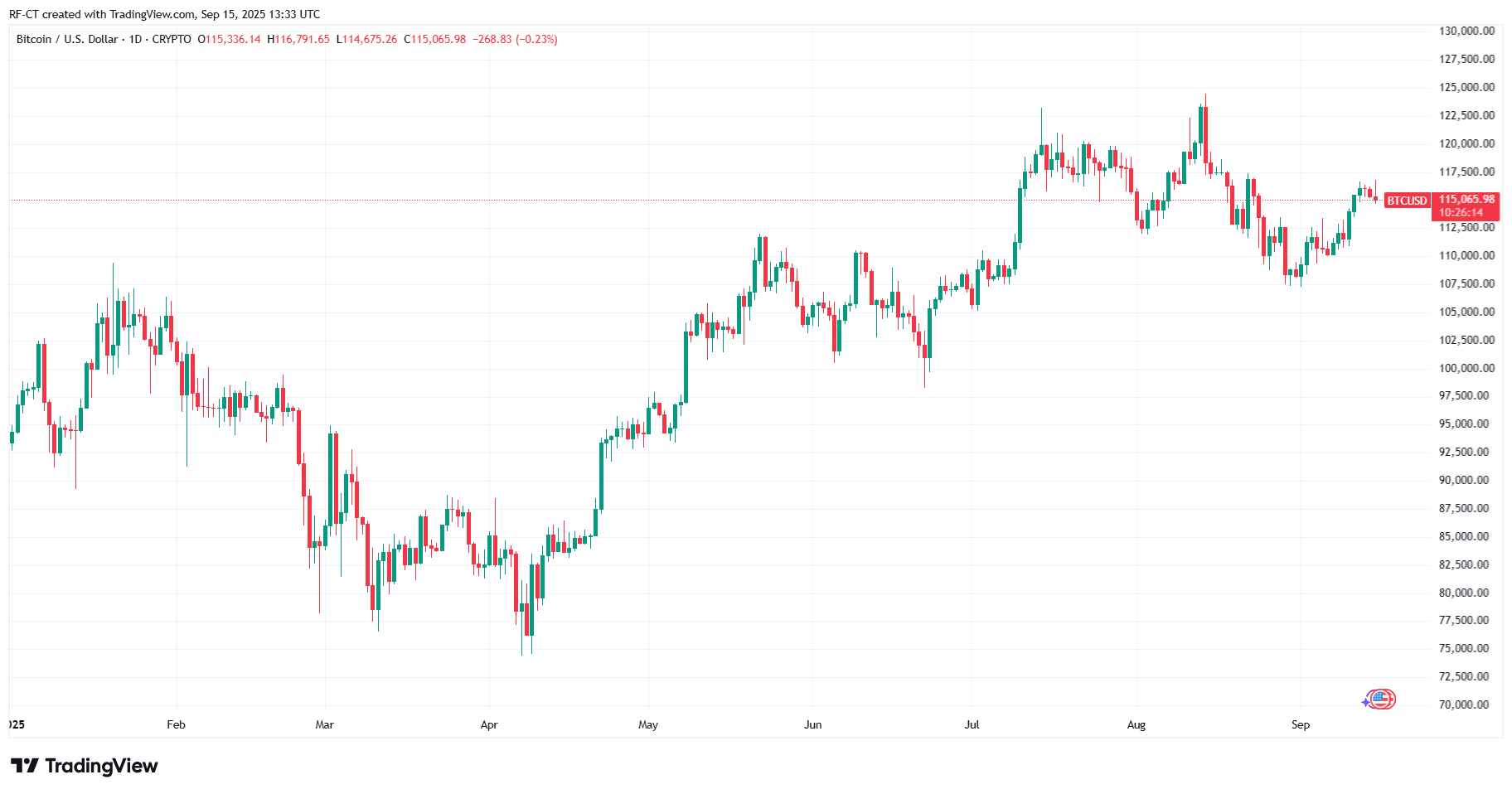 By TradingView - BTCUSD_2025-09-15 (YTD)
Outlook
Integrating Bitcoin and Ethereum into PayPal’s P2P payments is more than just another update—it is a milestone in global cryptocurrency adoption. By bringing digital assets into everyday money transfers, PayPal is solidifying its role as a bridge between the old financial system and the new era of blockchain-powered payments.
Disclaimer: The content of this article solely reflects the author's opinion and does not represent the platform in any capacity. This article is not intended to serve as a reference for making investment decisions.
You may also like
Trump Opposes Global AI Regulation, While the US Tightens Overseas Computing Power Permits! Nvidia and Southeast Asian Data Centers Face Divergence
President Donald Trump warned that any “strict” regulation of artificial intelligence would “stifle” its development. Meanwhile, the United States has imposed new restrictions on access to advanced artificial intelligence technology.

Indian Rupee hits roadblock after rally amid fears of back-to-back Fed rate hikes
IEA raises energy 'demand alert': Cooling surpasses heating to become the primary growth engine, AI data centers push the power grid to its limits
The International Energy Agency (IEA) annual flagship report "World Energy Outlook" points out that global cooling demand exceeds heating demand. Additionally, the rapid growth of data centers will push power grid loads to their limits.

The euro's decline shows no sign of stopping after falling below the 1.10 mark! France's 2027 election may become the biggest risk; the most pessimistic bet in more than six years emerges
The euro has fallen to its lowest point in 18 years, with little sign that the decline is easing. The market increasingly expects that, as France faces both intensified political division and fiscal pressure, next year's French elections will continue to exert pressure on the euro.

Crypto prices
More


