
Japan Explores Tougher Crypto Regulation For Market Growth

Japan’s crypto regulation is evolving, with proposed changes that aim to better protect investors and address market growth. Key reforms include stricter oversight for fundraising tokens and a focus on transparency.
Japan advances tougher crypto regulation, transitioning oversight from the Payment Services Act to investment-focused Financial Instruments Exchange Act.
The move aims to enhance investor protection as crypto markets expand rapidly.
FSA Initiates Strategic Regulatory Recalibration Amid Market Evolution
The Financial Services Agency (FSA) convened the first meeting of its Crypto Assets Working Group on July 31. Discussions centered around reclassifying crypto assets to treat them more comprehensively as investment products rather than merely payment tools.
Japan Crypto Business Association Vice Chairman Shiraishi documented a remarkable global crypto market expansion from $872 billion to $2.66 trillion. However, Japan’s domestic trading ecosystem demonstrates measured growth trajectories, advancing from $66.6 billion in 2022 to forecasted $133 billion levels.
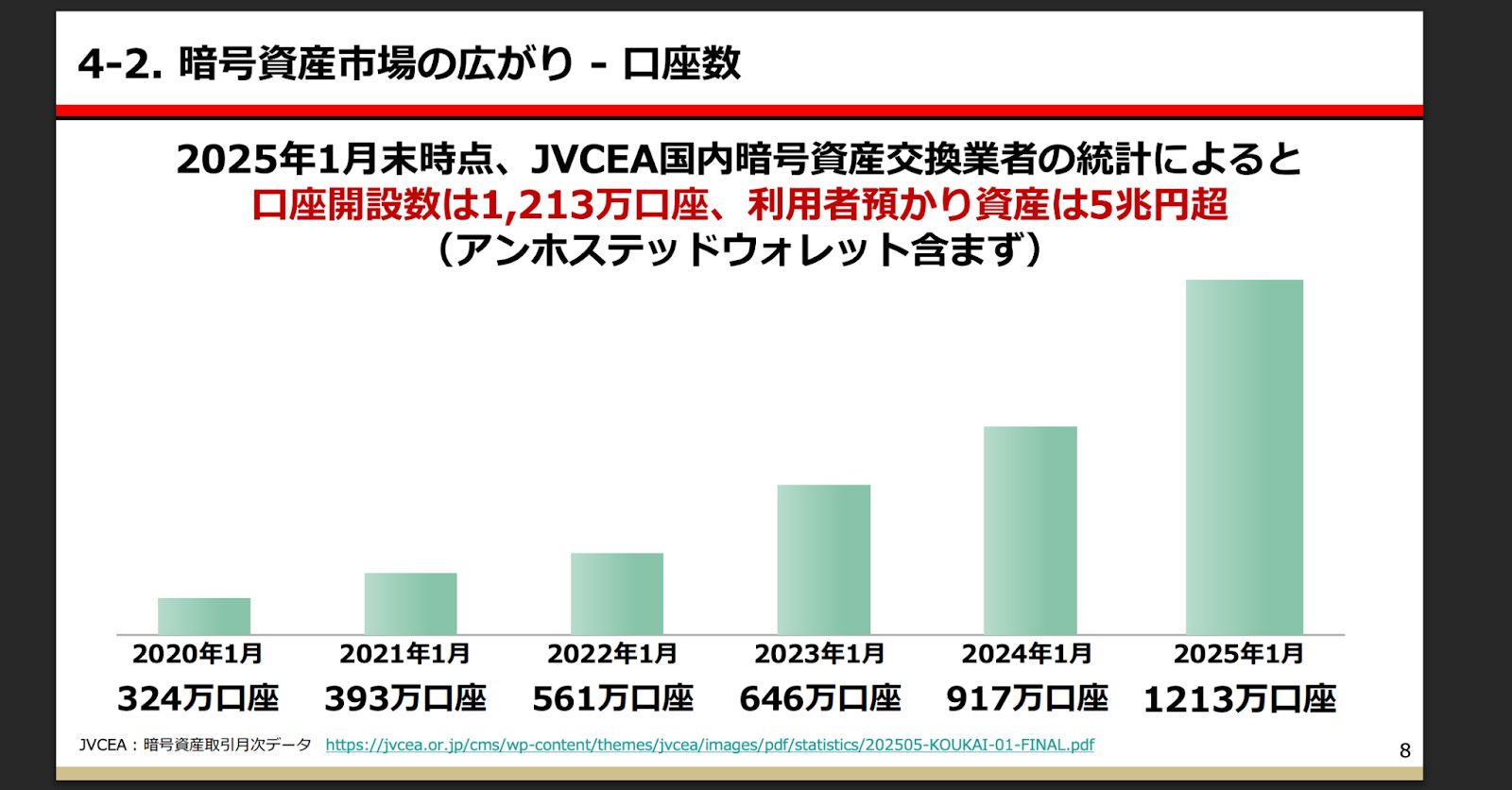
Despite holding 12.1 million accounts worth $33 billion, Japan’s crypto industry perceives diminishing global market influence.
Tougher Regulation and Investor Protection
Proposed regulatory frameworks establish a bifurcated classification system distinguishing fundraising tokens from established digital assets. Fundraising tokens would mandate comprehensive issuer disclosure requirements, while existing assets like Bitcoin maintain exchange-regulated oversight structures.
Tokyo University’s Yuichiro Matsui endorsed comprehensive regulatory reform initiatives, underscoring the critical necessity for updated crypto oversight frameworks. Georgetown University’s Shinichiro Matsuo advocated for multifaceted regulatory approaches emphasizing sustainability, security, adaptability, and strategic international alignment principles.
The complexity surrounding taxation also arose. Tax expert Yuichi Murakami dismissed industry calls for separate crypto wallet taxation, citing widespread fraud, security vulnerabilities, and inadequate calculation infrastructure.
“Claiming wallets need separate taxation for Web3 growth is nonsense unless clear tax reporting and investor protection measures are in place,” Murakami argued on X.
The working group plans detailed regulatory development, addressing transparency, combating fraud, and potentially introducing insider trading laws. Concrete proposals are expected by year-end, with legislative action possible by early 2026.
Disclaimer: The content of this article solely reflects the author's opinion and does not represent the platform in any capacity. This article is not intended to serve as a reference for making investment decisions.
You may also like
Both are Tech Giant IPOs, Why is Anthropic's Listing Valuation More Conservative Than SpaceX?
Unlike SpaceX's fixed pricing model, Anthropic adopts the traditional roadshow approach, granting more pricing power to institutional investors. Due to factors such as the Nasdaq downturn, Federal Reserve rate hikes, and AI oversupply, the market environment is under pressure, and previous expectations for a $2 trillion valuation have faded. Analysts point out that the difference in pricing strategies between the two companies essentially reflects the depth of their relationships with the Wall Street capital markets.

Inflation Pressures Persist, Fed Rate Hike Expectations Intensify, AI Investment Risks Increase Financial Stability Concerns
As U.S. inflation accelerates again, Federal Reserve officials have intensively released hawkish signals this week, further strengthening market expectations for a rate hike in December and opening the door to another rate hike in January next year.

Barclays Turns Tactically Bullish on US Stocks for the First Time Since March, Recent Selloff Sets Stage for Short-Term Rebound
As investors significantly reduce their stock holdings and market volatility pressures ease, Barclays' trading division has turned tactically bullish on US equities for the first time since mid-March this year.

Goldman Sachs 2027 Macro Outlook: Global Economy to Accelerate Slightly, but the Path Remains Rocky and Downside Risks Cannot Be Ignored
Goldman Sachs expects global GDP growth to rise from 2.7% in 2026 to 2.8% in 2027, with energy price shocks shifting from a headwind to a tailwind, and AI investment remaining the main growth driver. The three major downside risks stem from energy impacts related to the Iran situation, the bond market, and the AI cycle. Annual inflation is expected to decline, though upside risks persist. The Federal Reserve is projected to raise rates once each in December and March 2027, while the European Central Bank is expected to begin rate cuts in December 2027 and Q4, respectively. Both equities and bonds are expected to generate positive returns in 2027, though volatility risks are increasing, and returns on commodities are expected to be close to zero.

Crypto prices
More


