
Recapping the latest US data: Philly Fed, retail sales and more

After a jittery few months, recent economic data is hinting at a resilient economy that is beginning to re-accelerate
This is a segment from the Forward Guidance newsletter. To read full editions, subscribe .
With a flurry of economic data out today, it’s evident that the US economy is in pretty good shape, churning away despite the ever-unfolding stop-start tariff saga.
Let’s recap the data and what it all tells us.
Retail sales
Retail sales came out the gate swinging today, beating most expectations:
- Retail sales month over month: Actual: 0.6%; expected: 0.1%
- Retail sales control group MoM: Actual: 0.5%, expected: 0.3%
- Retail sales (ex autos) MoM: Actual: 0.5%, expected: 0.3%
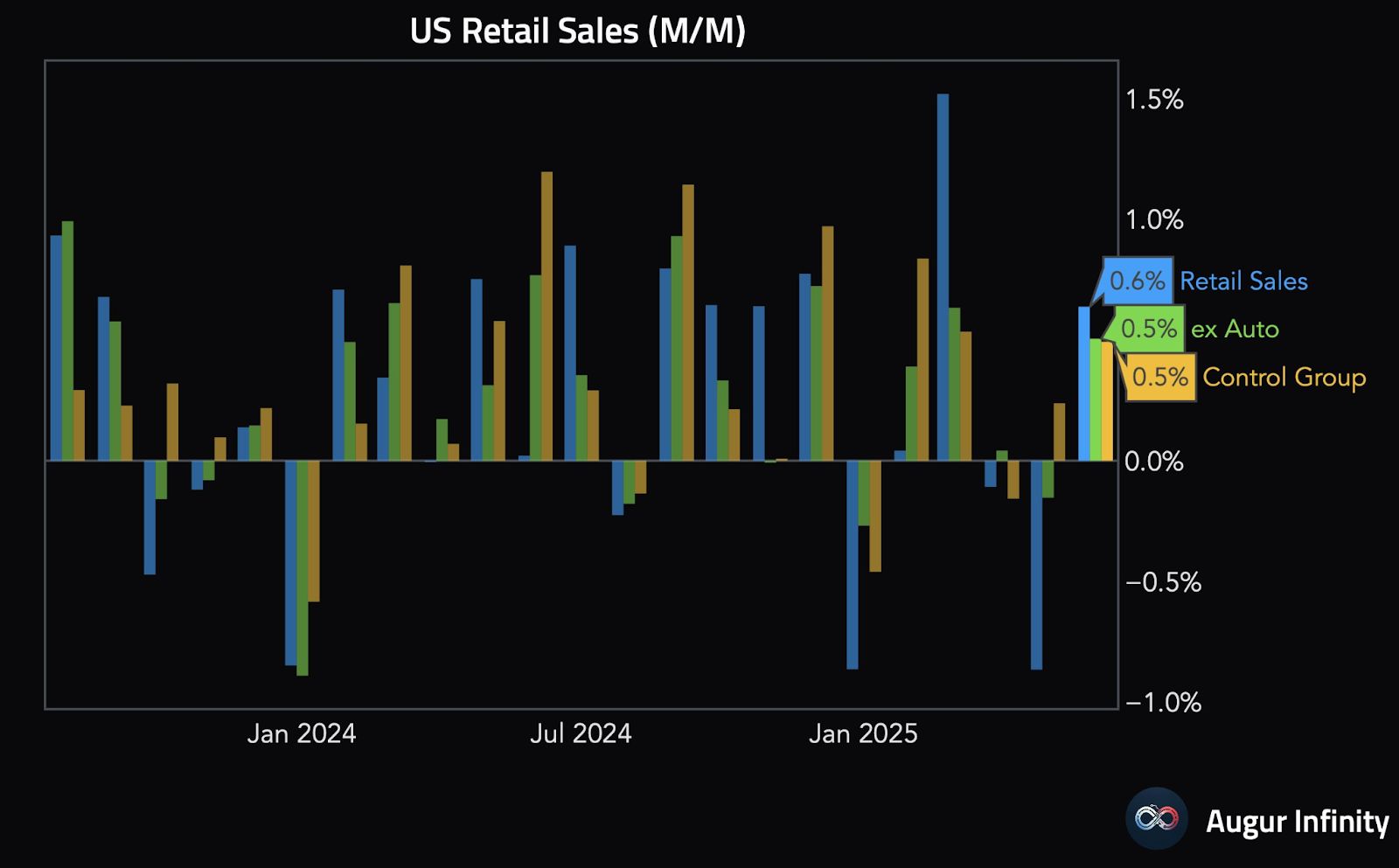
It’s important to remember that retail sales are a nominal metric and therefore include inflation. In an era of persistently above-target inflation, this becomes increasingly pertinent.
Despite the nominal good news, you can see how consumers’ purchasing power continues to decline in real terms. For example, this chart from economist Parker Ross:
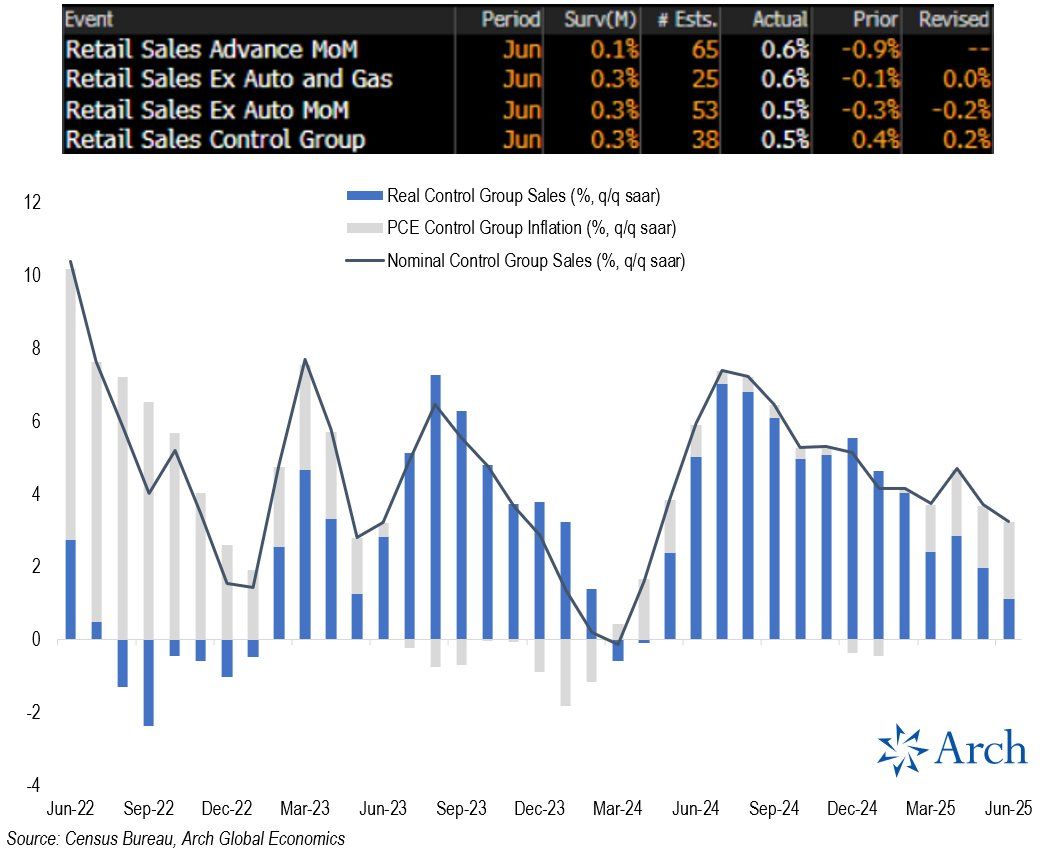
This vignette shows why significant recession is so difficult to trigger in a regime of higher inflation.
A recession could occur on a “real” basis — whilst nominal GDP continues to churn higher — in which the net effect is a decrease in purchasing power, as opposed to a nominal decrease in spending and incomes across the economy.
Philly Fed survey
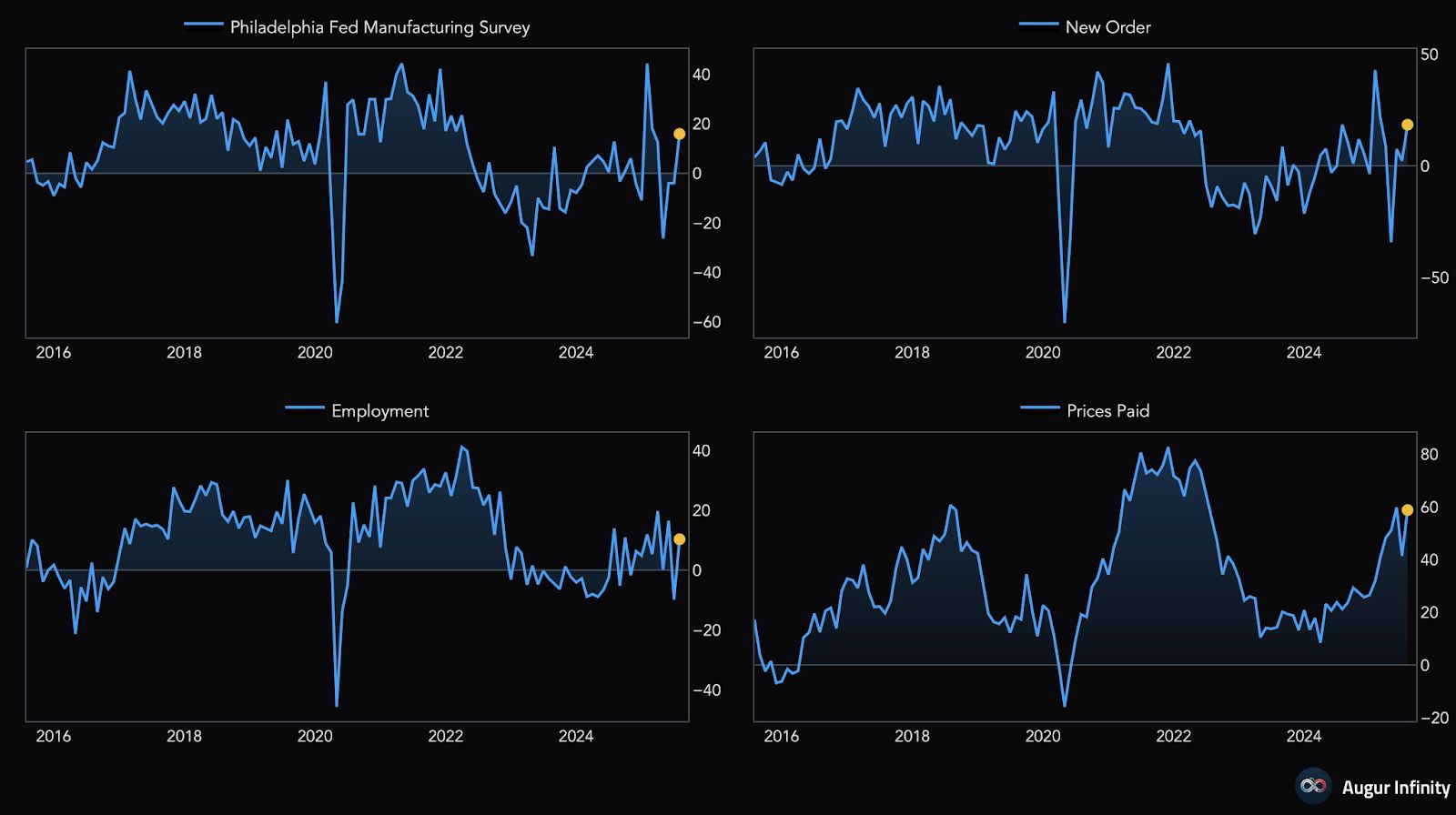
Setting aside the hard data, we received updates to the Philly Fed survey, which has been exceptionally accurate in recent years.
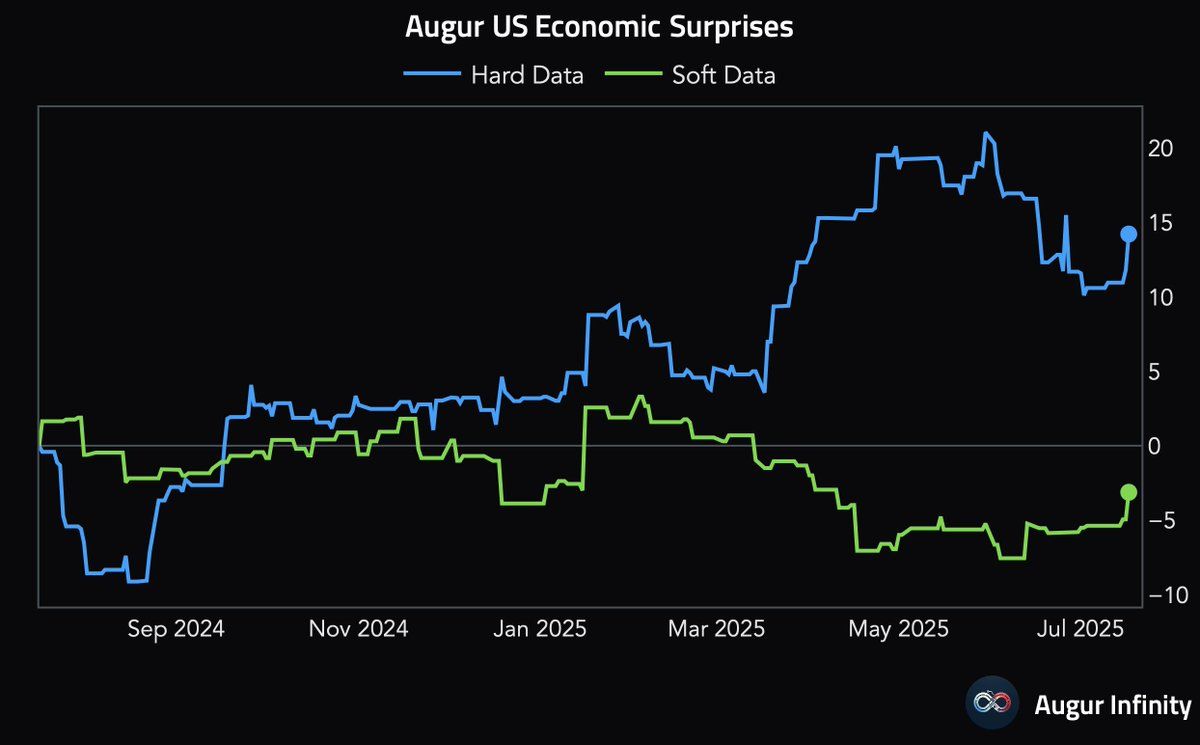
This soft data shows clear signs of an economy rebounding from Liberation Day uncertainty and adapting to where tariffs stand today.
Across the board, every metric continued higher:
- Philly Fed CAPEX index: Actual 17.10, previous: 14.50
- Philly Fed employment: Actual: 10.3, previous: -9.8
- Philly Fed new orders: Actual: 18.4, previous: 2.3
- Philly Fed prices paid: Actual: 58.80, previous: 41.40
Jobless claims
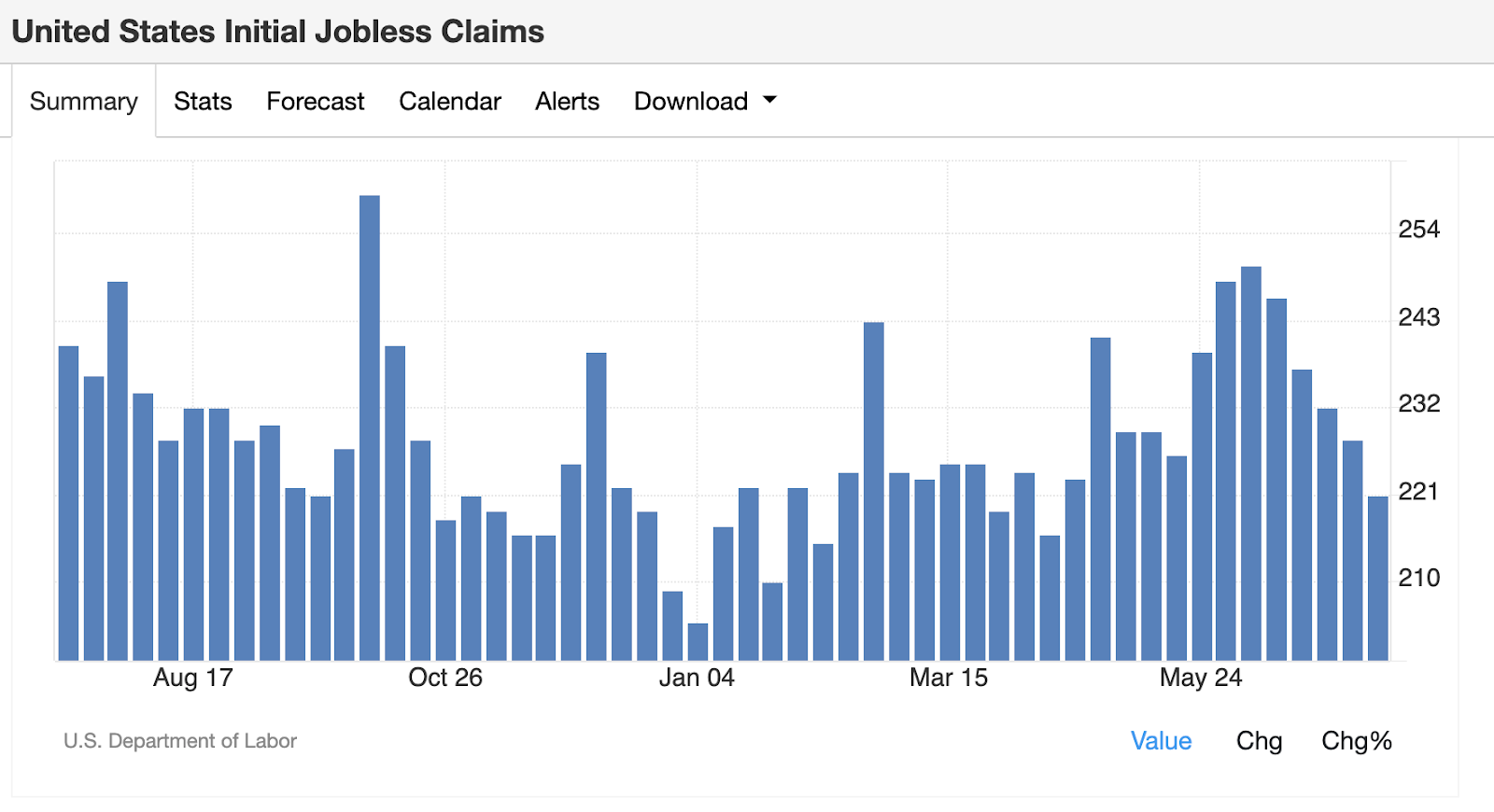
We see further validation of a surprisingly strong economy in the weekly jobless claims data.
Initial claims surprised to the downside and continued their decline:
Continuing jobless claims also surprised to the downside, showing signs that the recent surge over the last month has stalled:
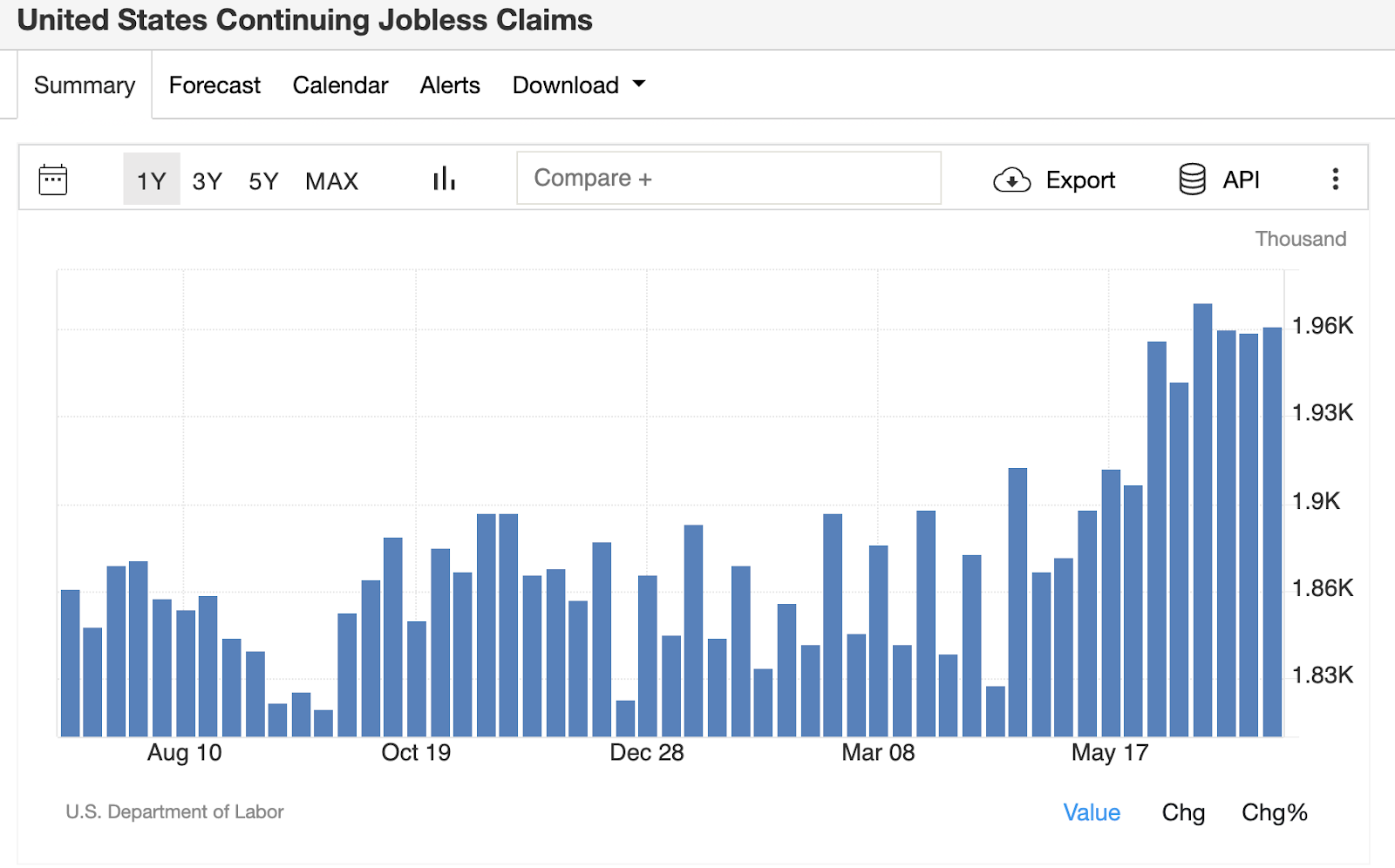
This contrast between initial and continuing claims is crucial for understanding the state of the labor market. The economy is solid enough to avoid triggering a meaningful layoff cycle, but weak enough so that those who do become unemployed are having a hard time finding a new job and thus remaining on continuing claims for longer.
Putting this all together, it’s clear the soft and hard data are beginning to rebound and improve.
Get the news in your inbox. Explore Blockworks newsletters:
- The Breakdown : Decoding crypto and the markets. Daily.
- Empire : Crypto news and analysis to start your day.
- Forward Guidance : The intersection of crypto, macro and policy.
- 0xResearch : Alpha directly in your inbox.
- Lightspeed : All things Solana.
- The Drop : Apps, games, memes and more.
- Supply Shock : Bitcoin, bitcoin, bitcoin.
Disclaimer: The content of this article solely reflects the author's opinion and does not represent the platform in any capacity. This article is not intended to serve as a reference for making investment decisions.
You may also like
Are Those Selling Bitcoin Making a Big Mistake? Stacks Founder Makes Noteworthy Bull Market Statement

Stellar’s tokenized asset market reaches $4.1 billion, market share triples

NVIDIA (NVDA.US) management changes may affect Anthropic's IPO plans; the market is watching whether the multi-billion-dollar investment will change
With the sudden departure of Nvidia CEO Jensen Huang, the record-breaking initial public offering plan of AI giant Anthropic is being reconsidered by the market.
Nebius Q3 results exceed expectations, capital expenditure rises to $27 billion, ARR target postponed, stock falls over 14% pre-market | Earnings Report Insights
Nebius reported Q3 revenue of $981 million (a year-on-year increase of 571%) and adjusted EBITDA of $466 million, both exceeding expectations. However, the company delayed and lowered its guidance for annual recurring revenue (ARR), stating that it is no longer applicable. Additionally, it significantly raised its 2026 capital expenditure target to $27 billion, with projections to further increase to $40 billion to $45 billion in 2027. The stock price plummeted more than 14% in pre-market trading.
Crypto prices
More


