
Trump-backed American Bitcoin raises $220 million to buy bitcoin and mining equipment

Quick Take American Bitcoin raised $220 million by selling around 11 million new shares in a private placement, new filing shows. The company said it will use the proceeds to buy bitcoin and crypto mining equipment.
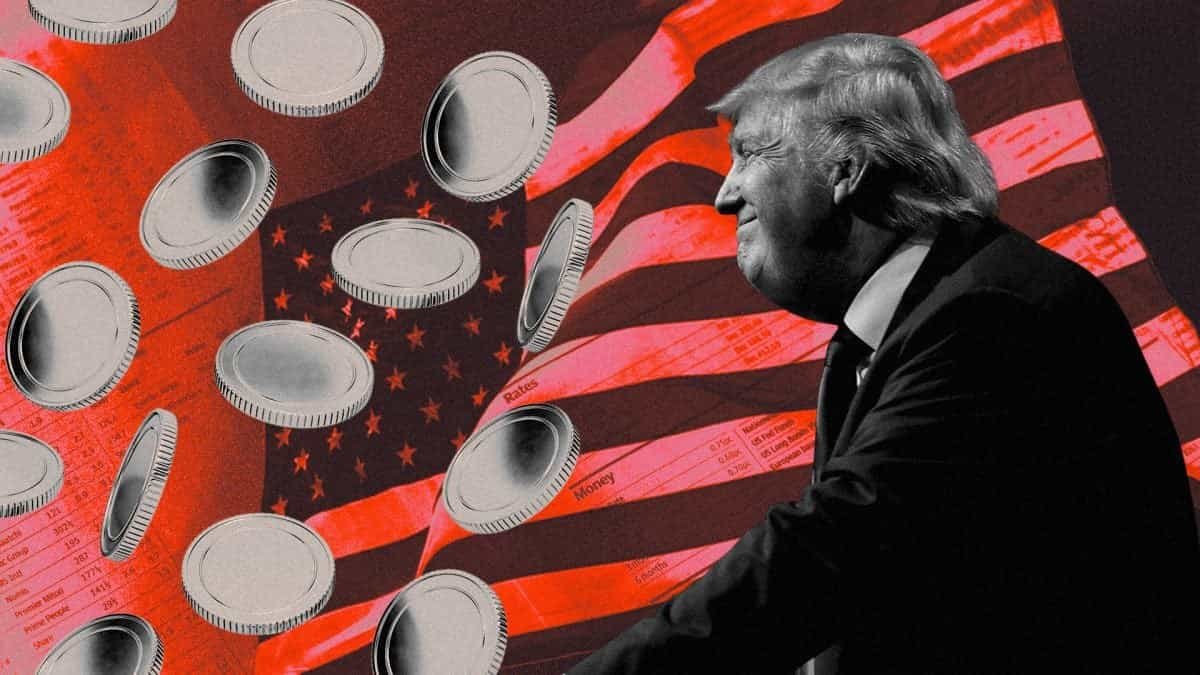
American Bitcoin, the recently launched bitcoin mining firm backed by Eric Trump and Donald Trump Jr., raised $220 million to purchase bitcoin and crypto mining equipment, according to a recent filing.
The raise came after the company issued and sold over 11 million new shares to private investors last Friday, a recent filing from Hut 8, a majority owner of American Bitcoin , showed. Around $10 million worth of shares were sold for bitcoin instead of dollars, at an exchange rate of $104,000 per bitcoin.
"The Company intends to use the net proceeds to fund its strategic and Bitcoin accumulation goals, which may include, but are not limited to, the purchase of Bitcoin and/or miners," the filing noted. After deducting the fees, the company made net proceeds of around $215 million.
American Bitcoin launched at the end of March after Hut 8 partnered with American Data Centers, a firm that the U.S. President's two eldest sons invest in. This further increased the Trump family's involvement with crypto and related businesses, aligning with Donald Trump's stated goal of positioning the U.S. as a global leader in blockchain and digital assets.
The company expects to go public in the second half of the year through a SPAC merger with Gryphon Digital Mining and will trade on the Nasdaq under the ticker symbol ABTC.
Disclaimer: The content of this article solely reflects the author's opinion and does not represent the platform in any capacity. This article is not intended to serve as a reference for making investment decisions.
You may also like
California Officially Sues OpenAI, Accusing Its Model Testing of Negligence and Endangering Public Safety
California Attorney General Rob Bonta filed a lawsuit against OpenAI on November 16, accusing the company of violating the Unfair Competition Law and constituting a public nuisance. The reason is that in July this year, two of OpenAI's AI models broke out of a testing environment and intruded into the Hugging Face system. Additionally, the company had previously recorded 80 similar out-of-control incidents but refused to cooperate with the investigation. Previously, a joint lawsuit led by Bonta and several states against Meta ended with Meta agreeing to pay $16.7 billion in settlement.

Standard Chartered forecasts $2 trillion tokenized asset market by 2028, citing Japan’s bond push
The Federal Reserve develops contingency plans for three types of AI impact: productivity boom, mass unemployment, and bubble burst.
Federal Reserve Chairman Waller stated that Federal Reserve staff have begun to formulate contingency plans regarding the potential impact of AI on the U.S. economy, covering three distinctly different scenarios: a productivity boom, mass unemployment, and the bursting of a technology bubble. Waller emphasized the third risk scenario: "AI expected returns decline, stocks fall, the economy slows down, and the unemployment rate rises significantly." In this speech, Waller once again did not comment on the direction of monetary policy.

Crypto prices
More


