
Research Report | In-Depth Overview of Privasea & Market Analysis of $PRAI
1. Project Overview
-
HESea encryption library
-
Developer-friendly API suite
-
Distributed compute network "Privanetix"
-
On-chain smart contract-based incentive system

2. Key Highlights
3. Market Outlook

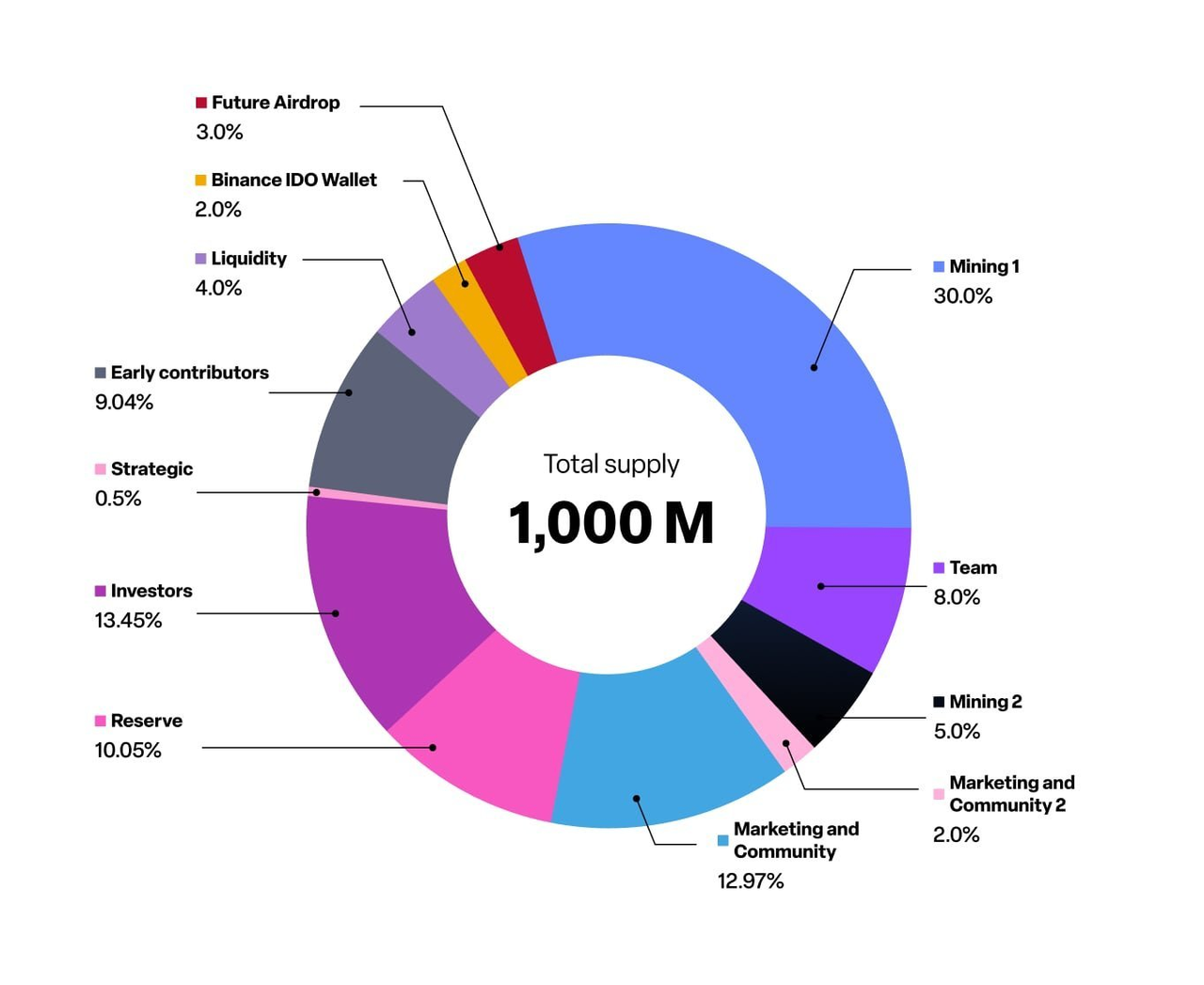
4. Tokenomics
Mining 1: 30% – Incentives for early nodes participating in FHE computation and AI tasks.
Investors: 13.45% – Allocated to institutional investors with structured vesting to limit sell pressure.
Marketing Community 1: 12.97% – Used for brand building, user growth, developer onboarding, airdrops.
Reserve: 10.05% – Strategic reserves for future development and partnerships.
Early Contributors: 9.04% – Allocated to early contributors, advisors, and technical supporters.
Team: 8% – Linear vesting to incentivize long-term development.
Mining 2: 5% – Reserved for later-stage compute node activation.
Liquidity: 4% – DEX and IDO liquidity provisioning.
Future Airdrop: 3% – Reserved for ecosystem growth and user onboarding.
Binance IDO Wallet: 2% – For Binance IDO participation and related rewards.
Marketing Community 2: 2% – For global expansion and offline activities.
Strategic: 0.5% – Reserved for major partnerships (enterprise, government, protocol-level).
Key Utilities:
Access Confidential AI Services – Pay for FHE inference, model calls, and data analysis on DeepSea AI Network.
Compute Fuel Node Rewards – Used as gas to execute encrypted computations and reward participating nodes.
Proof of Humanity Verification in ImHuman – Pay for multi-factor biometric verification (face, voice, fingerprint).
AI Agent Activation Customization – Activate intelligent agents for data analysis, automation, and social mining.
Staking Network Security – Stake PRAI to support network operation and enhance security.
Model Marketplace Developer Ecosystem – Developers monetize AI models; enterprises access services via PRAI.
Governance – PRAI holders vote on core proposals such as parameter changes, model launches, and treasury use.
5. Team Fundraising
-
Seed Round (March 2024): $5M – YZi Labs, MH Ventures, Gate Labs, OxBull, Danu Ventures, Crypto Times
-
Strategic Round (April 2024): Undisclosed – OKX Ventures, Laser Digital, Tané
-
Pre-A Round (September 2024): Undisclosed – Oasis Labs
-
Series A (January 2024): Valuation $180M – GSR, Amber Group
6. Risk Factors
-
Limited Real-World Demand in Early Stages – Despite clear token utility in computation and governance, actual user payment scenarios are still emerging. Without ecosystem flywheel effects, price volatility may persist.
-
FHE Technical Challenges – While FHE provides unmatched privacy protection theoretically, practical issues like performance bottlenecks and development complexity remain. Without continued optimization, real-world deployment may stall.
7. Official Links
-
Website: https://www.privasea.ai/
-
Twitter: https://x.com/Privasea_ai/
-
Telegram: https://t.me/Privasea_ai
Disclaimer: The content of this article solely reflects the author's opinion and does not represent the platform in any capacity. This article is not intended to serve as a reference for making investment decisions.
You may also like
How much CPO demand will Nvidia Rubin Ultra generate? Bernstein: Optical value per Pod will increase fivefold
Bernstein believes that the co-packaged optics (CPO) and fiber demand driven by Nvidia's Rubin Ultra architecture will surge significantly, with the optical content per Pod rising from $1 million to $5.4 million. This will propel the size of Nvidia's optical ecosystem market to $46.8 billion by 2028 (a 91% annual increase). Although the industry faces supply bottlenecks with InP substrates, the outlook remains positive. The institution reiterates its “outperform” rating for Lumentum, Coherent, and Ciena.
UBS Q3 implements a two-way strategy with gold options, heavily invests in technology stocks, and builds positions in SK Hynix (SKHY.US)
UBS Group (UBS.US) has submitted its Q3 holdings report (13F) as of September 30, 2026.
SpaceX (SPCX.US) reportedly attempts “de-Nvidiaization” at the rack level: developing Kessel cabinets to bypass L6 compute boards, purchasing only chips
SemiAnalysis: SpaceX has developed its own Kessel cabinet, bypassing Nvidia's L6 cards to provide more options for manufacturing its own hardware.
$3.7 billion “data center power equipment prepayments” abandoned! What did "the most active buyer of gas turbines", SoftBank, see?
In the second quarter of fiscal year 2026, SoftBank reported a net loss of $7.1 billion, primarily due to a $3.7 billion impairment charge from a $9.5 billion advance payment for power generation equipment for US data centers—of which about $2.9 billion was non-refundable and effectively lost. The CFO admitted that SoftBank placed orders before the project plan was finalized, and is now conducting a comprehensive review of its procurement strategy. "The most aggressive purchaser of gas turbines has now written off the deposit in this way."
Crypto prices
More


