
Solana Under Pressure: How Declining Demand Could Trigger a Plunge Below $120

Solana’s network struggles with decreased activity, leading to a significant drop in its TVL and SOL price. The decline in daily transactions and user engagement indicates a challenging outlook for the blockchain and its native token.
Solana’s network activity has sharply declined in recent weeks. This has resulted in a significant drop in its total value locked (TVL), which has now fallen to its lowest level since the beginning of the year.
The downturn in network engagement has also impacted the demand for SOL, whose price continues to tumble to new lows.
Solana’s User Activity Plummets 35% as Network Engagement Weakens
In the past month, the daily count of addresses that have completed at least one transaction on the Solana network has dropped by 35%. According to Artemis, over the past 30 days, only 4.08 million addresses have visited the Layer-1 network.
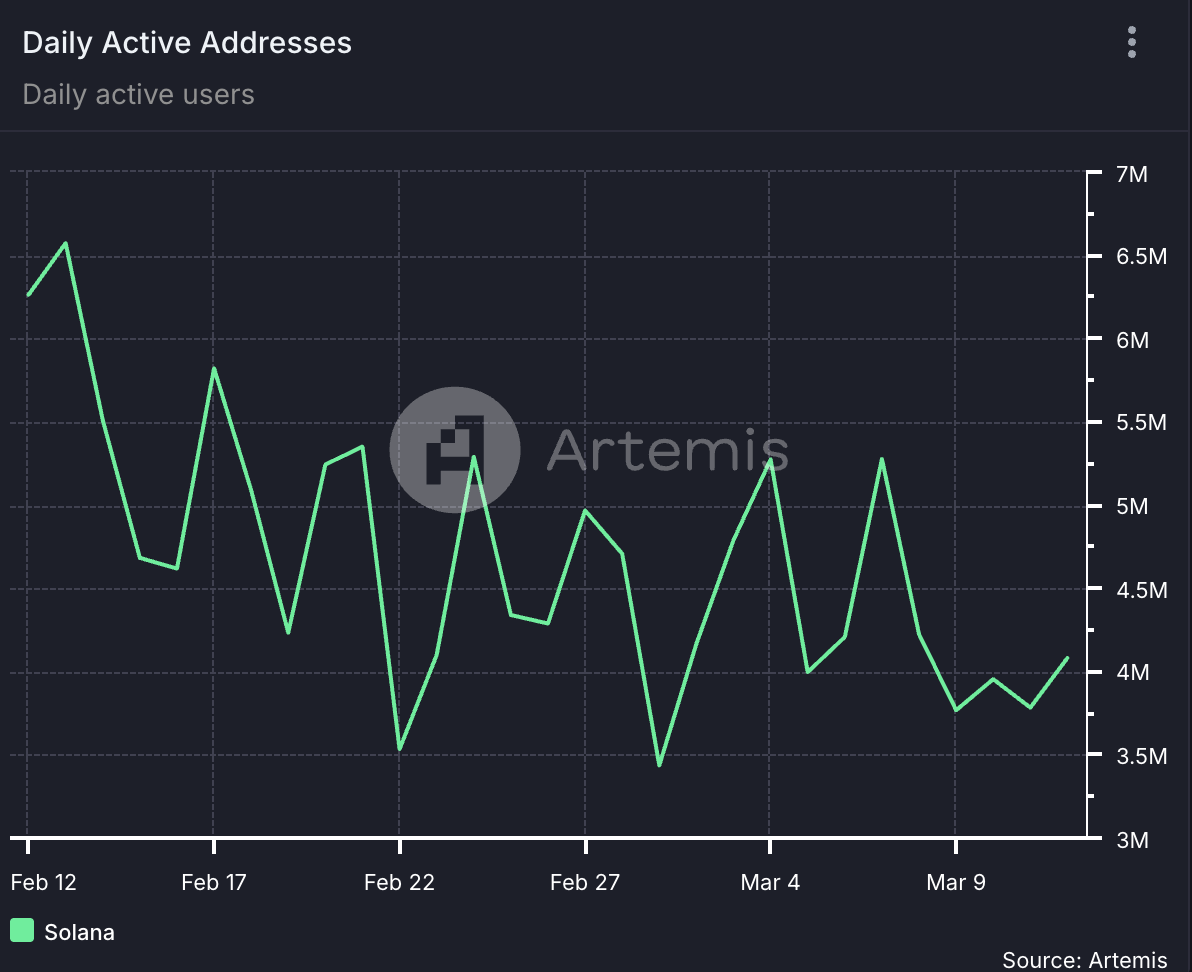 Solana Daily Active Address. Source:
Artemis
When a network sees a drop in daily active addresses, user engagement is reduced. This signals weakening network adoption, declining investor interest, and a shift of users to competing blockchains.
Moreover, this trend results in lower transaction activity, as observed with Solana. Per Artemis, during the period in review, the daily transaction count on the network has reduced by 18%.
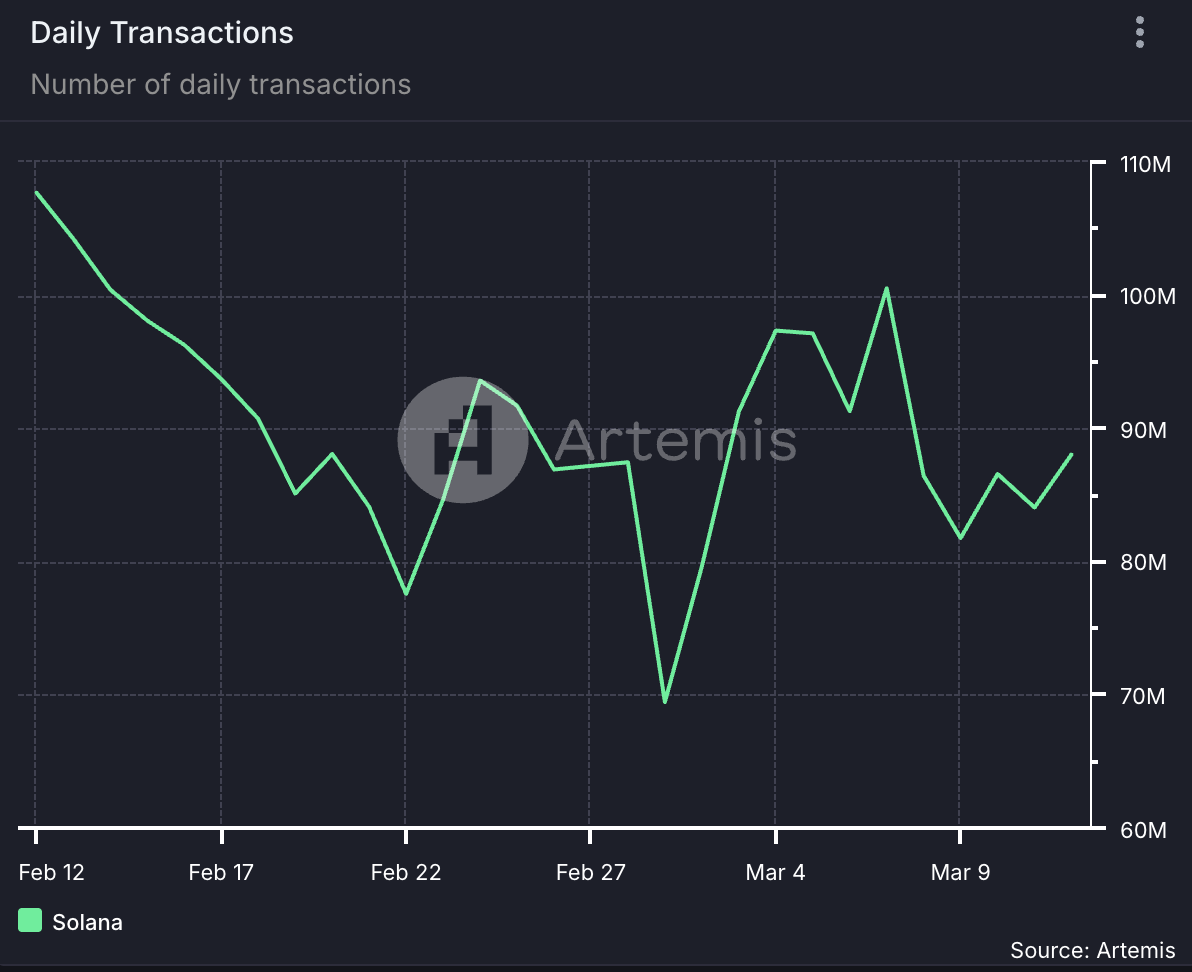 Solana Daily Transaction Count. Source:
Artemis
As network participation drops, Solana’s ecosystem feels pressure, with liquidity drying up across its decentralized finance (DeFi) protocols. This is reflected by the steady drop in the network’s total value locked (TVL). At press time, Solana’s TVL stands at $6.69 billion, its lowest since the beginning of the year.
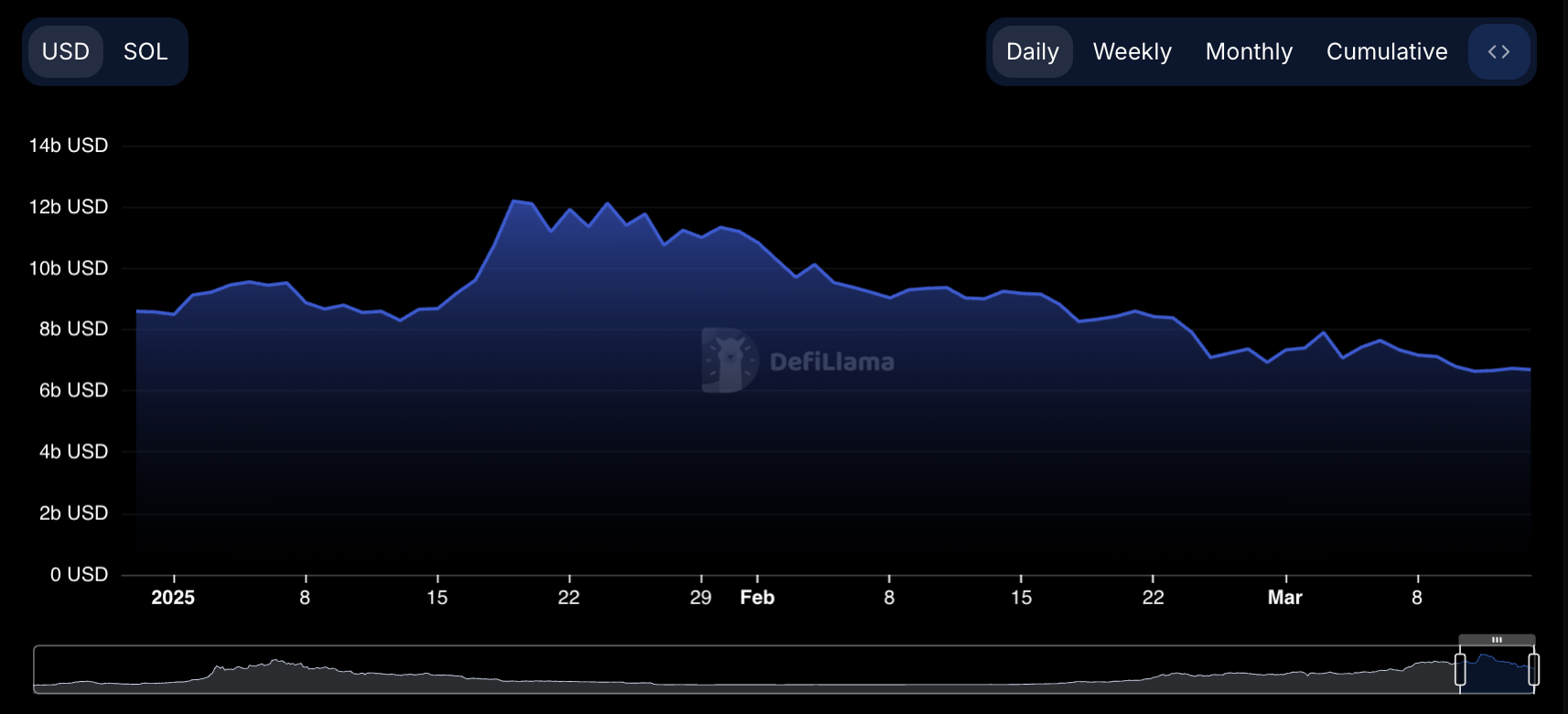 Solana TVL. Source:
DefiLlama
A drop in a network’s TVL highlights low investor confidence as users choose to withdraw their funds from the DeFi protocols housed within the blockchain. This trend reduces the network’s available liquidity and puts downward pressure on its native token.
Weakening Demand Threatens Drop Below $120
The demand for SOL is weakening, leaving it vulnerable to further declines if network activity fails to rebound. At press time, the altcoin trades at $124.86, having shed 35% of its value in the past 30 days.
On the daily chart, SOL’s Relative Strength Index (RSI) is in a downward trend at 36.91, confirming the low demand. When this momentum indicator falls below 50, selling activity outweighs buying pressure among market participants.
If selloffs persist, SOL would extend its decline and could fall to the key support floor formed at $120.72. If this level fails to hold, the coin’s price could plunge toward $108.43.
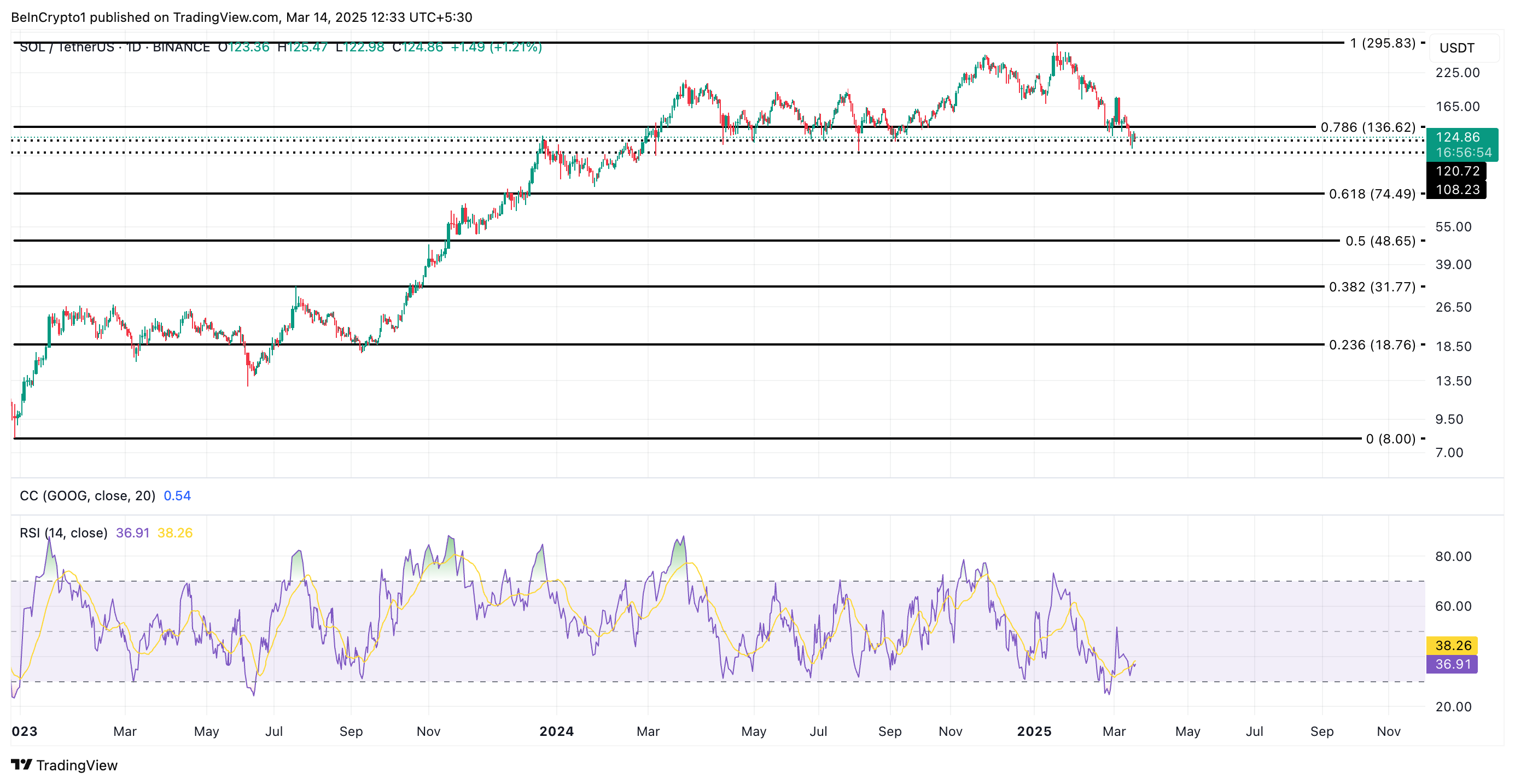 Solana Price Analysis. Source:
TradingView
Conversely, a bullish shift in market sentiment could send the coin’s price to $136.62.
Disclaimer: The content of this article solely reflects the author's opinion and does not represent the platform in any capacity. This article is not intended to serve as a reference for making investment decisions.
You may also like
As US stocks plummet, the parent company of GTA 6 rises against the market! First-day sales hit a record $3.79 billion; Wall Street shifts focus to next-generation GTA Online.
According to Rentrak data, the global box office of "Grand Theft Auto VI" has also surpassed that of "Avengers: Endgame," the highest-grossing film of all time, which has a global box office of approximately $2.94 billion.

$2.3 trillion “vanished into thin air”! The last time US chip stocks fell this badly was in 2001, Nvidia has already “lost an Amazon’s worth”.
This week, the Philadelphia Semiconductor Index dropped by over 10%, wiping out approximately $2.3 trillion in market capitalization from the chip sector, marking its worst single-week performance since 2001. Nvidia’s stock price has fallen for seven consecutive weeks, shrinking its market value by about $2.7 trillion since its October peak. Tightened financing support from Nvidia and the Anthropic IPO siphoning off liquidity, combined with continued hawkish signals from the Federal Reserve, have added further pressure. AI-related trades have faced concentrated sell-offs, and market concerns about future growth prospects are intensifying.

Nasdaq evaporated over $4 trillion in a week! After the global stock market's "Black Friday," the market begins to anticipate an AI industry chain rebound after excessive declines.
The S&P 500 Index plunged by 3.70% on Friday to 6,910.39 points, falling for the seventh consecutive trading day. Alongside the Dow Jones Industrial Average, which dropped 1.93%, both indices pulled back more than 10% from their historic closing highs, confirming entry into a technical correction. The Nasdaq Composite Index fell 5.28%, erasing its gains for the year. The Nasdaq 100 Index dropped 5.61%, falling about 19.84% from its historic closing high on October 6. At one point during the session, the decline exceeded 20%, entering what is referred to as a "technical bear market area."
VIX surges to highest level since the tariff dispute in April last year; Goldman Sachs Fear Index approaches maximum; US stocks may face another $80 billion sell-off next week
As the U.S. stock market faced a sharp sell-off on Friday, two major Wall Street market risk indicators issued warnings simultaneously.
Crypto prices
More


