Bitget App
Trade smarter
Buy cryptoMarketsTradeFuturesStocksEarnInstitutionAI & more
Ethereum’s Leverage Crash: Are Derivative Traders Facing a Massive Downturn?

Ethereum’s Leverage Crash: Are Derivative Traders Facing a Massive Downturn?

EthnewsEthnews2025/02/05 19:44
By:By Isai Alexei
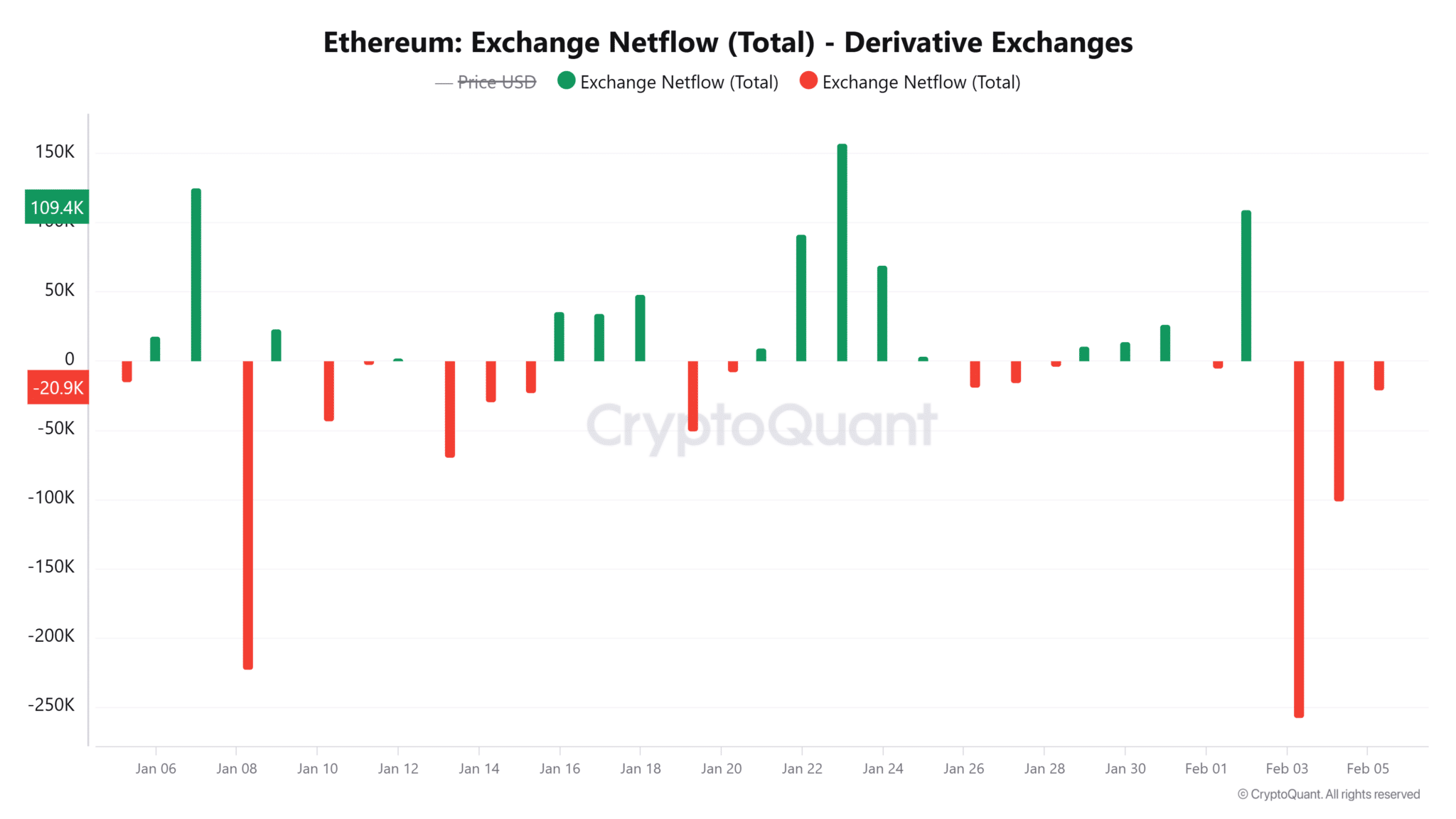
  • A withdrawal of 375,000 ETH from derivative exchanges reflects speculative decline and a shift toward spot trading strategies.
  • Lower open interest reached $22 billion, indicating reduced derivative activity since November, as traders exit positions and de-risk.

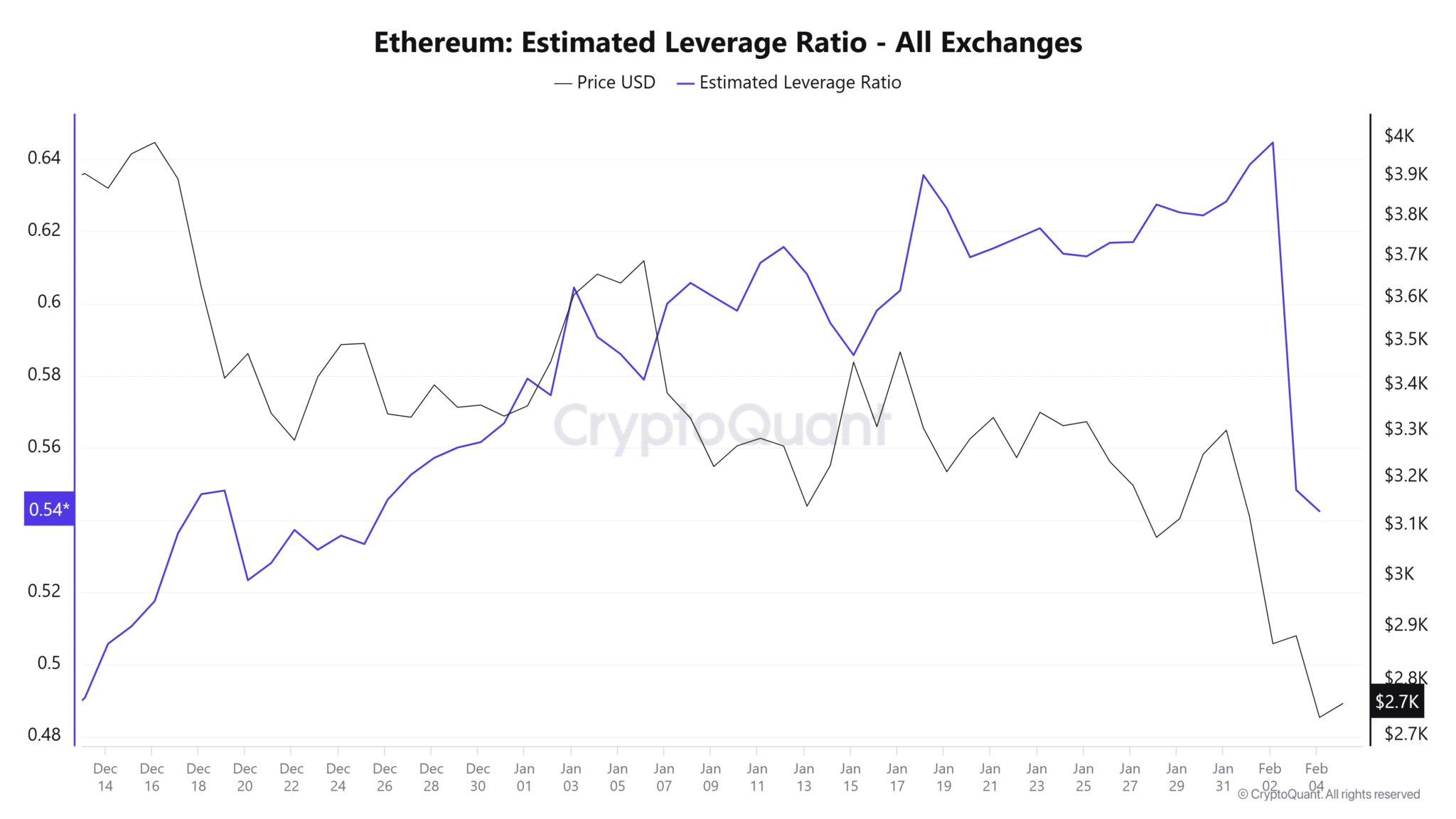
Ethereum’s derivatives markets have displayed clear shifts in trader behavior following recent price fluctuations. Data from Coinglass analytics platforms shows a 15% decrease in Ethereum’s estimated leverage ratio over two days, dropping from 0.64 to 0.54. This metric, which measures borrowed capital relative to total positions, reflects reduced speculative activity.
Ethereum’s Leverage Crash: Are Derivative Traders Facing a Massive Downturn? image 0 Source: CryptoQuant

Concurrently, 375,000 ETH left derivative exchanges in three days, marking the largest withdrawal since November. These movements coincide with Ethereum’s price volatility, including a five-month low of $2,160 earlier this week and a rebound to $2,760 at publication.
Ethereum’s Leverage Crash: Are Derivative Traders Facing a Massive Downturn? image 1 Source: CryptoQuant

The decline in leverage aligns with falling open interest, now at $22 billion. Reduced borrowing suggests traders are closing positions to avoid further losses after liquidations. Historical patterns indicate that Ethereum’s price often declines when leverage contracts, as fewer new positions signal weakened confidence . While this trend may pressure prices downward, it also lowers liquidation risks, potentially stabilizing volatility.  

Parallel withdrawals from derivatives and inflows to spot exchanges point to a broader shift. Traders appear to be selling ETH directly in spot markets rather than maintaining leveraged bets. This transition could amplify selling pressure but reduces reliance on borrowed funds, creating a dual effect: short-term bearish sentiment offset by reduced systemic risk.  

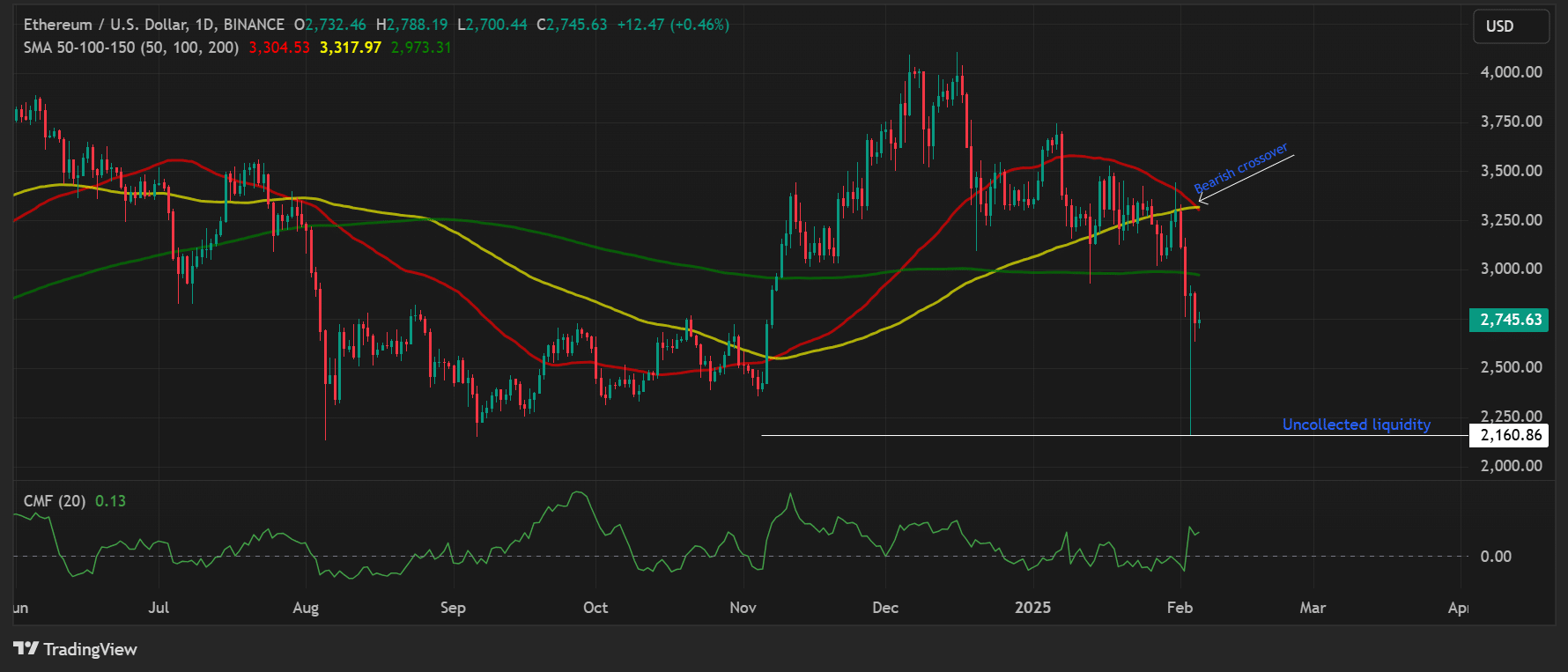
A bearish crossover occurred on Ethereum’s one-day chart as the 50-day Simple Moving Average (SMA) dipped below the 100-day SMA, signaling strengthening downward momentum. However, the Chaikin Money Flow (CMF), which tracks buying and selling pressure, remains positive . This divergence implies underlying demand persists despite bearish technicals.
Ethereum’s Leverage Crash: Are Derivative Traders Facing a Massive Downturn? image 2 Source: Tradingview

For Ethereum to reverse its trajectory, analysts identify two key resistance levels. The first lies at the 200-day SMA ($2,973), a threshold historically linked to bullish breaks. A sustained move above this level could shift sentiment. The second resistance sits at the 50-day SMA ($3,304), where a breakout might reignite upward momentum. Until then, the derivatives exodus and leverage unwind suggest traders are bracing for further turbulence.  

ETHNews current data underscores a market caught its breath, balancing caution with pockets of optimism. While reduced leverage limits immediate volatility, Ethereum’s path forward hinges on reclaiming technical levels and renewed confidence from derivatives participants.


1
0

Disclaimer: The content of this article solely reflects the author's opinion and does not represent the platform in any capacity. This article is not intended to serve as a reference for making investment decisions.

Understand the market, then trade.
Bitget offers one-stop trading for cryptocurrencies, stocks, and gold.
Trade now!

You may also like

New York Federal Reserve President: Overall price increases remain too high, inflation may not reach the Fed's target level until 2028

John Williams, President of the New York Federal Reserve, stated on Monday that although some inflationary pressures in the United States have shown signs of easing, the overall rise in prices remains too high.

智通财经•2026/11/23 22:41

No more mandatory retention! Anthropic launches EFS system, allowing enterprises to take control of their own AI data

Anthropic has launched the public beta of its Enterprise Frontier Security (EFS) system, allowing corporate clients to store AI data on their own cloud platforms, with clients holding their encryption keys. Anthropic only performs automated security scans and cannot access the data itself. The system retains the 30-day data retention requirement, but control over storage is returned to enterprises, addressing strong customer backlash sparked by the mandatory retention policy implemented in June.

华尔街见闻•2026/11/23 20:36
No more mandatory retention! Anthropic launches EFS system, allowing enterprises to take control of their own AI data

Report: Samsung's storage capacity is nearly sold out for the next three years, clients rush to secure long-term contracts until 2031

According to media reports, most of Samsung Electronics' memory manufacturing capacity for the period from 2027 to 2029 has already been secured through contracts. Some customers are even seeking to extend long-term supply agreements until 2031. Currently, leading memory manufacturers can only meet about 60% to 70% of client demand, and the supply shortage may intensify further in 2027.

华尔街见闻•2026/11/23 16:16
Report: Samsung's storage capacity is nearly sold out for the next three years, clients rush to secure long-term contracts until 2031

Anthropic commits to about $900 billion in computing power expenditure; bond market expects its bonds to be junk-rated

Despite Anthropic raising over $100 billion in its public offering and reaching a market capitalization of $1.18 trillion, the company is widely expected by the debt market to be rated as BB-level "junk bonds" due to its lack of profitability and approximately $900 billion in massive computing power expenditure commitments. Amid pressure on tech giants in the debt market and chip companies planning to reduce loan guarantees, Anthropic will still need to rely on structured financing in the short term, facing about a three-year window to strive for an investment-grade rating.

华尔街见闻•2026/11/23 13:51