
SUI Overtakes Bitcoin, Aptos To Become 13th-Largest DeFi Network
The SUI blockchain has been ramping up since the year 2024 began, and a natural consequence of this rapid growth is that it has now surpassed some major players in the decentralized finance (DeFi) space. This has put it ahead of heavy hitters such as Bitcoin and Aptos as SUI begins to leave its mark on the market.
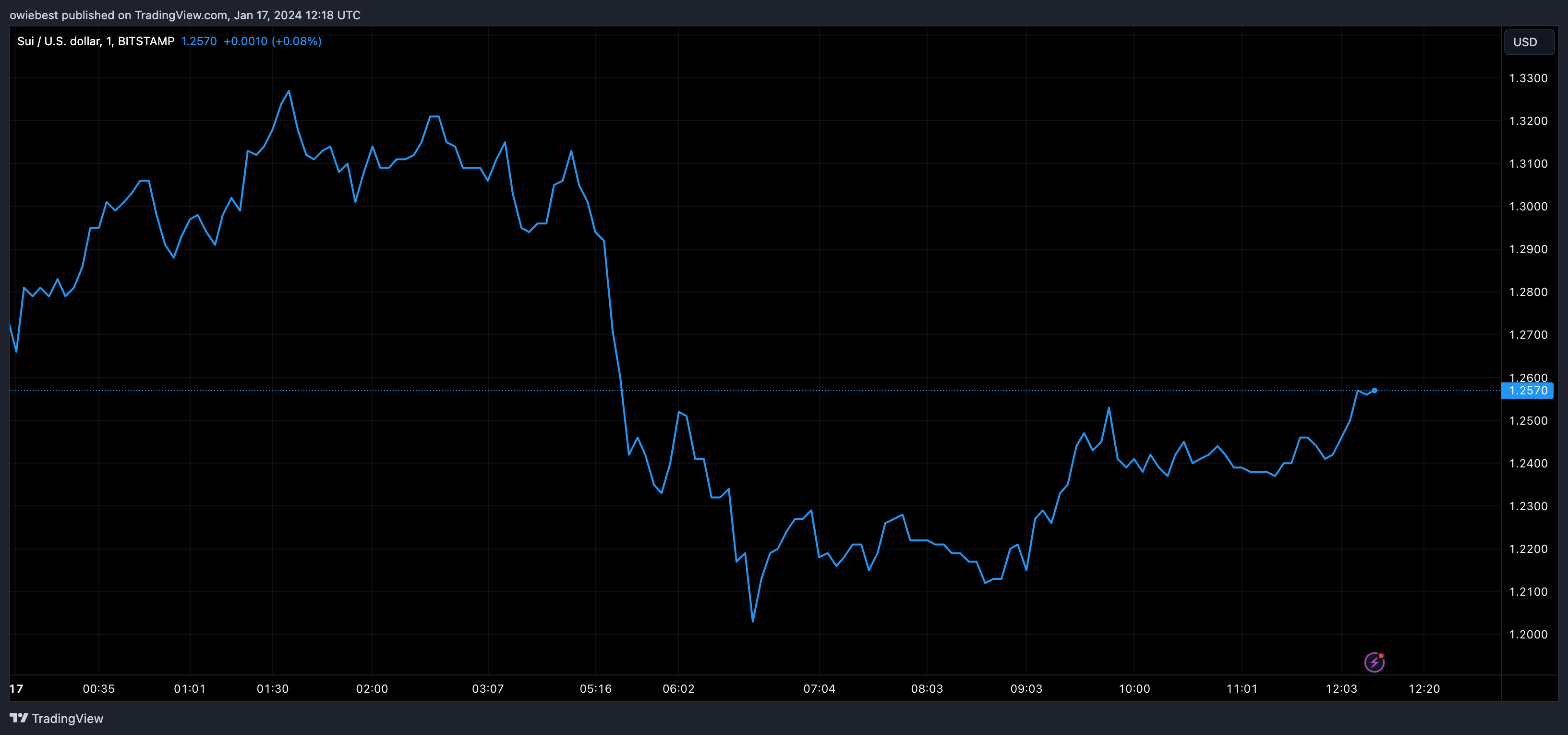
SUI Network TVL Crosses $360 Million
The total value locked (TVL) on the SUI network has completely exploded in the last year. The total value locked on the blockchain was sitting at less than $12 million in the middle of 2024. But now, less than a month into the year 2024, the TVL has already crossed the $360 million mark.
While this figure is still far off from the likes of Ethereum and BSC which continue to dominate the DeFi TVL, it puts it ahead of some heavy hitters in the game. For example, the Bitcoin TVL is currently sitting at $298.8 million, which means SUI TVL is much higher than that of Bitcoin.
Then again, another network which is currently lagging behind SUI is the Aptos TVL. The Aptos blockchain, which was launched to much fanfare back in 2022, is sitting at a TVL of $133 million. This means that SUI’s TVL is more than 2x higher than that of Aptos .
Other DeFi networks which SUI has surged ahead of include the likes of Kava at a TVL of $251 million, Near at a TVL of $94 million, and Metis at a TVL of $124 million. With its TVL figures, SUI is now the 13th-largest DeFi network.
DeFi Making A Comeback
After a long stretch of poor performance, the DeFi market looks to be making its comeback in 2024. As DeFiLlama data shows, after the market peaked at a TVL of almost $245 billion in 2022, it dropped more than 50%, spending the majority of 2023 trailing below $70 billion.
However, as crypto market sentiment has improved, so has the DeFi TVL. The TVL has grown from its October 2023 lows of $47 billion to more than $72 billion so far in 2024. This is as a result of the likes of SUI gaining more adoption and their token prices also increasing.
As expected, Ethereum dominates the majority of this TVL, currently sitting at $43.743 billion. The Tron and BSC networks are the second and third-largest, with TVLs of $8.14 billion and $5.41 billion, respectively.
Disclaimer: The content of this article solely reflects the author's opinion and does not represent the platform in any capacity. This article is not intended to serve as a reference for making investment decisions.
You may also like
BoJ’s Takata calls for nimble, data-dependent rate hikes rather than a fixed pace
AI Infrastructure Stocks Shed $4.2 Trillion—Is the “Shovel Seller Feast” Over?
Since June, Caterpillar has dropped by 44%, and Oklo has plummeted by 49%. Analysts point to the root cause: investors have been speculating on traditional industrial stocks as growth stocks, resulting in severely overvalued prices. Another key factor behind the sell-off is the uncertainty of data center regulatory policies following the U.S. midterm elections. The fundamentals remain resilient—Caterpillar has a backlog of orders totaling $78 billion, and several companies have secured revenue growth through 2027.

Johnson & Johnson (JNJ.US) plans to spend $3.4 billion to acquire Ollin, expanding its presence in the retinal disease treatment sector.
According to sources familiar with the matter, Johnson & Johnson may announce a deal as early as Monday to acquire Texas-based biotech company Ollin Biosciences for up to $3.4 billion.
As market forces battle each other, the yen is caught in a tug-of-war between bulls and bears! Goldman Sachs bets on a comeback while Morgan Stanley predicts a fall to 162
As the USD/JPY exchange rate approaches the key 160 level again, Morgan Stanley and Goldman Sachs have expressed sharply divergent views on the yen’s outlook. This highlights that forecasting the yen’s exchange rate is becoming increasingly challenging amid multiple conflicting forces.
Crypto prices
More


