
U.S. Stocks Stage a Powerful Comeback! Nvidia Surges Over 31%, Semiconductor Index Jumps 14%—A Renewed AI Rally or a Short-Term Bounce?
U.S. stocks staged a sharp rebound. According to the market information provided, Nvidia announced on Monday, the 23rd, that Jensen Huang would return as CEO, reigniting AI investment sentiment. Buying spread from the leading chipmaker to memory, server, and data center supply chains.
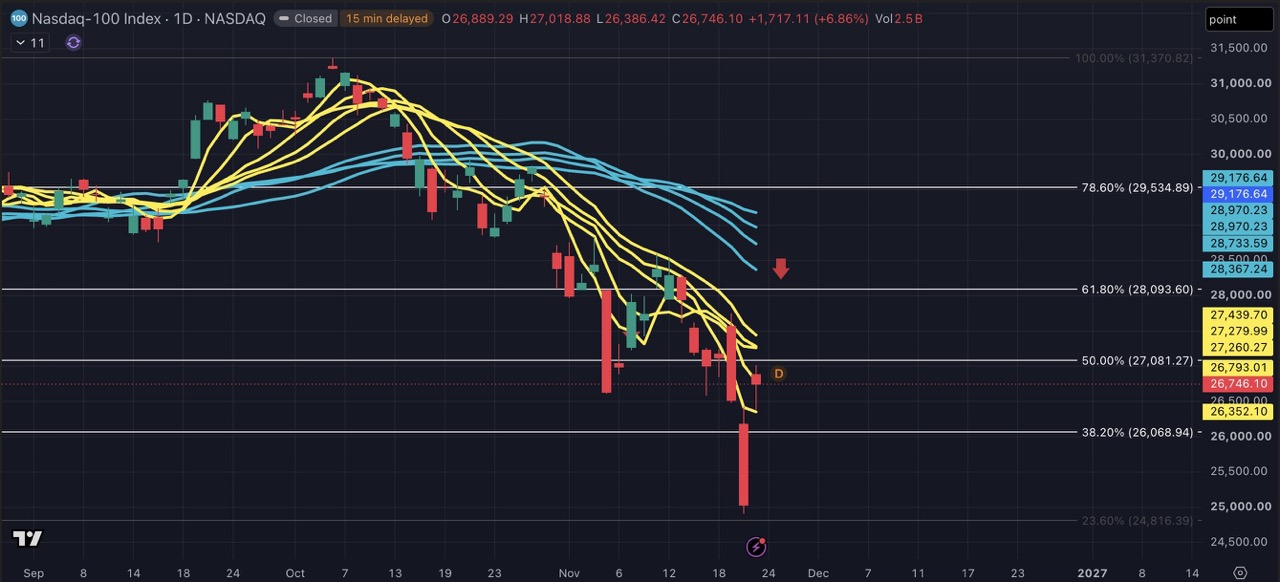
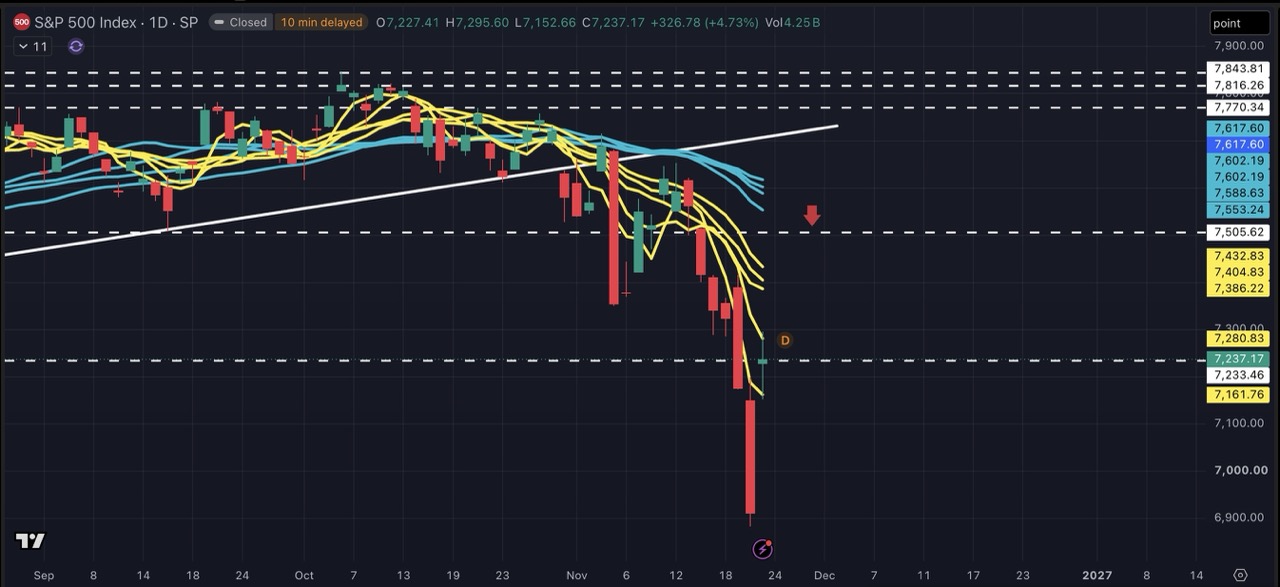
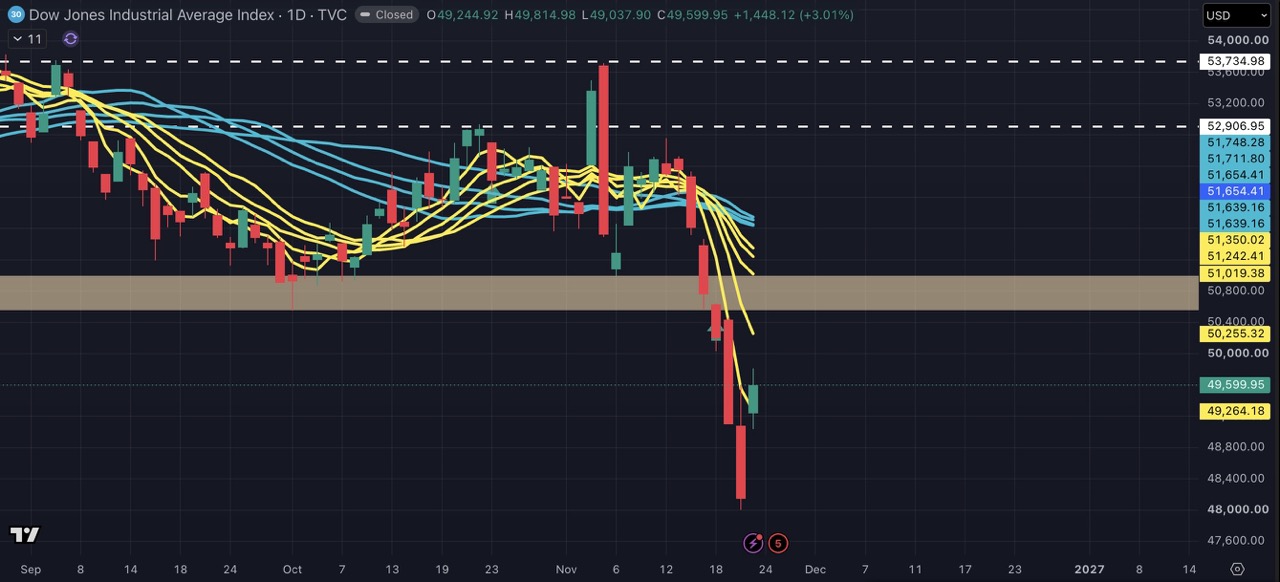
The Nasdaq Composite jumped 6.51%, the S&P 500 gained 4.73%, and the Dow Jones Industrial Average surged nearly 1,448 points. Nvidia led the charge with a 31.48% gain, while the Philadelphia Semiconductor Index climbed 14.03%, placing semiconductor stocks at the center of the rebound.
 |
 |
 |
In our view, this rally primarily reflects a repricing of uncertainty—not an equivalent improvement in corporate fundamentals overnight. For CFD traders, the key question is not simply how strong the rally is, but whether the market can establish a sustainable uptrend after such a sharp advance.
U.S. Stocks Rise Broadly, Led by Technology and Semiconductors
Here is how the major U.S. stock indexes performed yesterday:
| Index |
Closing Level |
Daily Gain |
| Dow Jones Industrial Average |
49,595.31 |
3.01% |
| Nasdaq Composite |
24,089.56 |
6.51% |
| S&P 500 |
7,237.17 |
4.73% |
| Philadelphia Semiconductor Index |
9,588.05 |
14.03% |
| NYSE FANG+ Index |
16,468.40 |
7.42% |
Notably, this rebound followed a steep sell-off the previous week. The information provided indicates that all three major indexes had fallen at least 10% from their recent highs, while the Nasdaq-100 had approached a 20% drawdown.
Our view is that a strong rebound after a steep decline could mark the beginning of a trend recovery—or simply a short-covering rally as panic subsides. Without confirmation from subsequent price action, trading volume, and capital flows, a single day’s gains are not enough to conclude that the correction is over.
Nvidia Leads the Rebound as Gains Spread Across the AI Supply Chain
Nvidia closed yesterday at $165.05, up 31.48%. Buying extended beyond the company to the broader AI supply chain:
-
Chips and foundries: TSMC’s ADRs rose 14.08%, while AMD gained 6.85%.
-
Memory and storage: Micron climbed 19.04%, while Western Digital advanced 13.84%.
-
Servers: Dell gained 20.47%, while Super Micro Computer rose 13.30%.
-
Data center-related companies: Astera Labs jumped 23.16%, while Nebius climbed 20.28%.
If these reports and market figures are confirmed, we believe the gains across multiple segments suggest that investors are reassessing risk premiums throughout the AI supply chain, rather than merely trading Nvidia’s leadership news.
However, rising share prices across the sector do not mean that every company’s profitability is improving in tandem. Chipmakers, memory suppliers, and server manufacturers differ in their cost structures, pricing power, and order visibility. For the rally to continue, it will need support from revenue, gross margins, and cash flow.
Our View: Sentiment Recovers First; Fundamental Confirmation Comes Next
1. Leadership News Can Reshape Valuations, but It Cannot Replace Earnings Growth
Stability in senior leadership influences investor confidence in a company’s strategy, customer relationships, and execution capabilities. If reports of Huang’s return are accurate, a reduction in Nvidia’s risk-related valuation discount would have a reasonable pricing rationale.
After such a sharp one-day gain, however, several questions remain: Can AI orders continue to translate into revenue? Can customers sustain their capital spending? Can profits across the supply chain keep pace with share prices?
2. Reduced Leadership Uncertainty Does Not Eliminate Regulatory Risk
The information provided also mentions AI chip export restrictions and potential trade blacklist measures. These details remain unverified.
In our view, tighter export restrictions could still affect companies’ addressable markets, product mixes, and shipment schedules. A single positive catalyst should therefore not be treated as a signal that all risks have disappeared.
3. The Faster Prices Rise, the More Important It Is to Confirm Support
A sharp rally can amplify the urge to chase prices. But higher prices may also widen the distance to a stop-loss level, changing a trade’s risk-reward ratio.
Our focus is less on “how much the market rose today” and more on whether subsequent pullbacks hold key levels, whether the rebound broadens, and whether buyers remain active after the positive news has been priced in.
CFD Trading Watch: Prepare Scenarios Rather Than Guessing Tops and Bottoms
In highly volatile markets, a trading plan should come before an order.
Scenario 1: The rally continues.
If the major indexes and semiconductor stocks remain strong, with support holding during pullbacks, traders can reassess the conditions for trend-following trades. A sharp rally alone should not be a reason to overlook entry costs or the distance to a stop-loss level.
Scenario 2: Prices consolidate near the highs.
If prices repeatedly test the highs without breaking through, watch for profit-taking and false breakouts. Reducing trading frequency and waiting for a clearer market structure can also be a form of risk management.
Scenario 3: The rebound fails.
If prices fall below a predefined support zone, reassess the original trade thesis rather than adding to the position to avoid taking a stop-loss.
With the Thanksgiving holiday falling this week, traders should also confirm the actual trading hours for U.S. stocks and the relevant CFD contracts on their platform. Liquidity may decline around the holiday, while spreads and slippage may increase. Stop-loss orders are not guaranteed to execute at the specified price.
Explore Bitget CFD: Plan First, Then Trade
The sharp rise in U.S. stocks creates new trading scenarios, but it also magnifies the risks of chasing prices and using leverage. Our central view is that news can ignite a rally, but its staying power must be confirmed by price structure and fundamentals.
Looking to trade global market moves? Visit Bitget CFD to explore the contracts available in your region, review trading hours and fees, and establish your position size, leverage, and stop-loss plan before assessing which trading opportunities suit you.
All trading education provided by Bitget is for educational purposes only and should not be considered financial advice. The strategies and examples shared are for reference only and may not reflect actual market conditions. CFD trading involves significant risk, including the potential loss of capital. Past performance does not guarantee future results. Please conduct thorough research and ensure that you understand the risks involved. Bitget is not responsible for any trading decisions made by users.


- U.S. Stocks Rise Broadly, Led by Technology and Semiconductors
- Nvidia Leads the Rebound as Gains Spread Across the AI Supply Chain
- Our View: Sentiment Recovers First; Fundamental Confirmation Comes Next
- CFD Trading Watch: Prepare Scenarios Rather Than Guessing Tops and Bottoms
- Explore Bitget CFD: Plan First, Then Trade